Does My Child Really Need Dental Treatment?
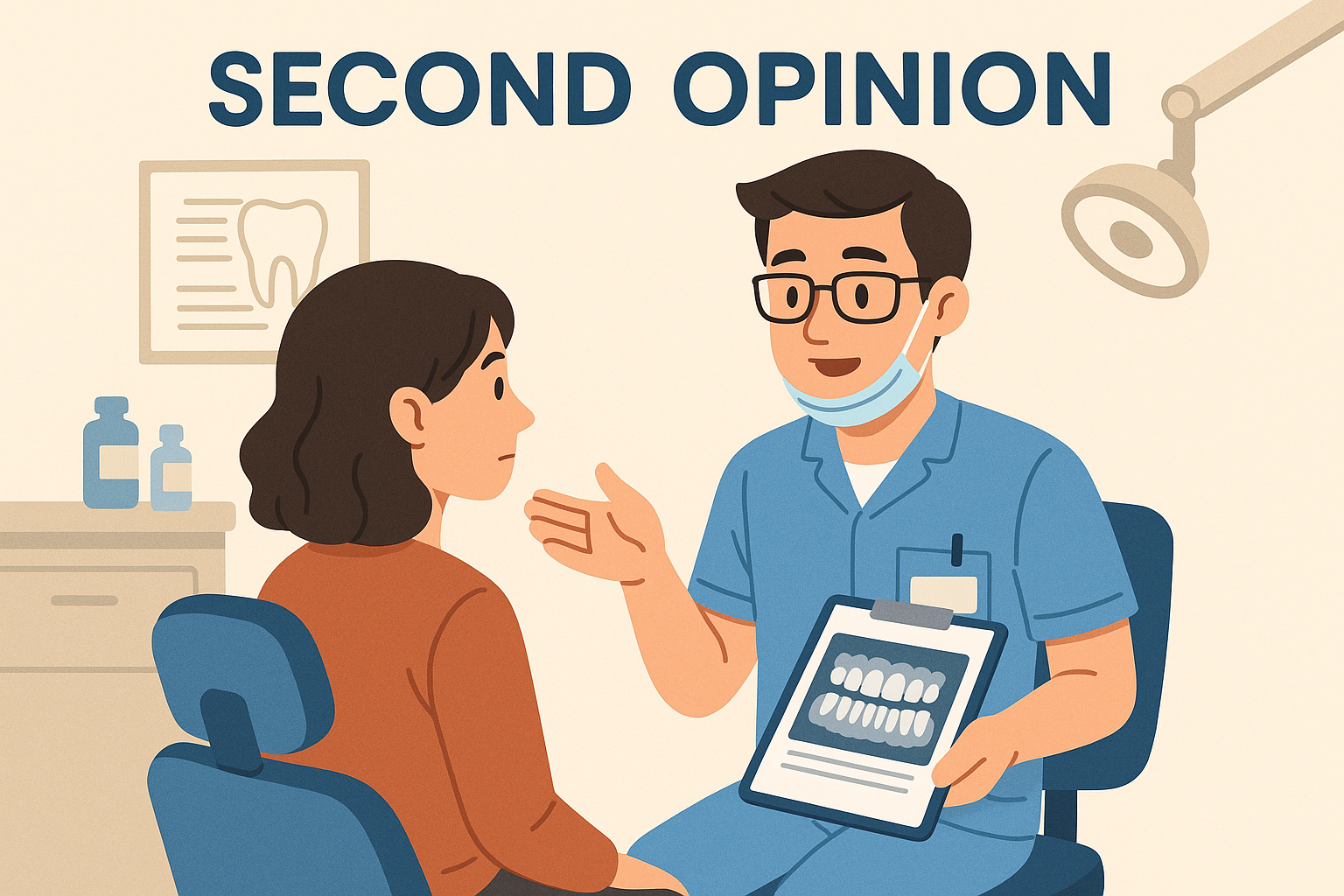
Pediatric dental treatment recommendations vary enormously between practitioners. Learn when treatment is genuinely necessary, when to question it, and how to get a reliable second opinion for your child.
Reviewed by the toothcheck Dental Team Independent dentist providing online second opinions.
Few statements from a dentist make a parent's heart drop like hearing that their child needs dental treatment under sedation, multiple fillings, or extraction of baby teeth.
The statistics on pediatric dental overtreatment are sobering. A landmark study published in *Community Dentistry and Oral Epidemiology* found that when 6- to 12-year-old children were examined by multiple dentists, the treatment recommendations varied so widely that some dentists recommended no treatment at all while others recommended multiple restorations on the same child PubMed: 21317586.
This diagnostic variability means that a significant number of pediatric dental treatment recommendations may be unnecessary — and when the treatment involves general anesthesia, pulpotomies ("baby root canals"), or stainless steel crowns, the stakes are both medical and financial.
If a plan sounds aggressive, you are not alone in questioning it — our guides to red flags of unnecessary dental work and how to tell if a dentist is overcharging you apply to children too. For a parent-focused overview, start with our children's dental second opinion guide.
Why Pediatric Dentistry Has Such High Variability
The Diagnostic Challenge
Diagnosing cavities in children's teeth is genuinely difficult. Baby teeth are smaller, the enamel is thinner, and children are less able to cooperate with the examination.
A 2018 study in the *Journal of the American Dental Association* compared radiographic diagnosis of proximal caries in primary teeth among six pediatric dentists. The agreement between dentists was only moderate, with kappa values ranging from 0.41 to 0.63 depending on tooth type and surface PubMed: 29961619.
This means that whether your child "needs" treatment may depend more on which dentist examines them than on the actual condition of their teeth.
The Watch-and-Wait Gap
For adult patients, there is a well-established category of "watchful waiting" for small enamel-only lesions. In pediatric dentistry, the threshold for treating versus monitoring varies enormously between practitioners.
Some dentists recommend filling any visible decalcification, citing the rapid progression of caries in children. Others argue that these early lesions can remineralize with fluoride and dietary changes. A Cochrane review of sealants versus fillings for initial caries in children found that sealants were effective at preventing progression of early lesions, with no clear advantage of invasive restorative treatment Cochrane: 2016.
The Treatment Recommendations Most Likely to Be Unnecessary
Stainless Steel Crowns on Baby Teeth
Stainless steel crowns (SSCs) on primary molars have become one of the most controversial topics in pediatric dentistry.
Evidence from the American Academy of Pediatric Dentistry (AAPD) supports SSCs as the treatment of choice for multi-surface caries in primary molars AAPD Guidelines. However, research shows significant variation in their use. Some practitioners fit SSCs for cavities that could be treated with a filling, and the rate of SSC placement varies by geographic region by as much as 400%.
A 2017 study in *Pediatric Dentistry* found that 23% of stainless steel crowns placed in a Medicaid population showed no radiographic evidence that a filling was insufficient — suggesting potential overtreatment PubMed: 28659160.
Before agreeing to SSCs, ask whether a large filling or composite crown is an alternative.
Pulpotomies (Baby Root Canals)
A pulpotomy involves removing the infected portion of the pulp from a primary tooth while leaving the healthy root pulp intact. It is indicated when decay has reached the pulp chamber.
A 2019 study found that inter-dentist agreement on when a pulpotomy was needed ranged from poor to moderate, even among pediatric dentists PubMed: 31545790.
If your child's dentist recommends a pulpotomy, ask to see the X-ray evidence of pulp involvement before proceeding.
General Anesthesia for Simple Fillings
The recommendation for general anesthesia (GA) for routine pediatric dental treatment is perhaps the most controversial area. GA carries real medical risks and adds $1,500 to $5,000 to the cost of treatment.
A 2021 study in *Anesthesia Progress* found that the rate of GA use for pediatric dental procedures varied by a factor of 10 between different geographic regions, with no corresponding difference in caries prevalence PubMed: 33891810.
If GA is recommended, ask:
- Can treatment be done with local anesthesia alone?
- Can nitrous oxide (laughing gas) provide sufficient anxiety control?
- Can treatment be broken into multiple shorter appointments?
When Treatment Is Genuinely Necessary
- Abscess or facial swelling — Risk of spread to deep neck spaces
- Deep caries causing spontaneous pain — Irreversible pulpitis, risk of infection
- Caries approaching the pulp — High risk of abscess in children
- Space infection affecting permanent tooth — Can damage developing successor tooth
- Tooth fractured with pulp exposure — Risk of necrosis and infection
- Baby tooth interfering with permanent eruption — Can cause impaction or ectopic eruption
How to Get a Reliable Pediatric Second Opinion
1. Choose the Right Provider
The ideal second-opinion provider is a pediatric dentist not affiliated with the original practice. Pediatric dentists complete two to three years of additional residency training focused on child development and treatment of primary teeth.
2. Get the Records First
You have a legal right to your child's dental records, including:
- Periapical and bitewing X-rays
- Written treatment plan with CDT codes
- Clinical notes documenting findings
The AAPD supports patient autonomy and the right to seek second opinions. Any dentist who refuses to transfer records should be reported to the state dental board.
3. Look for Key Signals
When comparing the two opinions, ask:
- Which teeth need treatment? Do both examinations identify the same teeth?
- What treatment is recommended? Is there a pattern of more vs less invasive treatment?
- Is "monitoring" an option? A recommendation that includes watchful waiting suggests conservative, evidence-based practice
- Is the urgency realistic? True dental emergencies in children are rare
4. Consider an Online Treatment Plan Review
If you cannot easily access a second pediatric dentist, an online treatment plan review gives you an independent written assessment from a licensed dentist who reads your child's X-rays and compares them against the recommended treatment.
Upload your child's X-rays and treatment plan to toothcheck for an independent, written review in under 72 hours.
Preventing Caries Before Treatment Is Needed
Evidence-based prevention strategies include:
- Fluoride varnish every 6 months — reduces caries by 30-40% Cochrane: 2020
- Dental sealants on first permanent molars — reduces occlusal caries by up to 80% CDC Sealant Evidence
- Silver diamine fluoride (SDF) for arresting early caries
- Dietary counseling — reducing sugar frequency, not just total sugar intake
FAQ
When should I seek a second opinion for my child's dental treatment?
Consider a second opinion if the recommended treatment includes stainless steel crowns for primary teeth, extractions, pulpotomies, treatment under general anesthesia, or multiple fillings (four or more). Also seek a second opinion if you cannot see the cavities on the X-ray yourself.
Can baby teeth with cavities fall out without treatment?
Baby teeth with small, non-painful cavities in children under 6 may sometimes exfoliate before the cavity causes problems. However, cavities in baby molars that will remain for 2-4 more years can progress to abscesses, risking damage to the developing permanent tooth.
Is general anesthesia safe for my child's dental treatment?
General anesthesia is generally safe for healthy children when administered by a qualified anesthesiologist. However, regional variation in its use far exceeds clinical need, so ask whether less invasive approaches are feasible alternatives.
How much does a pediatric dental second opinion cost?
An in-person second opinion costs $50-$200. An online treatment plan review costs $59-$99. Given that unnecessary treatment can cost thousands, the investment is almost always cost-effective.
Can online X-ray review be accurate for my child?
Yes. X-ray interpretation does not require the child to be present. The reviewer reads the same digital X-rays your dentist used and compares findings to the recommended treatment. For caries detection, X-rays are the primary diagnostic tool.
Cost Comparison: Pediatric Dental Treatment by Approach
- Fluoride varnish (6-month visit): $25–$60 — Covered by most plans
- Sealants (permanent molars): $30–$60/tooth — Often fully covered
- Composite filling (1 surface): $100–$250
- Composite filling (2–3 surfaces): $200–$450
- Stainless steel crown: $300–$450
- Pulpotomy + crown: $400–$800 — "Baby root canal"
- Extraction: $150–$300
- Space maintainer: $200–$500 — Needed if primary molar extracted
- General anesthesia (add-on): $1,500–$5,000
- Second opinion (in-person): $50–$200
- Online treatment plan review: $59–$99 — Best value
The math: If a second opinion has a 20–30% probability of changing a $500–$3,000 treatment plan, the expected value of even a $200 investment is strongly positive.
Questions to Ask Your Child's Dentist
Print these questions and bring them to your next appointment:
1. Can you show me the cavity on the X-ray? Good: Dentist points to a specific dark area and explains what they see. Concerning: "It's hard to see on the image" or refusal to share the X-ray.
2. Is monitoring an option for this tooth? Good: "We could apply fluoride and recheck in 6 months." Concerning: "No, it will only get worse," without explaining why it is beyond remineralization.
3. What are the alternatives to a stainless steel crown? Good: Explains when a large filling versus a crown is appropriate. Concerning: "This needs a crown. No alternatives."
4. Can this be done without general anesthesia? Good: Offers nitrous oxide, behavior techniques, or shorter appointments. Concerning: "GA is the only safe way," without discussing alternatives.
Key Statistics for Parents
- 20–50% — rate at which pediatric dentists disagree on treatment plans for the same child
- 4x — variation in stainless steel crown placement rates across US regions
- 10x — variation in general anesthesia use across regions
- 80% — reduction in cavities on sealed molars vs unsealed
- 60–70% — arrest rate of silver diamine fluoride for active caries
- $1,500–$5,000 — the extra cost of general anesthesia for dental treatment
Real Parent Story: When One Dentist Said 8 Fillings and Another Said 2
When 5-year-old Liam's first dentist said he needed 8 fillings and two stainless steel crowns under general anesthesia at a cost of $5,200, his mother Laura hesitated. The dentist had barely shown her the X-rays and seemed rushed.
Laura requested copies of Liam's X-rays and took them to a second pediatric dentist. That dentist identified only 3 small cavities that could be treated with composite fillings under nitrous oxide, and recommended fluoride varnish and sealants for the other spots that the first dentist had called cavities.
The second opinion cost $89. The treatment cost $420 instead of $5,200. Laura saved $4,780 and her son avoided general anesthesia.
This is not unusual. The research on pediatric diagnostic variability shows that such dramatic treatment plan differences are well-documented in the peer-reviewed literature. The anxiety of questioning a professional is real, but the financial and medical stakes justify the unease.
When Extraction of a Baby Tooth Is Actually the Right Call
There are situations where extracting a primary tooth is genuinely the best option:
1. The decay has destroyed too much tooth structure to support a crown 2. There is an abscess that antibiotic treatment alone will not resolve 3. The baby tooth is preventing the permanent tooth from erupting (over-retained primary tooth) 4. The permanent successor is close to erupting (within 6 months radiographically) 5. Severe infection that threatens the permanent tooth bud
When extraction is recommended, ask about space maintenance. Premature loss of a primary second molar almost always requires a space maintainer to prevent the adjacent teeth from shifting and causing alignment problems.
Silver Diamine Fluoride: The Drill-Free Alternative
Silver diamine fluoride (SDF) is a minimally invasive treatment option that is transforming pediatric dentistry. In 2014, the FDA cleared SDF for treating dentin hypersensitivity, and it is now widely used off-label for arresting caries in children.
How it works: SDF is a liquid that is painted onto cavities. The silver kills bacteria and the fluoride promotes remineralization. It stops cavities from progressing without drilling, filling, or anesthesia.
Benefits for children:
- No needles or drills — ideal for anxious children
- Treatment takes 1–2 minutes per tooth
- Arrests 60–70% of active caries lesions
- Costs $25–$75 per application, compared to $150–$450 for a filling
Drawbacks:
- The treated cavity turns black from silver oxidation
- It only arrests existing decay — it does not restore tooth structure
- Some insurance plans still do not cover SDF
SDF is an excellent alternative for young children with early cavities who cannot tolerate traditional restorative treatment. It buys time until the child can cooperate with fillings or until the baby tooth exfoliates.
Final Advice
Your child's dental health deserves the same rigor you would apply to any medical decision. The research is clear that pediatric dental treatment recommendations vary significantly between practitioners, and a recommendation that sounds aggressive should be verified before you commit.
The best approach is not to assume overtreatment, but to verify that the evidence supports the recommendation. An independent review of your child's X-rays and treatment plan gives you that verification.
Upload your child's X-rays and treatment plan to toothcheck for an independent, written review from a licensed dentist in under 72 hours. Prefer a parent-focused starting point? Read our children's dental second opinion guide, or begin an online dental second opinion now.
References: 1. Variability in pediatric dental treatment decisions. *Community Dent Oral Epidemiol*, 2011. PubMed: 21317586 2. Inter-examiner agreement in pediatric caries diagnosis. *JADA*, 2018. PubMed: 29961619 3. Sealants vs fluoride varnishes for preventing caries. *Cochrane*, 2016. Cochrane Library 4. Provider variation in pediatric treatment. *J Dent Res*, 2020. PubMed: 32663103 5. Appropriateness of SSC placement. *Pediatr Dent*, 2017. PubMed: 28659160 6. Pulpotomy diagnostic agreement. *Pediatr Dent*, 2019. PubMed: 31545790 7. Geographic variation in pediatric dental GA. *Anesth Prog*, 2021. PubMed: 33891810 8. Fluoride varnishes for preventing caries. *Cochrane*, 2020. Cochrane Library 9. AAPD Guideline on Restorative Dentistry. AAPD
Reviewed by the toothcheck Dental Team. Last medically reviewed: June 2026