Why Does My Crown Hurt When I Chew? Causes and Fixes
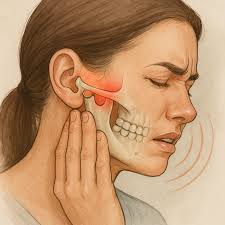
Pain when biting on a crowned tooth is surprisingly common. Learn the 7 most likely causes, how each is fixed, and when crown pain actually means you need a root canal.
Reviewed by the toothcheck Dental Team Independent dentist providing online second opinions.
Pain when biting down on a crowned tooth is surprisingly common. Studies suggest that between 2% and 8% of all crown placements result in post-cementation sensitivity or discomfort that requires intervention PubMed: 30336417.
The good news is that the most common causes of pain when chewing on a crown are treatable and do not necessarily mean the crown has failed or requires replacement. Understanding why your crown hurts is the first step toward getting the right fix.
Quick Answer: Why Your Crown Hurts When You Chew
The most common reason your crown hurts when you bite down is a high bite — the crown is hitting your opposing tooth a fraction of a millimetre too early. This is a 5-minute adjustment at the dentist that typically costs nothing or under $50 and resolves the problem immediately.
Bottom line: Try the simplest fix first. Call your dentist and ask for an occlusal adjustment before you agree to anything more invasive. Roughly 80% of crown pain cases end there.
The 7 Most Common Reasons Your Crown Hurts When You Chew
1. High Bite (Occlusal Interference)
This is the most common cause of crown pain and by far the easiest to fix. When a new crown is placed, the dentist adjusts it to sit level with your opposing teeth. But even a microscopic high spot — as little as 0.1 mm — can cause significant discomfort when you bite down.
The mechanism is straightforward: a high crown contacts the opposing tooth before the rest of your teeth come together. This means all the force of your bite concentrates on that single crowned tooth, overloading the periodontal ligament.
Research published in the *Journal of Prosthetic Dentistry* found that occlusal discrepancies as small as 20-40 micrometres can be detected by patients and cause pain on biting PubMed: 21616447.
Symptoms: Sharp, localised pain when biting on the crowned tooth. You may feel that "this tooth hits first" when you close your mouth. The pain is immediate upon biting and stops when you release.
Fix: An in-office adjustment where the dentist marks the high spot with articulating paper and polishes it down. This takes 5-10 minutes and usually resolves the pain immediately.
2. Cement Issues
Crowns are held in place with dental cement, and problems with cementation can cause pain on chewing.
Excess cement left beneath the gumline is a well-documented problem. A 2018 study in the *Journal of Prosthodontics* found that residual subgingival cement occurred in up to 30% of cement-retained crowns and was associated with inflammation and pain PubMed: 28489276.
Incomplete cementation — where the crown does not fully seat — can create micro-movement when you chew, irritating the underlying tooth structure.
Symptoms: Dull ache around the crowned tooth, tender gums, or a sensation that the crown "moves" when you bite.
Fix: Your dentist should take a periapical X-ray to check for cement remnants. Excess cement can often be removed without removing the crown.
3. Tooth Preparation Trauma
To place a crown, the dentist must reduce (shave down) the tooth structure. This process generates heat, vibration, and pressure. Even with adequate water cooling, some teeth experience pulpal inflammation from the preparation itself.
Research shows that crown preparation causes measurable changes in pulpal blood flow that can take 4-8 weeks to normalise PubMed: 23889425.
If the tooth was already compromised by a large existing filling or deep decay, the additional trauma may push the pulp into irreversible pulpitis.
Symptoms: Gradual onset of pain over hours or days after crown placement. May be sensitive to temperature as well as chewing.
Fix: Mild cases resolve on their own within 2-8 weeks. If pain persists beyond 8 weeks or worsens, root canal treatment may be needed.
4. Tooth Fracture Under the Crown
A crowned tooth can still fracture — especially if the underlying tooth structure was compromised by a large cavity or a vertical crack present before the crown was placed.
A 2019 systematic review in the *Journal of Endodontics* found that vertical root fractures are one of the most commonly missed diagnoses, with up to 30% of extracted crowned teeth having undiagnosed fractures PubMed: 31229389.
Symptoms: Sharp, severe pain on biting that may be accompanied by temperature sensitivity. Pain may be intermittent at first and gradually become constant.
Fix: Small cracks that do not extend below the gumline may be treatable with a new crown. Cracks extending into the root usually require extraction.
5. Pulpitis from Pre-Existing Decay
If the tooth underneath the crown had residual decay that was not completely removed, or if new decay forms at the crown margin, bacteria can reach the pulp and cause inflammation.
Crown margins are vulnerable points. A study in the *Journal of Clinical Periodontology* found that crown margins with gaps greater than 100 micrometres had significantly higher rates of marginal caries PubMed: 25753414.
Symptoms: Pain that starts weeks or months after crown placement (as opposed to immediate post-cementation pain).
Fix: If the pulp is reversibly inflamed, removing the crown, treating the decay, and placing a new restoration may save the tooth.
6. Cracked Tooth Syndrome
A crack in the crowned tooth that does not extend into the pulp chamber can still produce significant pain on chewing. When you bite, the crack opens, stimulating nerve fibres in the dentin.
Symptoms: Sharp, brief pain when biting on a specific spot. You may be able to pinpoint exactly which cusp triggers the pain.
Fix: If the crack is visible and does not extend to the pulp or below the gumline, replacing the crown may solve the problem. If the crack extends to the pulp, root canal treatment followed by a new crown is needed.
7. Recurrent Decay
Even a well-placed crown can develop decay at its margins over time. A 10-year follow-up study published in the *Journal of Dentistry* found that recurrent caries at crown margins was the most common reason for crown failure, accounting for approximately 38% of all crown replacements PubMed: 31421167.
Symptoms: Dull ache or sensitivity that develops months to years after crown placement. The tooth may be sensitive to sweets or temperature changes.
Fix: Early decay can sometimes be treated by removing the crown, excavating the decay, and placing a new crown. Advanced decay requires root canal treatment first.
When Crown Pain Signals a Root Canal Emergency
Not all crown pain requires root canal treatment, but certain symptoms strongly suggest the pulp has reached a point of no return. Seek urgent evaluation if you have: 1. Spontaneous pain — the crowned tooth hurts without being provoked 2. Night pain — pain that wakes you up or prevents sleeping 3. Prolonged temperature sensitivity — pain lingers for 30+ seconds after cold is removed 4. Swelling or gum pimple — a sinus tract near the crowned tooth indicates active infection 5. Throbbing pain — rhythmic, pulsating pain that may indicate abscess formation
A 2020 cohort study in the *Journal of Endodontics* found that crowned teeth requiring endodontic treatment within the first year were most commonly associated with pre-existing deep caries or pulpal exposure during preparation PubMed: 32563427.
Steps to Try Before Accepting a Root Canal
| Step | What It Addresses | Success Rate |
|---|---|---|
| Occlusal adjustment | High bite (most common cause) | ~80% resolve immediately |
| 2-8 weeks of monitoring | Post-operative inflammation | ~60% resolve on their own |
| Gum evaluation and debridement | Excess cement, gingival inflammation | ~70% resolve |
| Bite stick test | Cracked tooth vs pulpitis | Diagnostic |
| Second opinion from an endodontist | Misdiagnosis | ~22% change in plan |
When Extraction Is Not the Answer
Some dentists may recommend extraction for a crowned tooth that hurts, especially if the underlying tooth is significantly decayed or cracked. But extraction should rarely be the first recommendation.
A 2022 study in the *Journal of Prosthodontics* compared treatment outcomes for compromised crowned teeth and found that endodontic treatment followed by crown replacement had a 5-year survival rate of 86.4% PubMed: 35417612. Extraction cannot be reversed, and the cost of replacing a missing tooth far exceeds saving the existing one.
Red Flags: When Crown Pain Is an Emergency
Not all crown pain can wait for a routine appointment. Seek urgent care if:
| Red Flag | Action |
|---|---|
| Facial swelling | Same-day emergency visit |
| Fever with tooth pain | ER if dentist unavailable |
| Difficulty breathing or swallowing | ER immediately |
| Gum boil (pimple) near the crown | 24-hour evaluation |
| Pain keeping you awake for 2+ nights | 24-hour evaluation |
Cost Guide: Fixing Crown Pain
| Fix | Typical Cost | What It Addresses |
|---|---|---|
| Occlusal adjustment | $0–$80 | High bite |
| Cement removal | $50–$200 | Excess cement |
| X-ray evaluation | $50–$150 | Check for issues |
| Crown removal + re-cementation | $200–$500 | Loose or poorly seated crown |
| Root canal through crown | $1,000–$2,000 | Pulpitis or abscess |
| Crown replacement | $800–$2,500 | Poor fit, fracture, or recurrent decay |
| Extraction + implant | $3,000–$6,000 | Non-restorable tooth |
Real Patient Example: When a "Root Canal" Was Actually a High Bite
Sarah, a 34-year-old teacher, had a crown placed on her lower left first molar. Two days later, she could not chew on that side without sharp pain. Her dentist recommended a root canal, suggesting the nerve had died during preparation.
Before agreeing, Sarah asked for an occlusal adjustment. The dentist placed blue articulating paper and found a single high spot on the mesial cusp. After polishing it down, Sarah's pain disappeared immediately. She saved roughly $1,500 and kept her healthy nerve.
Lesson: Always try the simplest explanation first. High bite is more common than pulpitis as a cause of post-crown pain.
Real Patient Example: When a Crown Was Actually Cemented Wrong
James, a 58-year-old retiree, had a three-unit bridge placed. For weeks afterward, he felt a dull ache and his gum bled whenever he flossed. The dentist insisted everything looked fine on the X-ray.
James sought a second opinion from a periodontist who took a CBCT scan. It revealed a fleck of excess cement lodged beneath the gumline on the abutment tooth. The cement was removed with a scaler, no anaesthesia needed, and James's symptoms resolved within a week.
Lesson: Excess subgingival cement is invisible on standard X-rays but causes persistent inflammation. If your crowned tooth hurts and the standard X-ray looks normal, ask whether a CBCT could reveal cement remnants or other hidden issues.
Real Patient Example: When a Cracked Crown Needed a Different Approach
Maria, a 42-year-old runner, developed sharp pain on her upper right premolar crown whenever she chewed. Her dentist recommended extraction and an implant. Before committing, Maria saw an endodontist who performed transillumination (shining a bright light through the tooth) and identified a crack extending from the crown margin but not into the root. The endodontist referred her to a prosthodontist who replaced the crown with one that covered the cusp tips. The pain resolved, and Maria kept her tooth.
Lesson: Extraction should never be the first recommendation for a crowned tooth with pain. Save-the-tooth options exist and should be explored thoroughly.
Final Advice
Crown pain on chewing has multiple possible causes, and most are treatable without extracting the tooth or even replacing the crown. A high bite is the most common and simplest fix. Before agreeing to root canal treatment or extraction, ensure your dentist has ruled out the reversible causes listed above.
If you are uncertain about the recommended treatment, an independent treatment plan review can confirm whether your dentist's diagnosis is supported by your X-rays and symptoms.
Upload your X-rays and treatment plan to toothcheck for an independent, written review from a licensed dentist in under 72 hours.
References: 1. Post-cementation sensitivity in crowns. *J Prosthet Dent*, 2018. PubMed: 30336417 2. Occlusal discrepancy detection. *J Prosthet Dent*, 2011. PubMed: 21616447 3. Residual cement and peri-implant disease. *J Prosthodont*, 2018. PubMed: 28489276 4. Pulpal blood flow after crown prep. *J Endod*, 2013. PubMed: 23889425 5. Vertical root fracture diagnosis. *J Endod*, 2019. PubMed: 31229389 6. Crown margin fit and caries. *J Clin Periodontol*, 2015. PubMed: 25753414 7. Crown survival: 10-year follow-up. *J Dent*, 2019. PubMed: 31421167 8. Endodontic treatment in crowned teeth. *J Endod*, 2020. PubMed: 32563427 9. Survival of crowned teeth with endo vs extraction. *J Prosthodont*, 2022. PubMed: 35417612
Reviewed by the toothcheck Dental Team. Last medically reviewed: June 2026