Upload Your Dental X-Rays for a Second Opinion
Upload your dental X-rays and get a detailed written reading from an experienced dentist in under 72 hours. Every finding identified by tooth number — no AI shortcut, just a real specialist reading your imaging.
What You Get Back
A written report — delivered by email — that walks through each of your images and documents what is there.
Finding-by-finding read
Each notable feature identified, located by tooth number or anatomic landmark, and explained in plain language.
What may have been missed
Findings visible on the imaging but not in your dentist's original diagnosis — flagged explicitly with rationale.
Differential for ambiguous findings
For findings that are not clear-cut, the likely differential diagnoses listed — not just "abnormal."
Agreement vs. disagreement
Where our reading agrees with your dentist's diagnosis, and where it diverges — with the reasoning.
Recommended next imaging
If a finding needs an additional view, periapical at a different angle, vitality test, or CBCT — we say so.
Urgency triage
Which findings need action this week, which can wait months, and which are simply worth monitoring.
How a Dental X-Ray Review Works
Step 1: Upload Your X-Rays
Bitewings, periapicals, panoramic, FMX, or CBCT — any format from any office. Higher resolution is better, but we work with what you have.
Step 2: Systematic Reading by a Dentist
A licensed dentist reads each image systematically — caries, perio, periapical, root, and incidental findings — and correlates with your symptoms.
Step 3: Written Report in Under 72 Hours
You receive a written report by email — every finding identified, urgency triaged, and next steps recommended.
What We Check on Every X-Ray
Every review follows the same systematic checklist. The order matters: working through the imaging in a consistent sequence is how subtle findings get caught instead of missed.
- Caries — interproximal, occlusal, and recurrent decay around existing restorations, evaluated using ICDAS-aligned radiographic criteria.
- Periodontal bone levels — CEJ-to-alveolar-crest distance, horizontal and vertical bone loss patterns, furcation involvement.
- Periapical findings — radiolucencies, condensing osteitis, widened PDL space, sinus tract tracking.
- Root morphology — internal and external resorption, root fractures where visible, calcified canals, root proximity to anatomic structures.
- Existing restorations — marginal integrity, secondary decay, overhangs, open margins, post and core integrity.
- Impactions and unerupted teeth — angulation, depth, proximity to adjacent roots and the inferior alveolar nerve.
- Incidental findings — cysts, retained root tips, sinus floor pathology, calcifications, soft-tissue opacities, anatomic variations.
- Image quality — whether the imaging is adequate to make each call, and what additional view to request when it is not.
X-Ray Types We Review
Every standard dental radiograph type. If you are unsure what kind of X-ray you have, upload it anyway — we will identify the view and read it.
Bitewing
The most common posterior X-ray. Best view for interproximal caries and early bone loss between back teeth.
Periapical (PA)
Single-tooth detailed view from crown to apex. Essential for evaluating periapical lesions, root anatomy, and endodontic outcomes.
Panoramic (OPG)
Whole-jaw single image. Best for assessing wisdom teeth, broad bone-level overview, and incidental findings in the sinus and TMJ.
Full Mouth Series (FMX)
Typically 18–20 individual images covering every tooth. The most comprehensive set for a full diagnostic review.
Occlusal
Larger view showing the floor or roof of the mouth. Used for impactions, supernumerary teeth, and cysts in pediatric cases.
CBCT
3D cone beam CT. Reviewed where clinically appropriate — implants, suspected root fractures, complex endodontic anatomy, impacted teeth near the nerve.
Expert Human Review vs. AI X-Ray Tool vs. Your Own Dentist
AI dental X-ray tools are useful for screening triage. They are not a substitute for an expert clinician reading your imaging in the context of your symptoms and history. Here is how the three options actually compare.
| Expert Human Review | AI X-Ray Tool | Your Own Dentist | |
|---|---|---|---|
| Reads subtle findings | Yes | Limited — pattern recognition only | Yes |
| Correlates with your symptoms | Yes | No | Yes |
| Independent of treating dentist | Yes | Yes | No |
| Handles non-standard angles / film artifacts | Yes | Often struggles | Yes |
| Gives a written report | Yes | Sometimes — heatmap output | Verbally in the chair |
| Recommends next imaging if needed | Yes | No | Yes |
| Turnaround | Under 72 hours | Seconds | Days to weeks for appointment |
AI X-ray tools used by dental practices (such as Pearl and Overjet) are reading aids for the dentist — not a patient-facing diagnostic. Their published sensitivity and specificity numbers are screening-level, not interpretation-level.
When a Dental X-Ray Review Is Worth It
- Your dentist showed you a finding on the X-ray and you want a second look
- You suspect something was missed — pain or symptoms that do not match the diagnosis
- A new dentist found problems on the same X-ray your previous dentist did not
- You have old and recent X-rays and want change over time evaluated
- You want to understand what you are actually looking at on your imaging
- You are considering travel for dental work and want the imaging vetted before booking
- An AI X-ray tool flagged something and you want a human to verify it
- You are about to start expensive treatment and want the diagnostic foundation checked first
What a Good X-Ray Submission Looks Like
Image quality directly affects how confidently we can read the X-ray. Where possible, request the original digital file from your dentist rather than a phone photo of a screen.
A strong submission has
- Original digital files from the dental office (emailed or on a flash drive)
- All imaging from the visit, not just the tooth in question
- The date each X-ray was taken
- Your dentist's diagnosis or treatment plan, if you have it
- A brief description of any symptoms in the area
- Prior X-rays from previous visits, if available for comparison
A weaker submission has
- Phone photo of a screen with glare or rotation
- Heavy JPEG compression with visible artifacts
- Only one image when the visit produced a full series
- Cropped tightly around one tooth, losing anatomic context
- No date, no symptom description, no context
- Missing one half of a bitewing or FMX series
If your submission falls short of the "strong" column, we still review what you have — but the report will tell you specifically what additional imaging would resolve any ambiguity.
Read by a Licensed Dentist — Not an Algorithm
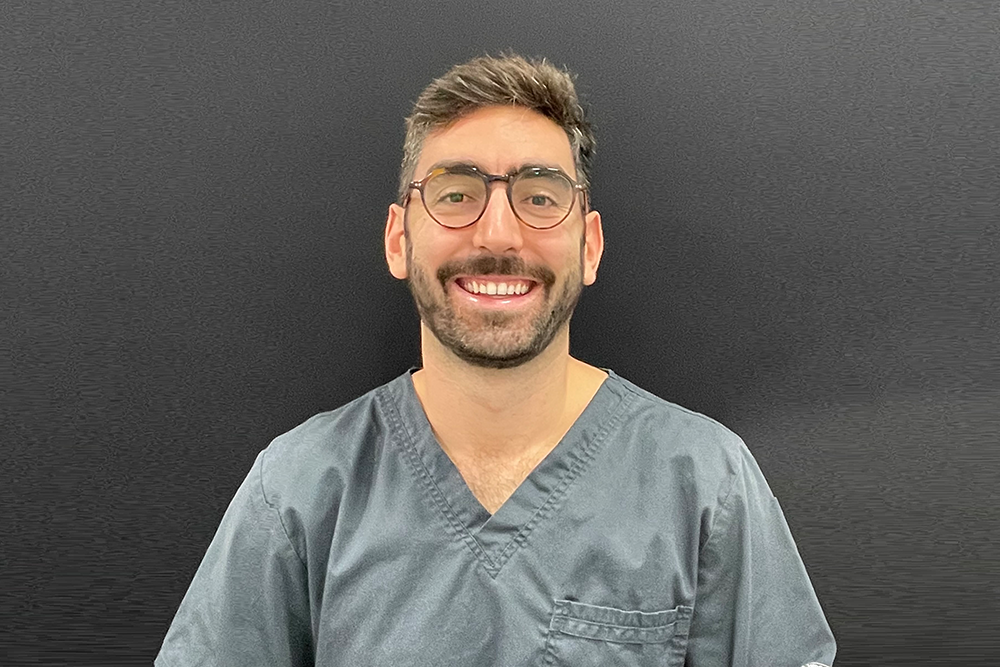
Lead Reviewer
Our Dental Expert Team
DDS / DMD
10+ years of clinical experience
Dr. Beitia reads thousands of dental radiographs per year of clinical practice across general dentistry, endodontics, and oral surgery cases. Every X-ray review follows a systematic reading protocol aligned with the ADA radiographic selection criteria and AAOMR diagnostic standards.
Our Independence
Our reviewers are paid a flat fee per X-ray review. They are not paid more if the review identifies more findings, fewer findings, or recommends specific treatment — and they do not perform the treatment we discuss.
We have no relationship with the dentist who took your X-rays, no relationship with your insurer, and no financial connection to any dental lab, imaging vendor, or AI software company. The only incentive is to give you an accurate, useful read.
Reviews are conducted under HIPAA-compliant handling of your imaging and personal information.
Before You Submit
Background reading on the topics covered in a typical X-ray review
Frequently Asked Questions
Q: What types of dental X-rays do you review?
A: We review every standard dental X-ray type: bitewings (the most common posterior X-ray), periapicals (single-tooth detailed views), panoramic radiographs (OPG / whole-jaw images), full mouth X-ray series (FMX, typically 18–20 images), occlusal X-rays, and cone beam CT (CBCT) scans where appropriate. Older film X-rays scanned to image files are also acceptable.
Q: How do I get a copy of my dental X-rays from my dentist?
A: Under HIPAA you have a legal right to copies of your dental records, including X-rays, at no charge or for a small administrative fee. Call your dental office and ask for "digital copies of my most recent X-rays" — most offices can email them or provide them on a flash drive the same day. If a practice refuses, that is reportable to your state dental board.
Q: What file formats do you accept?
A: JPEG, PNG, PDF, and DICOM are all accepted. Higher-resolution images allow a more precise read — when possible, request the original digital file from your dentist rather than a phone photo of a screen.
Q: How is this different from an AI dental X-ray tool?
A: AI X-ray tools are useful screening triage, but they work on pattern recognition trained on labeled datasets — they miss subtle findings, struggle with non-standard angulations, and cannot correlate radiographic findings with your symptoms or your medical history. A human specialist reads your imaging in the context of who you are. Several published studies (BDJ Open 2025, BMC Oral Health 2024) have documented meaningful gaps between AI screening output and the diagnostic interpretation of an experienced dentist — we cover these in detail in our guide on five things AI dental X-ray tools miss. We do not use AI as a substitute for the dentist's read.
Q: What findings do you look for on a dental X-ray?
A: Every review systematically checks: interproximal and occlusal caries (using ICDAS-aligned criteria), recurrent decay around existing restorations, periapical radiolucencies and condensing osteitis, periodontal bone loss (CEJ-to-bone-crest distance, vertical and horizontal patterns), root morphology and any signs of resorption, fractures and crack lines where visible, impaction and angulation of unerupted teeth, calcifications in pulp chambers and canals, and incidental findings such as cysts, retained root tips, or sinus-floor involvement.
Q: Can you tell me whether my dentist missed something?
A: Yes — that is one of the most common reasons patients come to us. We compare our independent reading against the diagnosis your dentist provided and explicitly flag findings that were present on the imaging but not in the original diagnosis. This is a sensitive area, so we are careful to distinguish "missed finding" from "judgment-call finding" in our report.
Q: Do you read CBCT (3D cone beam) scans?
A: Yes, for cases where CBCT is clinically appropriate — typically impacted teeth, implant planning, endodontic complications, or suspected root fractures. CBCT review is more involved than a standard X-ray review and may take up to 48 hours. The American Academy of Oral and Maxillofacial Radiology has clear guidance on when CBCT is and is not indicated; we apply those criteria.
Q: Can you compare my old and new X-rays to track change over time?
A: Yes. Comparing X-rays taken months or years apart is one of the most useful ways to evaluate whether a finding is progressing, stable, or healing. If you have prior X-rays from a previous dentist, upload them alongside the new ones and we will compare findings side by side.
Q: What does the X-ray review report look like?
A: A written report, delivered by email, that walks through your images one by one. Each notable finding is identified, located by tooth number or anatomic landmark, and explained in plain language. For ambiguous findings we list the likely differential diagnoses and recommended next steps — for example, an additional periapical at a different angle, a vitality test, monitoring at the next recall, or treatment.
Q: How long does an X-ray review take?
A: Most reviews are returned in under 72 hours of submission. CBCT reviews and cases involving multiple sets of imaging taken over time may sit at the longer end of that window.
Q: What if my X-ray quality is poor?
A: We will tell you. Some findings cannot be reliably read from a low-quality image — for example, an early interproximal cavity on a heavily compressed JPEG taken at a sharp angle. In those cases the report will recommend specific additional imaging by name (the right type, the right angle), so you can ask your dentist for it.
Q: Will my dentist find out I got my X-rays reviewed?
A: No. Reviews are confidential. We do not contact your dentist, your insurer, or anyone else without your explicit instruction.