Deep Cleaning Second Opinion: Do You Need SRP?
Told you need a deep cleaning (scaling and root planing)? Get an independent dentist to check your perio chart and X-rays for $59 and confirm whether SRP is truly necessary.
Reviewed by the toothcheck Dental Team Independent dentist providing online second opinions.
You went in for a routine checkup and left with a treatment plan for a "deep cleaning" — clinically called scaling and root planing, or SRP — often quoted at $800 to $1,500 or more for the full mouth. If you had healthy cleanings for years and this recommendation seemed to come out of nowhere, pausing to verify it is a smart and reasonable thing to do.
Deep cleaning is one of the most over-recommended procedures in all of dentistry. That does not automatically mean your dentist is wrong. It means the line between "you need a regular cleaning" and "you need SRP" is genuinely blurry, easy to cross, and financially tempting to cross. A deep cleaning second opinion checks the objective evidence — your gum measurements and your X-rays — and tells you in plain English whether the treatment is justified before you commit.
Quick Answer
Scaling and root planing is only medically necessary when you have active periodontitis: gum pockets of 4mm or deeper that bleed when probed, together with bone loss visible on X-rays. If your gums are healthy, or you have simple gingivitis (bleeding without bone loss), the correct treatment is a regular cleaning that costs a fraction as much — not SRP.
You should get a second opinion before agreeing if any of these are true:
- No one showed you a periodontal chart with your pocket depths
- You have not seen X-rays that actually demonstrate bone loss
- A previous dentist cleared you with regular cleanings for years
- SRP was recommended on your first visit at a new practice
- You were told you need all four quadrants treated when only one area looks affected
For a flat $59, an independent licensed dentist reviews your existing records and gives you a written answer in under 72 hours — before you commit to a procedure that often leads to years of billed periodontal maintenance.
Regular Cleaning vs. Deep Cleaning: The Difference That Decides Everything
Almost every disputed deep-cleaning recommendation comes down to one distinction: gingivitis versus periodontitis.
A regular cleaning (adult prophylaxis) is for healthy gums and for gingivitis — inflammation and bleeding at the gumline with no bone loss. Gingivitis is reversible with a standard cleaning and better home care. This is the cleaning you have likely had every six months for most of your life.
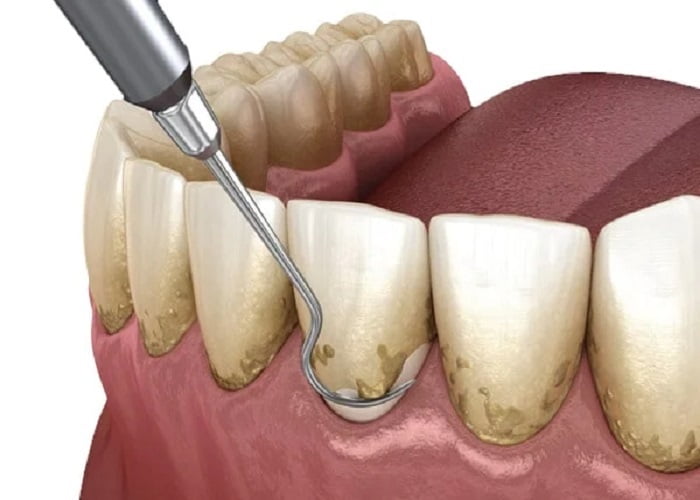
Scaling and root planing is a treatment for periodontitis — active gum disease that has progressed to measurable bone loss around the teeth. It cleans hardened tartar from the root surfaces below the gumline, which a regular cleaning cannot reach. According to the American Academy of Periodontology, SRP is the appropriate non-surgical treatment for periodontitis, not for healthy gums or mild gingivitis.
So the entire question of whether you "really need a deep cleaning" is the same as the question: do you actually have periodontitis with bone loss, or do you have gingivitis? That is not a matter of opinion. It has objective diagnostic criteria that can be checked from your records. Our companion guide, do I really need a deep cleaning, walks through the clinical thresholds in more depth.
What an Independent Dentist Actually Checks
When a reviewing dentist evaluates a deep-cleaning recommendation, they are looking for three specific things — the same evidence a diagnosis of periodontitis requires.
1. Does the periodontal chart show pockets of 4mm or deeper with bleeding?
Healthy gums measure 1 to 3mm between the gum and the tooth. A perio chart records six measurements per tooth. Pockets of 4mm or more that bleed on probing are part of the clinical picture of periodontitis. If your chart is mostly 2s and 3s with only occasional bleeding, that points toward gingivitis and a regular cleaning — not full-mouth SRP.
2. Is there real bone loss on the X-rays?
Periodontitis is defined by bone loss. On X-rays, the bone level should sit just below the point where the enamel meets the root (the cementoenamel junction). If the bone has receded well below that line, periodontitis is confirmed and SRP is reasonable. If the bone level looks normal, the diagnosis does not hold up, no matter what the pockets suggest.
3. Is the disease localized or genuinely full-mouth?
This is where a lot of money is at stake. Even when true periodontitis is present, it is often confined to a few teeth or a single quadrant. SRP is billed by quadrant, so the reviewing dentist checks whether the evidence supports treating all four quadrants or only the areas that are actually affected.
A treatment plan review puts these three checks side by side with what you were actually charged for, so any gap between the diagnosis and the plan becomes obvious.
The Biggest Overbilling Pattern to Watch For
The single most common problem is full-mouth, four-quadrant SRP billed when the disease is localized to one area — or absent entirely. Charging four quadrants of scaling and root planing when only one quadrant shows genuine periodontitis can multiply the bill several times over, and it also enrolls you in ongoing periodontal maintenance visits (usually every three to four months) for years afterward, instead of standard six-month cleanings.
The second pattern is a deep cleaning recommended on a first visit at a new practice, with no perio chart shown and no clear X-ray evidence of bone loss. Genuine periodontitis develops over years, not in the gap between two appointments. If a new dentist diagnoses it the same day a previous dentist had you healthy, that is a classic reason to verify before proceeding.
These are not fringe concerns. Aggressive SRP billing is well documented, and the pattern shows up alongside the other warning signs in our guides on red flags of unnecessary dental work and how to tell if your dentist is overcharging you. Being told your gums are diseased when you feel fine is unsettling; our piece on what to do when a dentist says you have gum disease covers how to respond calmly.
When Scaling and Root Planing IS Genuinely Needed
A second opinion is not about assuming the worst of your dentist. Plenty of deep-cleaning recommendations are entirely correct, and skipping a needed one lets gum disease progress toward loose teeth and tooth loss.
SRP is genuinely warranted when the records show pockets of 4mm or deeper with bleeding on probing, clear bone loss on X-rays, heavy tartar below the gumline, or a documented history of periodontitis with signs of recurrence. When all of that is present, a reviewing dentist will tell you plainly that the recommendation is sound — which is its own kind of relief. The goal is a correct decision, not a cheaper one.
How a toothcheck Deep Cleaning Second Opinion Works
You do not need a second in-person exam. You use the records you already have.
1. Upload your most recent X-rays (bitewings and any full-mouth films), a photo or copy of your periodontal pocket chart, and the treatment plan or estimate you were given. You are entitled to all of these under your HIPAA right to access your records, and your office must provide them on request. 2. A licensed independent dentist reviews whether your chart and X-rays actually support a periodontitis diagnosis, and whether the number of quadrants recommended matches the evidence. 3. You receive a written, plain-English report in under 72 hours explaining what the records show, whether the deep cleaning appears necessary, and what questions to bring back to your dentist.
Because the review is independent, the reviewing dentist has no financial stake in whether you get the procedure. Their only job is to tell you what the evidence supports.
Is a $59 Second Opinion Worth It?
A full-mouth deep cleaning typically runs $800 to $1,500 or more out of pocket, and it rarely ends there. A periodontitis diagnosis usually converts your routine cleanings into periodontal maintenance visits several times a year, indefinitely — so an unnecessary diagnosis can cost far more over time than the cleaning itself. You can sanity-check any quote against a neutral reference like FAIR Health and against our deep cleaning cost breakdown.
Against that, a flat $59 to confirm whether the whole thing is warranted is a small, one-time cost. If the review confirms you need SRP, you proceed with confidence. If it finds a regular cleaning would do, the report has more than paid for itself — many times over.
FAQ
Can a dentist tell if I need a deep cleaning from my existing records? Yes. Periodontitis has objective criteria — pocket depths of 4mm or deeper with bleeding, and bone loss on X-rays. A reviewing dentist can assess those from your perio chart and radiographs without a new in-person exam.
What if my dentist did not show me a perio chart? That is itself a reason to pause. A deep cleaning is a treatment for a diagnosis that requires measurements. Ask for your perio chart and X-rays in writing; you have the right to them, and a second opinion cannot be done well without them.
Is a deep cleaning ever recommended when it is not needed? It is one of the most over-recommended procedures in dentistry, most often as full-mouth SRP when disease is localized or absent, or as a first-visit recommendation with no supporting chart. That does not mean every recommendation is wrong — only that verifying is reasonable.
Will getting a second opinion delay treatment I actually need? No. Turnaround is under 72 hours. Periodontitis progresses over months and years, so a few days to confirm the diagnosis will not change the outcome, and it protects you from starting treatment you do not need.
What is the difference between a deep cleaning and a regular cleaning? A regular cleaning treats healthy gums and gingivitis above and at the gumline. A deep cleaning (scaling and root planing) treats periodontitis by cleaning the root surfaces below the gumline, and is only appropriate when there is bone loss.
Do I have to leave my current dentist to get a second opinion? No. An online second opinion is a private, independent review. You keep your dentist, and you walk back in better informed about what to accept, question, or decline.
Final Advice
If you were told you need a deep cleaning and something feels off — no chart, no X-ray evidence, a sudden diagnosis after years of clean checkups, or all four quadrants at once — trust that instinct enough to check. A deep cleaning is worth doing when the evidence supports it, and worth questioning when it does not.
Gather three things: your X-rays, your periodontal pocket chart, and the treatment plan you were quoted. Upload them for a second opinion dentist to review and get a written, plain-English answer in under 72 hours for a flat $59 — before you say yes to a procedure that can shape your dental bills for years.
Last medically reviewed: July 2026