Do I Really Need a Deep Cleaning?
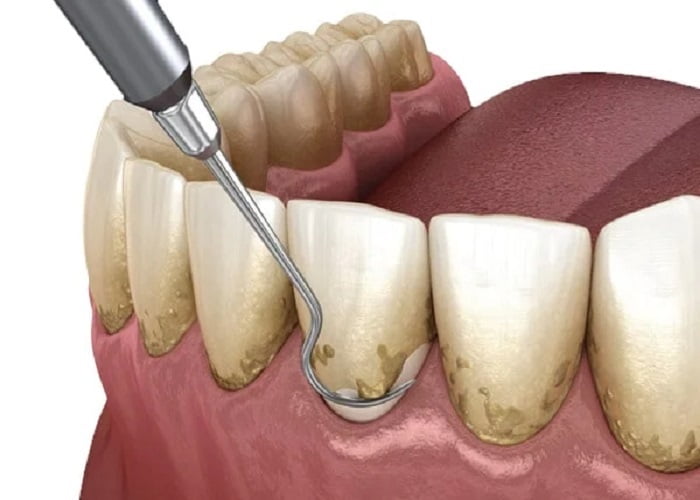
Learn when a deep cleaning (scaling and root planing) is truly necessary versus when a regular cleaning is enough. Avoid one of the most over-recommended procedures in dentistry.
Reviewed by the toothcheck Dental Team Independent dentist providing online second opinions.
If your dentist suddenly recommended a "deep cleaning" — especially after years of routine cleanings at a previous practice — you're right to pause and ask whether it's really needed.
Deep cleaning (clinically called scaling and root planing, or SRP) is one of the most over-recommended procedures in dentistry. According to the American Academy of Periodontology, scaling and root planing is a treatment for periodontitis — active gum disease with measurable bone loss — and is not appropriate for healthy gums or mild gingivitis.
The line between "needs a regular cleaning" and "needs a deep cleaning" is exactly where dentists disagree most, and where over-diagnosis is most common.
This guide explains exactly when a deep cleaning is medically necessary, when a regular cleaning is enough, and how to know if you should get a second opinion before agreeing to a $1,000+ procedure.
If your dentist recommended this treatment and you're unsure, an online dental second opinion can review your perio chart and X-rays and tell you with confidence whether you actually need it.
Quick Answer: You Only Need a Deep Cleaning When You Have Active Gum Disease With Bone Loss
A deep cleaning may be necessary when you have:
- Periodontal pockets of 4mm or deeper, with bleeding on probing
- Visible bone loss on X-rays
- Heavy calculus (tartar) below the gumline
- A diagnosis of periodontitis (not just gingivitis)
- Persistent bleeding gums that haven't responded to home care and a regular cleaning
A deep cleaning is NOT needed for:
- Mild bleeding when you brush or floss
- Pockets of 3mm or less
- Tartar that's only above the gumline
- Gingivitis without bone loss
- A first visit at a new dentist after years of clean checkups elsewhere
- "Just to be safe" or preventive reasons
If a previous dentist consistently cleared you with a regular cleaning and a new dentist suddenly says you need a deep cleaning, that is a strong signal to get a second opinion.
What a Deep Cleaning Actually Is — and Why It Costs So Much
A "deep cleaning" is two procedures, billed under two separate codes:
- D4341 — Scaling and root planing, four or more teeth per quadrant (~$250–400 per quadrant)
- D4342 — Scaling and root planing, one to three teeth per quadrant (~$150–250 per quadrant)
A full-mouth deep cleaning typically runs $800 to $1,500 out of pocket, and often more without insurance. Insurance generally covers SRP only when periodontitis is documented in the chart — which is part of why some practices over-diagnose.
A regular cleaning (D1110, "adult prophylaxis") costs $80–200 and is what's appropriate for healthy gums or simple gingivitis. For more on dental procedure costs, see our dental second opinion cost guide.
When a Deep Cleaning IS Actually Necessary
1. Documented Periodontal Pockets of 4mm or Deeper
Healthy gums have pockets of 1–3mm between the gum and tooth. Pockets of 4mm or more — especially if they bleed when probed — are part of the clinical definition of periodontitis.
Your dentist or hygienist should have a perio chart showing six pocket measurements per tooth. Ask to see it.
2. Bone Loss Visible on X-Rays
Periodontitis is defined by bone loss around the teeth. If your X-rays show the bone has receded below the normal level (the cementoenamel junction, or CEJ), you have periodontitis and a deep cleaning is appropriate.
If there is no bone loss on X-ray, it is gingivitis — and that is treated with a regular cleaning, not a deep cleaning.
3. Heavy Calculus Below the Gumline
Hardened tartar deep below the gumline cannot be removed with a regular cleaning. If your dentist can show you the buildup on X-rays or intraoral photos, the recommendation is clinically reasonable.
4. Bleeding on Probing With Active Disease
Bleeding alone isn't enough to diagnose periodontitis — but bleeding combined with deep pockets and bone loss is the standard clinical picture.
5. A Documented History of Gum Disease
If you've had periodontitis before and have signs of recurrence, periodic deep cleanings — sometimes called "perio maintenance" (D4910) — may be appropriate.
When a Deep Cleaning Is NOT Needed — Common Overdiagnoses
These are the most common reasons a deep cleaning is wrongly recommended:
1. Pockets of 3mm or Less
This is healthy. SRP is not appropriate for pockets in the normal range.
2. Mild Gingivitis (Bleeding Without Bone Loss)
Gingivitis is reversible with a regular cleaning and improved home care. SRP is overkill.
3. Tartar Above the Gumline Only
Above-the-gumline calculus is exactly what a regular cleaning is designed to remove.
4. "Borderline" Cases at a New Dentist
If you have had healthy gums for years and a new dentist suddenly diagnoses periodontitis, ask to see the perio chart and X-rays. Genuine periodontitis develops over years, not between two appointments.
5. "Preventive" Deep Cleanings
A deep cleaning is a treatment for active disease. It is not a preventive measure for healthy gums.
6. Full-Mouth SRP When Only One Quadrant Is Affected
If only one area shows pockets and bone loss, only that area needs SRP. Full-mouth SRP for localized disease inflates the bill.
7. Recommendations Without a Perio Chart or X-Rays
Periodontitis has objective diagnostic criteria. If a dentist recommends a deep cleaning without showing you measurements and X-rays, that is a red flag.
How a Real Periodontitis Diagnosis Should Look
A legitimate deep cleaning recommendation has all three of the following:
1. Perio chart showing pockets ≥4mm with bleeding on probing 2. X-rays showing bone loss below the cementoenamel junction (CEJ) 3. Visible subgingival calculus on examination or photos
If your dentist can show you all three, the recommendation is well-founded. If they can show you none, ask why.
Why Deep Cleanings Are Commonly Overdiagnosed
Three structural reasons:
1. Insurance Reimbursement
Many insurers will only cover periodontal codes (D4341/D4342) if periodontitis is documented in the chart. Some practices code aggressively to capture the higher reimbursement.
2. Production Goals
Corporate-owned and high-volume practices sometimes have hygienist production targets. Deep cleanings have higher per-visit revenue than regular cleanings.
3. Misclassifying Gingivitis as Periodontitis
The diagnostic line between gingivitis (no bone loss) and stage 1 periodontitis (slight bone loss) is genuinely subjective on borderline cases. Some dentists default to the more aggressive diagnosis.
This pattern is well-documented enough that the US Department of Justice has prosecuted dental chains for fraudulent SRP billing. You are not being paranoid to ask questions.
Common Signs the Recommendation May Be Unnecessary
- The dentist did not show you a perio chart
- You have not seen X-rays demonstrating bone loss
- A previous dentist consistently cleared you with regular cleanings
- The recommendation came at a first visit at a new practice
- You were told you need full-mouth SRP without quadrant-specific findings
- The treatment was bundled with a long list of other expensive procedures
- You felt pressured to schedule the same day
These are the same red flags that show up across the rest of dentistry. See our full guide on 12 Red Flags of Unnecessary Dental Work for the broader picture.
What Are the Alternatives?
Most patients who are wrongly recommended a deep cleaning need one of these instead:
A regular cleaning (prophy, D1110) — Right answer for healthy gums or mild gingivitis. Same cleaning you have had every six months.
Localized SRP on a single quadrant — If only one area has true periodontitis, treat only that area.
Improved home care + 3-month re-evaluation — For early gingivitis, better brushing and flossing and a recheck in three months often resolves the issue without any procedure.
Periodontal maintenance (D4910) — For patients with prior periodontitis who are now stable, this is the appropriate ongoing code, not full SRP every visit.
When You Should Get a Second Opinion
Always get another evaluation when:
- You have been told you need a deep cleaning at a first visit at a new dentist
- Your previous dentist never mentioned gum disease
- You were not shown the perio chart or X-rays
- The full quoted cost is over $1,000
- You feel pressured to schedule immediately
- You have no symptoms — no bleeding, no bad breath, no pain
A deep cleaning is irreversible in the financial sense: once billed, you have paid for treatment you may not have needed. Reviewing the case before agreeing is reasonable and smart.
For more on why an independent review matters, see The Importance of an Unbiased Second Opinion Dentist.
How an Online Second Opinion Helps
At toothcheck, an experienced dentist can review your:
- Perio chart (the six-point pocket measurements)
- X-rays
- Treatment plan
- Symptoms
You receive:
- A clear yes/no on whether SRP is justified
- An explanation of what your perio chart actually shows
- Recommended alternative treatment if SRP is not warranted
- A confidence score
Most reviews are returned in under 72 hours.
FAQ
Is a deep cleaning the same as a regular cleaning?
No. A regular cleaning (prophy) removes plaque and tartar above the gumline for healthy gums. A deep cleaning (SRP) treats active periodontitis by cleaning below the gumline and smoothing root surfaces.
Can I just refuse and stick with a regular cleaning?
If you genuinely have periodontitis, refusing treatment will let it progress and eventually cause tooth loss. If you do not have periodontitis, a regular cleaning is the correct treatment. The question is not whether to refuse — it is whether the diagnosis is correct.
How much does a deep cleaning cost?
Typically $800–1,500 for full-mouth out of pocket. Per quadrant: $250–400 (D4341) or $150–250 (D4342).
Why does the new dentist say I need it but my old dentist didn't?
Possible reasons: (1) your gums genuinely got worse, (2) the new dentist uses different diagnostic criteria, (3) the new practice is more aggressive in coding for periodontal procedures. A second opinion can sort out which.
Will my insurance cover a deep cleaning?
Most plans cover SRP only when periodontitis is documented (pockets ≥4mm, bleeding on probing, bone loss). If your case is borderline, your insurance may deny — and you will pay full price.
Is bleeding when I brush enough to need a deep cleaning?
No. Bleeding is a sign of gingivitis or periodontitis, but the distinction matters. Without deep pockets and bone loss, a regular cleaning plus better home care is the right treatment.
What is the difference between SRP and perio maintenance?
SRP (D4341/D4342) is the initial treatment for active periodontitis. Perio maintenance (D4910) is the ongoing cleaning for patients who have been treated for periodontitis and are now stable.
Final Advice: Don't Pay for a Deep Cleaning Without Seeing the Evidence
A real deep cleaning recommendation comes with a perio chart, X-rays, and a clear clinical picture. If your dentist has not shown you those, ask to see them — and if the recommendation still does not add up, get an independent review before you pay.
Upload your perio chart, X-rays, and treatment plan at toothcheck. Get a verified second opinion from an independent dentist in under 72 hours.
A clear answer can save you over $1,000 — and save you from a procedure you did not need.
Still unsure about other procedures? Read Do I Really Need a Filling? or our complete second opinion guide.
Need clarity about your dental diagnosis?
Upload your perio chart and X-rays to toothcheck and get a verified second opinion in under 72 hours.
Last medically reviewed: May 2026