Dental Occlusion Explained: Class I, II, III and Why Your Bite Matters
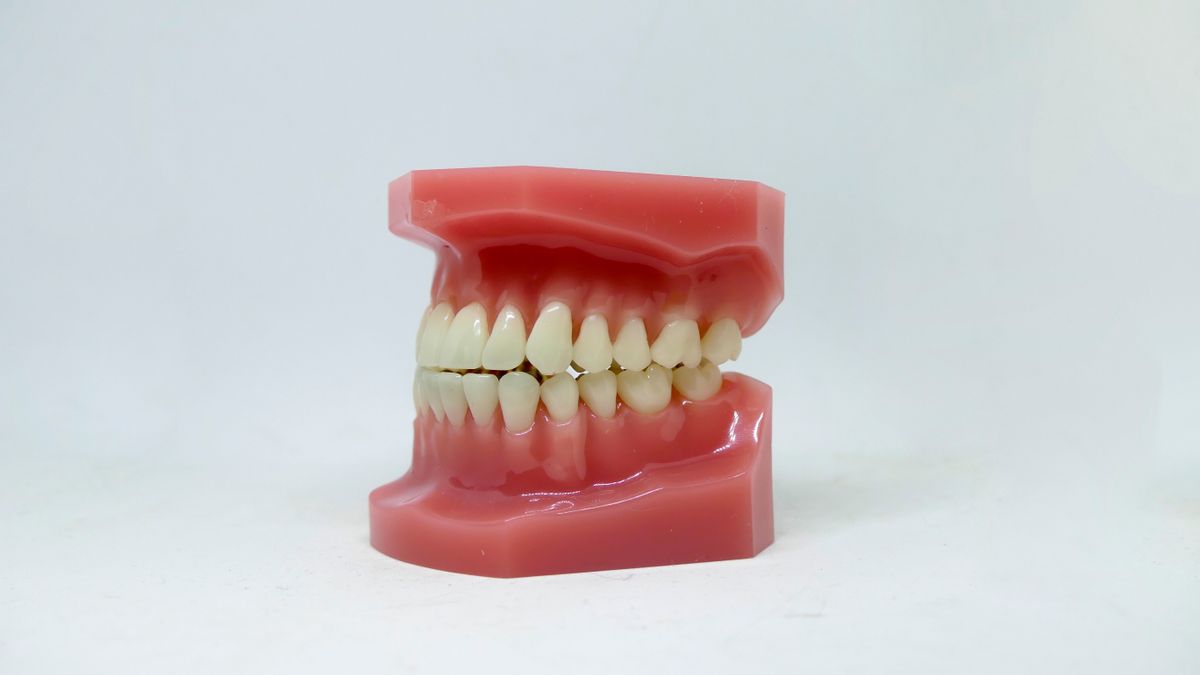
Dental occlusion explained: what Angle Class I, II and III mean, how your bite affects wear, chewing and jaw comfort, and when treatment is worth it.
Reviewed by the toothcheck Dental Team Independent dentist providing online second opinions.
Occlusion is the dental term for how your upper and lower teeth meet. It sounds like a minor technical detail, but it governs where chewing forces land, how your teeth wear over decades, and how much strain your jaw muscles carry. When a dentist or orthodontist says you have a "Class II" or "Class III" bite, they are using a classification system that has been in use for more than a century.
That label is a description, not a diagnosis of disease. Plenty of people with a Class II or Class III relationship chew comfortably and keep their teeth for life, while others with a technically normal bite have problems. This guide explains what the classes actually measure, what a healthy bite does for you, and how to tell a variation from something that needs treatment.
Quick Answer
Dental occlusion describes how your upper and lower teeth fit together. Angle's classification sorts the front-to-back molar relationship into Class I (normal), Class II (lower jaw or teeth sit behind the upper) and Class III (lower jaw or teeth sit ahead of the upper). A good bite spreads chewing force evenly and is easier to keep clean, but many mild malocclusions are harmless and do not need treatment.
How Angle's classification works
In the 1890s, Edward Angle proposed using the first permanent molars as the reference point, because they are among the most stable teeth in the mouth. The question he asked is simple: where does the upper first molar sit relative to the lower first molar?
In an ideal relationship, the mesiobuccal cusp (the front, cheek-side cusp) of the upper first molar sits in the buccal groove of the lower first molar. The upper canine also sits slightly behind the lower canine, in the gap between the lower canine and first premolar. That is Class I.
Classes II and III describe what happens when the upper and lower arches are shifted out of that relationship. The shift can come from the position of the teeth, from the size or position of the jawbones, or from both.
| Class | Molar relationship | Typical look | Common features |
|---|---|---|---|
| Class I | Upper first molar cusp sits in the groove of the lower first molar | Normal profile | Bite is front-to-back normal, but crowding, spacing or rotations can still exist |
| Class II | Lower molar sits behind the normal position (upper is forward) | Prominent upper front teeth, receding chin | Large overjet; division 1 has protruding upper incisors, division 2 has tilted-back upper incisors with a deep bite |
| Class III | Lower molar sits ahead of the normal position | Lower jaw looks forward, flat or concave profile | Edge-to-edge or reversed bite of front teeth, often called an underbite |
Class I: normal does not mean straight
Class I describes only the front-to-back fit of the molars and canines. It says nothing about whether the teeth are crowded, gapped or rotated. Many people who seek braces or aligners have a Class I jaw relationship and crooked teeth within it. These cases are often the simplest to treat because the arches already line up, and the job is mostly to arrange the teeth within them.
A Class I bite can also have problems in the other two dimensions. A crossbite means some upper teeth bite inside the lower teeth. An open bite leaves a gap between upper and lower front teeth when the back teeth are closed. A deep bite means the upper front teeth cover too much of the lower ones vertically. None of these change the Class I label.
Class II: the upper jaw looks forward or the lower sits back
Class II is the pattern most people mean when they say "overbite", though that word is used loosely. Strictly, overjet is the horizontal distance between the upper and lower front teeth, and overbite is the vertical overlap. A Class II relationship usually comes with an increased overjet.
The cause is often a lower jaw that is small or set back (retrognathic mandible), sometimes an upper jaw that is forward, and sometimes a combination. Habits such as prolonged thumb sucking can push the upper front teeth forward in childhood, but the underlying jaw pattern is largely inherited.
Class II is divided into two subtypes. Division 1 has protruding upper incisors. Division 2 has upper incisors that tilt backward, usually with a deep bite, and the upper lateral incisors may flare out.
Prominent upper front teeth carry one real practical risk: they are more exposed to injury, and large overjets are associated with a higher rate of front-tooth trauma in children and teenagers. Otherwise, a moderate Class II is mainly an aesthetic and bite-function question.
Class III: the lower jaw sits forward
In Class III, the lower first molar sits ahead of where it should be relative to the upper. The result is an underbite or an edge-to-edge bite at the front. It can be skeletal (a larger or more forward lower jaw, or an underdeveloped upper jaw) or dental (the front teeth tilt in a way that reverses the bite while the jaws are fine).
Class III is less common than Class II in most populations, and the frequency varies considerably between ethnic groups. This distinction between skeletal and dental matters, because a purely dental Class III can sometimes be corrected with tooth movement alone, while a significant skeletal one in an adult may need jaw surgery to fully correct.
When the problem is skeletal and a child is still growing, orthodontists sometimes intervene early with appliances that influence growth of the upper jaw. In a fully grown adult those options are gone, which is why timing matters for the more severe cases.
Why your bite matters
A well-balanced bite does several practical things.
- Distributes force. Teeth are built to take load along their long axis. When upper and lower teeth meet evenly, the force of chewing is shared across many teeth. When it is concentrated on a few, those teeth are more likely to chip, crack, wear down or loosen over time.
- Chews efficiently. Back teeth grind and front teeth shear. If few teeth touch, food is broken down less well, and people tend to compensate by chewing on one side.
- Limits abnormal wear. Teeth that strike each other in the wrong places can wear flat or develop notches at the gumline, particularly in people who also grind at night.
- Reduces muscle strain. Jaw muscles work harder when the bite does not settle into a stable position. This can contribute to tiredness or tension, although it is rarely the only cause of jaw pain.
- Makes cleaning easier. Crowded or overlapping teeth trap plaque. Deep bites can cause the lower front teeth to bite into the gum behind the upper ones, which can cause local inflammation.
The relationship between bite and temporomandibular joint (TMJ) disorders deserves caution. Large reviews have not found that a particular malocclusion reliably causes TMJ pain, and correcting the bite is not a dependable cure for it. If you have jaw pain, a dentist should look at muscles, joint, habits and stress as well as tooth contact.
When a bite does not need treatment
Most people have some degree of malocclusion. A mild Class II or III relationship, slight crowding or a small overjet that causes no wear, no pain, no gum damage and no difficulty chewing is a normal variation. Many orthodontic treatments are chosen mainly for appearance, which is a perfectly valid reason, but it is a different decision from treating a problem that will get worse.
Signs that a bite may deserve a closer look include:
- Teeth wearing down or chipping in a pattern that follows the bite
- Lower front teeth biting into the gums behind the upper teeth
- Front teeth that stick out far enough to be repeatedly injured
- Regular difficulty biting or chewing certain foods
- Persistent jaw pain, clicking with pain, or limited opening
- A bite that has changed noticeably over a short time
Severity also matters. Moderate Class II cases are often managed with braces or aligners, sometimes with elastics, and sometimes with the removal of premolars. Severe skeletal discrepancies in adults can need surgical correction. If you want to compare appliance options, our guides to clear aligners vs braces and whether you really need braces or Invisalign cover the trade-offs, including which bite problems aligners handle less predictably.
Who decides, and how to evaluate a plan
Diagnosing a malocclusion properly takes more than looking at the teeth. An orthodontist will usually examine your bite, take photographs and impressions or digital scans, and often take a panoramic X-ray and a lateral cephalometric X-ray (a side-profile image of the skull) to separate a skeletal problem from a dental one. That distinction drives the plan.
Orthodontic treatment is a long, costly commitment, and treatment philosophies differ. Some clinicians extract teeth where others expand the arch, and some recommend surgery where others would camouflage with braces. It is reasonable to ask why a particular approach was chosen, how long it will take, what the retention plan is, and what happens if you decline. The American Association of Orthodontists (https://aaoinfo.org/) and the American Dental Association's patient site (https://www.mouthhealthy.org/) both publish plain-language guidance on bite problems and choosing a provider.
FAQ
What is dental occlusion? It is the way your upper and lower teeth meet when you close your mouth and when you chew. It includes the static contact pattern and how the teeth glide against each other as your jaw moves.
Is Class I occlusion the same as perfectly straight teeth? No. Class I describes only the front-to-back relationship of the first molars and canines. You can have a Class I bite with crowding, spacing, rotations, a crossbite or an open bite.
Does a Class II or Class III bite always need treatment? No. Mild relationships are common and often cause no symptoms. Treatment is usually recommended for functional trouble such as abnormal wear, gum or tooth trauma, difficulty chewing or significant jaw discomfort, or when the patient wants a change in appearance.
Can a bad bite cause jaw pain or TMJ problems? It can contribute, but the link is weaker than many people assume. Clenching, stress, joint conditions and muscle overload all play a role, and correcting the bite does not reliably cure jaw pain.
Can adults fix a Class II or Class III bite? Often yes. Adults have finished growing, so treatment relies on moving teeth, sometimes with extractions or elastics, and in severe skeletal cases may involve jaw surgery.
Final Takeaway
Your bite class is a measurement, not a verdict. Class I, II and III describe how your jaws and molars line up, and what matters is whether your particular bite is causing wear, injury, gum damage or difficulty chewing, or whether it simply bothers you cosmetically. If you have been given a large orthodontic plan and are unsure about it, a second opinion is a reasonable step; toothcheck offers an online dental second opinion where a licensed dentist reviews your X-rays and treatment plan for a flat 59 dollars.
Last medically reviewed: October 2026