Dental X-Ray Second Opinion: An Independent Read
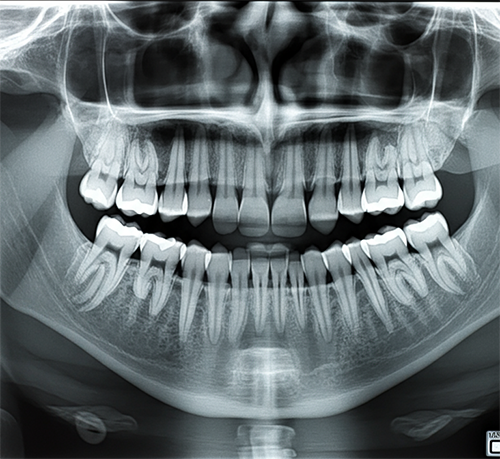
Every dental treatment recommendation rests on X-ray interpretation. Here's what dental X-rays actually show, the most common misreads, and how to get an independent dentist to review yours.
Reviewed by the toothcheck Dental Team Independent dentist providing online second opinions.
Every dental treatment recommendation — root canal, crown, filling, deep cleaning, implant, extraction — rests on the interpretation of your X-rays. If the interpretation is wrong, every recommendation that follows is wrong.
But X-ray interpretation is also the most subjective part of dentistry. Two qualified dentists looking at the same X-ray can reach genuinely different conclusions. According to the American Dental Association, dental imaging should be ordered and interpreted in the context of clinical findings and patient risk — not in isolation.
This guide explains what dental X-rays actually show (and don't), the most common ways they are misinterpreted, how to get an independent dentist to review yours without an in-person visit, and exactly when an X-ray second opinion is worth getting.
For a deeper, annotated walk-through of how a dentist actually reads each finding — caries, bone loss, periapical lesions, fractures, impactions — see our dental X-ray reading guide. If you have X-rays and want an independent dentist to read them line by finding, our dental X-ray review service returns a written report in under 72 hours.
Quick Answer: Yes — You Can Get a Dentist to Independently Review Your X-Rays Without a Second Office Visit
An online dental X-ray second opinion is appropriate when:
- You have a recent X-ray (under 12 months old)
- The X-ray is reasonable quality (in focus, full tooth visible, correct angle)
- You also have a treatment plan or symptoms to interpret in context
- You have not had recent in-person physical examination findings beyond the X-ray (or you have notes from one)
It is not appropriate as a standalone replacement for in-person care when:
- You have an active dental emergency requiring physical examination
- The X-ray is older than 12 months and your symptoms have changed
- A definitive diagnosis requires physical tests (palpation, percussion, periodontal probing)
In those cases, the reviewing dentist will tell you so and direct you to in-person care.
Why an X-Ray Second Opinion Matters More Than You Think
The diagnostic chain in dentistry runs:
X-ray → interpretation → diagnosis → treatment plan → procedure → cost
If interpretation is wrong, every step downstream is wrong too. Patients who get second opinions on their treatment plans often discover the issue is not the recommended procedure — it is the X-ray reading that led to the recommendation.
A genuine apical infection on an X-ray justifies a root canal. A normal anatomical shadow does not. The treatment cost is the same. The medical necessity is not.
Types of Dental X-Rays and What Each Shows
Bitewing X-Ray
Used at most routine cleaning visits. Shows the crowns of upper and lower back teeth and the bone level between them.
Best for: detecting decay between teeth, evaluating fillings, checking for early bone loss.
Limited for: anything below the gumline, root tips, abscesses.
Periapical X-Ray (PA)
Shows the entire tooth from crown to root tip plus the surrounding bone.
Best for: detecting root infections (apical periodontitis), evaluating root canal results, looking at root anatomy.
Limited for: side-by-side comparison of multiple teeth in a row.
Panoramic X-Ray (Pano)
A single image of the entire jaw.
Best for: wisdom tooth evaluation, big-picture orthodontic planning, identifying jaw cysts or pathology.
Limited for: detailed cavity diagnosis (resolution is too low; bitewings are needed for that).
Cone Beam CT (CBCT)
A 3D scan typically used before implant placement, complex extractions, or unclear endodontic cases.
Best for: implant planning, complex root anatomy, assessing fractures, sinus relationships.
Limited for: routine cavity diagnosis (overkill and unnecessary radiation).
The right second-opinion review depends on which X-rays you have. Most diagnostic disputes can be resolved with bitewings plus periapicals. Implant cases generally need CBCT.
What Dental X-Rays Actually Show (And Don't)
X-rays show what is dense (bone, teeth, fillings) in shades of gray. Denser things appear lighter. Air, soft tissue, and decay appear darker.
X-rays show:
- Decay — as darker areas in the tooth
- Bone loss — by comparing where the bone level should be vs. where it is
- Apical infection — as a dark "halo" at the root tip
- Existing fillings, crowns, root canals — as bright white shapes (metal) or distinct outlines (composite)
- Cysts and pathology — as well-defined dark areas in the bone
X-rays do NOT reliably show:
- Hairline cracks in teeth (often invisible)
- Soft-tissue inflammation (gum disease without bone loss)
- Pulp inflammation before it has caused bone changes
- Vitality of the tooth nerve (whether it is alive or dead — that needs a separate test)
- Pain or sensitivity (those are clinical, not radiographic)
Confusing what an X-ray cannot show with what it does show is one of the most common sources of misinterpretation.
The 5 Most Common X-Ray Misinterpretations
1. Shadow at Root Tip = Infection (Often Wrong)
A clearly defined dark halo at the root tip is consistent with apical periodontitis. But that is not the only thing that can produce a dark area there:
- Mental foramen (a normal anatomical opening near the lower premolars)
- Nasopalatine canal (between the upper front teeth)
- Maxillary sinus (above the upper back teeth — frequently mistaken for an abscess)
- Imaging artifacts and angulation issues
Misreading anatomical shadows as infections is one of the most common reasons for unnecessary root canal recommendations. See Do I Really Need a Root Canal? for context.
2. Dark Area Under a Filling = Recurrent Decay (Often Artifact)
The transition between a filling and tooth structure can produce a dark line on X-ray that looks like decay. Sometimes it is. Often it is just the normal radiographic appearance of a sound restoration interface.
Genuine recurrent decay is usually accompanied by clinical signs — sensitivity, soft tissue around the filling margin, or visible breakdown.
3. Bone Curvature = Bone Loss (Often Anatomical)
Periodontal bone loss is real and serious. But normal anatomical variation in bone height between teeth is not the same as disease. The clinical perio chart (pocket depths and bleeding on probing) must match the X-ray for a true periodontitis diagnosis. See Do I Really Need a Deep Cleaning?.
4. Stained Grooves = Cavity (Often Color, Not Decay)
The dark color in molar grooves on X-rays often shows what was already visible on examination — which may be old stain, not active decay. Genuine cavity diagnosis combines radiographic evidence with clinical examination findings. See My Dentist Found Multiple Cavities — Is That Normal?.
5. Dark Spot in Tooth = Cavity (Sometimes Normal Anatomy)
The pulp chamber is naturally dark on X-ray. So is the natural enamel-dentin junction. Both can be misread as decay by an inexperienced or rushed reader.
What an X-Ray Second Opinion Includes
A complete X-ray review covers:
- Tooth-by-tooth assessment of each finding
- Distinction between definitive findings, ambiguous findings, and likely artifacts
- Comparison with prior X-rays if available
- Whether the X-rays support the proposed treatment plan
- Whether additional imaging is needed before treatment
- Recommended next steps (treat, monitor, or further evaluate)
- A confidence score for each finding
It is not a yes-or-no rubber stamp. The reviewing dentist explains what the imaging shows in plain language so you can make an informed decision.
How to Get Your X-Rays From Your Dentist
Under HIPAA, you have a legal right to copies of your dental records and X-rays. To request:
1. Ask the front desk for "a copy of my dental X-rays and records." A written request is best. 2. Specify electronic copies if possible — most clinics can email or share via patient portal. 3. Acceptable file formats include JPEG, PNG, PDF, or DICOM. 4. The clinic must respond within 30 days under HIPAA, though most provide records within a week.
If your clinic is reluctant or charges an unreasonable fee, you can file a complaint with the HHS Office for Civil Rights. In practice, most clinics provide records on request.
When You Should Get an X-Ray Second Opinion
An X-ray second opinion is most valuable when:
- A treatment over $500 has been recommended
- The recommendation is for an irreversible procedure (root canal, crown, extraction, implant)
- You have no symptoms, but the X-ray supposedly shows a problem
- A new dentist is recommending substantially different treatment than your previous one
- You want to understand what your X-ray actually shows
- You are about to undergo dental work abroad — see Dental Work in Mexico: A Dentist's Guide
It is less essential for:
- Simple, single fillings under $300
- Routine cleanings
- Cosmetic procedures with no underlying disease
How toothcheck Reviews X-Rays
You upload your X-rays through a secure form. We accept:
- JPEG, PNG, or PDF (most common)
- DICOM (3D CBCT scans)
- Multiple X-rays per submission
Along with the imaging, we recommend you upload:
- The treatment plan from your dentist (if any)
- Photos of the affected teeth (optional)
- A description of any symptoms
A US-licensed dentist reviews and returns:
- A written tooth-by-tooth assessment
- Whether the X-rays support the proposed treatment
- Alternative interpretations of any ambiguous findings
- A confidence score
- Recommended next steps
Most reviews are returned in under 72 hours.
FAQ
Do I need to be in the same state as the reviewing dentist?
No. The review is an independent radiographic and treatment-plan opinion, not a diagnostic exam under a doctor-patient relationship requiring jurisdiction. The reviewing dentist explains what your X-rays show; your in-person dentist remains the treating clinician.
How recent do my X-rays need to be?
Generally under 12 months for routine review, under 6 months if you have changed symptoms.
What if my X-rays are low quality?
We can usually still review them, but a low-quality X-ray limits what can be said with confidence. The review will note this. Sometimes the recommendation is to obtain new X-rays before any major treatment decision.
Can the reviewing dentist see all the same things as my regular dentist?
For X-ray interpretation, yes. For physical findings (palpation, percussion, sensitivity tests), no — those require in-person care. A good X-ray second opinion combines what the imaging shows with what your symptoms and treating dentist's notes describe.
Will the reviewing dentist contact my regular dentist?
Only at your request. Most patients use the second opinion to inform their own conversation with their treating dentist.
Is an online X-ray second opinion as accurate as an in-person one?
For X-ray interpretation, comparable. The reviewing dentist sees the same images your local dentist sees. For diagnoses that require physical examination, an in-person opinion is sometimes needed — and the reviewing dentist will tell you when.
How much radiation is in dental X-rays?
A full set of bitewings is about the same as 2 days of natural background radiation. Modern digital X-rays use about 70% less radiation than film. Concerns about routine dental X-ray frequency are reasonable to discuss with your dentist; concerns about a single set are generally not warranted.
What if my dentist won't release my X-rays?
You have a legal right under HIPAA. File a written request. If still denied, file a complaint with HHS Office for Civil Rights.
Final Advice: The X-Ray Is the Foundation — Get the Foundation Right
Every dental treatment recommendation starts with X-ray interpretation. If you have any doubt about whether the imaging supports the proposed treatment, an independent review is the cheapest way to resolve it.
Upload your X-rays for an independent dental X-ray review and get a written, finding-by-finding report from a licensed dentist in under 72 hours.
A clear answer can save you thousands of dollars — and save you from procedures based on misread imaging.
Have an X-ray you want reviewed?
Upload your dental X-rays for a second opinion along with your treatment plan and get a verified answer in under 72 hours.
Last medically reviewed: May 2026