Tooth Abscess: Symptoms and When It Is an Emergency
What a tooth abscess is, when it's a true emergency versus when you can wait, how it's actually treated, and when antibiotics help (and when they don't). Dentist-reviewed.
Reviewed by the toothcheck Dental Team Independent dentist providing online second opinions.
A tooth abscess is one of the few dental conditions that genuinely needs prompt attention. But not every "abscess" is a true emergency, and not every recommended treatment plan is the right one — extractions, root canals, and broad-spectrum antibiotics are all routinely over-prescribed in this situation.
A tooth abscess is a localized infection caused by bacteria reaching the inside of a tooth or the surrounding gum tissue. According to the American Association of Endodontists, most tooth abscesses originate from an infected pulp (the nerve inside the tooth) and require either a root canal or extraction to resolve — antibiotics alone do not cure a dental abscess.
This guide explains what an abscess actually is, how to tell when it's a true emergency, what treatment is appropriate (and what isn't), and when a second opinion makes sense.
If you have facial swelling spreading toward the eye or neck, a fever, or any difficulty breathing or swallowing, do not wait — go to an emergency room or urgent dental care immediately. The rest of this guide covers everything else.
Quick Answer: A Tooth Abscess Always Needs Treatment — But Only Some Are True Emergencies
Get emergency care right now if you have:
- Swelling spreading across your face or neck
- Fever above 101°F (38.3°C)
- Difficulty breathing or swallowing
- Difficulty opening your mouth
- Confusion, dizziness, or rapid heart rate
- One eye swelling shut
You can usually wait 24–48 hours for a regular dental visit if:
- The pain is localized to one tooth
- Swelling is small and limited to the gum near the tooth
- You can eat, drink, breathe, and swallow normally
- You have no fever
In either case, the abscess will not go away on its own. Antibiotics may temporarily reduce symptoms, but the source of the infection — the tooth itself — must be treated.
What a Tooth Abscess Actually Is
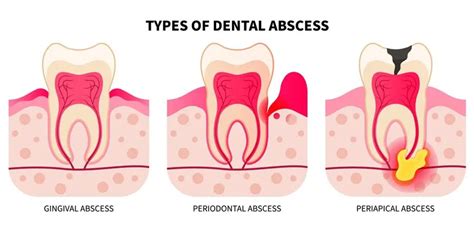
A tooth abscess is a pocket of pus caused by a bacterial infection. There are three main types, and the distinction matters because they're treated differently:
1. Periapical Abscess (most common)
Forms at the tip of the tooth's root, caused by bacteria entering through a deep cavity, crack, or trauma that has reached the pulp (nerve).
Treatment: Root canal or extraction. See Do I Really Need a Root Canal? for whether a root canal is the right call for your situation.
2. Periodontal Abscess
Forms in the gum pocket alongside a tooth, caused by gum disease (periodontitis) trapping bacteria below the gumline.
Treatment: Drainage and treatment of the underlying gum disease. The tooth itself may not need a root canal. See Do I Really Need a Deep Cleaning? for context on periodontal treatment.
3. Gingival Abscess
Forms on the surface of the gum, often from a foreign object (like a popcorn kernel) lodged in the tissue.
Treatment: Drainage and removing the irritant. Usually the simplest to treat.
Symptoms of a Tooth Abscess
Common signs include:
- A dull, throbbing toothache
- Sharp pain when biting or chewing
- A "pimple" or bump on the gum (called a fistula or sinus tract) — sometimes draining pus
- Bad taste in the mouth, especially if the bump drains
- Swelling around the tooth or in the cheek
- Sensitivity to hot or cold that lingers more than 30 seconds
- Tender or swollen lymph nodes under the jaw or in the neck
- A loose feeling in the tooth
A tooth that has had recent dental work can be tender and sensitive for days to weeks without that being an abscess. Persistent pain that gets worse — not better — over time is the more concerning pattern.
When a Tooth Abscess Is a True Medical Emergency
A localized abscess is a dental problem. A spreading abscess can become a medical emergency.
Go to the emergency room immediately if you have:
- Swelling spreading toward your eye, neck, or under your jaw
- Difficulty breathing or swallowing — this can indicate Ludwig's angina, a life-threatening complication
- Fever above 101°F with chills
- Rapid heartbeat or confusion
- One eye swelling shut
- A hard, woody feeling under the chin or in the front of the neck
These are signs the infection has spread beyond the tooth, and IV antibiotics plus surgical drainage may be required.
The American Dental Association's emergency guidance treats facial swelling that affects breathing or swallowing as a medical emergency, not just a dental one.
When You Can Wait Until a Regular Dental Visit
If your symptoms are limited to:
- Pain in one tooth
- A small bump on the gum (with or without occasional drainage)
- Mild localized swelling of the gum
- Sensitivity to chewing on that tooth
… and you have no fever, no spreading swelling, and no difficulty breathing or swallowing, you can typically wait 24–48 hours to see a regular dentist.
This is the most common scenario, and it's the situation where a second opinion is most valuable — because while you do need treatment, *which* treatment is the right call (root canal, extraction, drainage, or watch-and-wait while a referral is set up) is exactly where dentists disagree.
What to Do at Home Right Now
While waiting for treatment:
- Rinse with warm salt water several times a day (½ teaspoon salt in 8 oz warm water)
- Take ibuprofen if you tolerate it — generally more effective than acetaminophen for dental pain
- Apply a cold compress to the outside of the cheek
- Sleep with your head elevated
- Eat soft, lukewarm foods
- Avoid alcohol, smoking, very hot or very cold foods, and chewing on the affected side
Do not:
- Try to drain the abscess yourself
- Apply heat to the outside of the face — heat can spread infection
- Rely on antibiotics alone — they do not cure the underlying problem
How a Tooth Abscess Is Actually Treated
There are three legitimate definitive treatments, and the right one depends on your specific situation.
1. Root Canal (Most Common)
If the tooth is restorable and the infection comes from the pulp, a root canal removes the infected nerve tissue, cleans the canals, and seals the tooth. A crown is usually placed afterward.
This is appropriate when:
- The tooth has enough structure to restore
- The patient wants to keep the natural tooth
- There is no major fracture below the gumline
For more, see Do I Really Need a Root Canal? and Root Canal Cost — What to Expect.
2. Extraction
If the tooth is too damaged to save, extraction removes the source of infection in a single visit.
This is appropriate when:
- The tooth has fractured below the gumline
- Decay is too extensive for restoration
- The patient prefers a single visit (with future implant or bridge)
It is NOT automatically the right answer just because there's an abscess. Many teeth with abscesses can be saved with a root canal. If extraction was recommended quickly and you want to keep the tooth, see Root Canal vs. Alternatives.
3. Incision and Drainage
For some periodontal or gingival abscesses, the dentist drains the pus and treats the underlying cause (gum disease, foreign object). The tooth itself may not need a root canal at all.
Antibiotics — When They Help, and When They Don't
This is the most misunderstood part of abscess treatment.
The CDC's antibiotic stewardship guidance and the ADA's clinical practice guidelines are explicit: antibiotics are NOT a substitute for definitive dental treatment of a localized abscess.
Antibiotics ARE appropriate for:
- Spreading infection (cellulitis)
- Fever with abscess
- Patients with certain medical conditions — immunocompromised, prosthetic heart valves, recent joint replacement
- As a bridge to definitive treatment when treatment can't be done immediately
Antibiotics are NOT appropriate for:
- A localized abscess in an otherwise healthy patient who can be treated promptly
- "Just in case" prescriptions without a definitive treatment plan
- As the only treatment — they will reduce symptoms, but bacteria almost always return when antibiotics stop
If your dentist prescribed only antibiotics without scheduling a root canal, extraction, or drainage, ask why. The infection will recur unless the source is treated.
What a Tooth Abscess Looks Like on X-Ray
A periapical abscess shows up as:
- A round or oval dark area at the tip of the root
- Clearly defined borders
- A "halo" shape under the root
What's commonly mistaken for an abscess on X-rays:
- Normal anatomical structures (mental foramen, nasopalatine canal, maxillary sinus)
- Old restoration shadows
- Overlapping roots
- Imaging artifacts and angulation issues
A clear, localized dark area at the root tip combined with symptoms is a strong diagnosis. A questionable shadow alone, without symptoms, is one of the most common reasons for unnecessary root canal recommendations.
Cost of Treating a Tooth Abscess
Typical out-of-pocket US costs:
- Emergency exam + X-ray: $100–250
- Incision and drainage only: $100–300
- Root canal (front tooth): $700–1,200
- Root canal (molar): $1,000–1,800
- Extraction (simple): $150–400
- Extraction (surgical): $300–800
- Crown after root canal: $800–1,500
- Antibiotics: $10–50
A full "abscess + root canal + crown" treatment plan often totals $2,000–3,500. See our dental second opinion cost guide for more.
When You Should Get a Second Opinion
A tooth abscess always needs treatment, but the *right* treatment is exactly where second opinions add value.
Get a second opinion when:
- Extraction was recommended and you want to know if the tooth can be saved
- Root canal was recommended on a tooth without clear symptoms or radiographic evidence of infection
- You were given antibiotics with no follow-up plan for definitive treatment
- The full treatment cost is unusually high
- You feel pressured to make a decision the same day for a non-emergency situation
- A "watch tooth" suddenly became urgent at a new practice
These are common second-opinion scenarios — see 12 Red Flags of Unnecessary Dental Work for the full picture.
How an Online Second Opinion Helps
At toothcheck, an experienced dentist can review your:
- X-rays — to confirm whether an abscess is genuinely present
- Symptoms
- Proposed treatment plan
- Estimated cost
You receive:
- A clear yes/no on whether the diagnosis is supported
- An assessment of whether root canal vs. extraction is the right call
- An evaluation of whether antibiotics are appropriate as part of the plan
- A confidence score and urgency rating
Most reviews are returned in under 72 hours. If your case requires immediate in-person care, the reviewing dentist will tell you so.
FAQ
Can a tooth abscess go away on its own?
No. Even if the visible swelling drains and symptoms improve, the underlying infection persists and the tooth continues to be a source of bacteria entering the bloodstream.
Can I treat a tooth abscess with antibiotics alone?
No. Antibiotics can reduce symptoms and slow the infection, but the source — the infected tooth — must be treated definitively (root canal, extraction, or drainage). Once antibiotics stop, the infection almost always returns.
Is a tooth abscess deadly?
In rare cases, yes. Untreated abscesses can spread to the floor of the mouth (Ludwig's angina), the bloodstream (sepsis), or the brain. These complications are uncommon when treatment is sought promptly, but they're the reason dental abscesses are not "wait and see" conditions.
How long can I wait to treat an abscess?
For a localized abscess with no spreading swelling, no fever, and no breathing or swallowing difficulty: 24–48 hours is generally safe to find a dentist. With any spreading infection or systemic symptoms: go to an ER immediately.
Will the bump on my gum (fistula) keep coming back?
Yes — until the tooth is treated. The fistula is the body's way of draining the infection. It will close once the source is addressed.
Does a draining abscess mean it's getting better?
No, only that the body has found a release valve. The infection is still active.
Is a tooth abscess contagious?
No.
How do I prevent a tooth abscess?
Treat cavities early, address cracks before they reach the pulp, manage gum disease, and don't ignore tooth pain. See The Importance of Regular Dental Checkups.
Final Advice: An Abscess Always Needs Treatment, But the Right Treatment Isn't Always Obvious
If you have a tooth abscess, you do need treatment — antibiotics alone won't cure it, and waiting indefinitely risks serious complications.
But which treatment — root canal, extraction, or drainage — and whether antibiotics belong in the plan are exactly where second opinions add value. Don't agree to extraction or expensive bundled treatment without understanding your options.
If you're not in a true emergency (no spreading swelling, no fever, no breathing or swallowing difficulty), upload your X-rays and treatment plan to toothcheck. Get a verified second opinion in under 72 hours.
If you have any signs of spreading infection, go to an ER first. The second opinion can come after.
Need clarity about your dental diagnosis?
Upload your X-rays to toothcheck and get a verified second opinion in under 72 hours. For active emergencies, seek in-person urgent care.
Last medically reviewed: May 2026