Why an Unbiased Second Opinion Dentist Matters
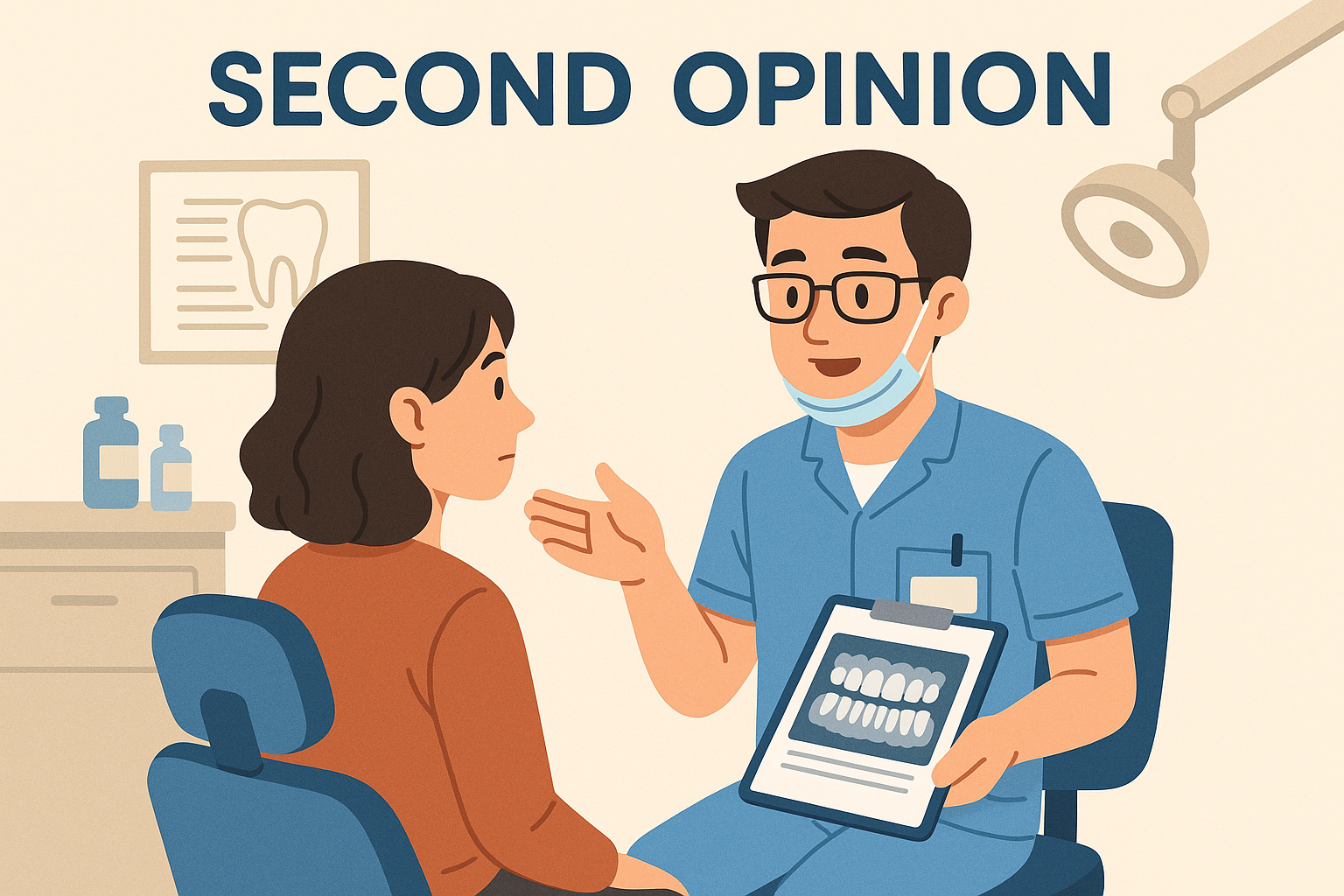
Discover why getting an unbiased second opinion from an independent dentist is crucial for making informed decisions about your dental health and treatment plans.
Reviewed by the toothcheck Dental Team Independent dentist providing online second opinions.
When your dentist recommends a root canal, crown, extraction, or implant, it is natural to wonder: do I really need this? A second opinion from an independent, unbiased dentist can answer that question with clarity and help you avoid unnecessary procedures.
In this guide, we explain why second opinions matter, what makes a truly unbiased review different from a referral, the most common situations where patients benefit from independent verification, and how the process works. For a deeper look at what "independent" structurally means — and the four common second-opinion arrangements that look independent but are not — see independent dental second opinion: why it matters that the reviewer is not selling you anything.
Why Second Opinions Matter in Dentistry
Dental treatments can be expensive, time-consuming, and sometimes irreversible. According to the American Dental Association, treatment plans for the same patient can vary significantly between providers. That variation is not always a sign that one dentist is wrong. Dentistry involves clinical judgment, and reasonable professionals may interpret the same X-ray differently.
A second opinion from an independent dentist helps you:
1. Verify Treatment Necessity
Not all dental procedures are immediately necessary. A second opinion can help determine whether a treatment is truly urgent or whether it can be safely monitored over time.
This is especially important for procedures like root canals, crowns, and extractions that permanently alter your teeth.
For example, a small area of decay on an X-ray does not always require a filling right away. In some cases, remineralization and monitoring is the better path. A second opinion helps you understand when treatment is truly needed versus when watchful waiting is appropriate.
2. Compare Treatment Options
Different dentists may recommend different approaches to the same issue. A second opinion can reveal alternative treatments that are less invasive, more cost-effective, or better suited to your situation.
For instance, a tooth that one dentist recommends extracting and replacing with an implant may be treatable with a root canal and crown by another. Understanding the full range of options helps you make a choice you are comfortable with.
3. Ensure Accuracy of Diagnosis
Dental conditions can be misdiagnosed or over-diagnosed. An independent review of your X-rays, examination findings, and proposed treatment plan provides an additional layer of verification.
Common scenarios where diagnosis can vary:
- Cracks and fractures: Hairline cracks are difficult to detect and interpret. What one dentist calls a cracked tooth needing a crown, another may assess as a craze line that requires no treatment.
- Borderline decay: Small dark spots on X-rays can be early-stage demineralization or active cavities. The treatment approach differs significantly.
- Periodontal disease staging: The boundary between gingivitis and periodontitis affects whether you need deep cleaning or standard prophylaxis.
4. Avoid Unnecessary Procedures
Research published in dental journals has shown that treatment recommendations can vary widely. A second opinion helps protect you from procedures and costs that may not be justified by your clinical situation.
Learn more about red flags for unnecessary dental work and how to recognize when a treatment plan may be more aggressive than needed.
What Makes a Second Opinion Truly Unbiased
Not all second opinions are equal. The value of a second opinion depends on the independence of the reviewing dentist. Here is what distinguishes an unbiased review:
No Financial Incentive to Treat
When you visit a new dentist in person for a second opinion, that dentist may benefit financially if they recommend treatment and you become their patient. An independent online review removes that incentive entirely. The reviewing dentist does not perform the work and has nothing to gain from recommending more or less treatment.
No Referral Relationship
A second opinion from a dentist within the same practice or referral network may be influenced by professional relationships. True independence means the reviewing dentist has no connection to your current provider.
X-Ray Based Review
The most objective second opinions are based on your actual diagnostic records, primarily X-rays and clinical photos, rather than a brief in-person exam that may introduce new subjective assessments.
When to Seek a Second Opinion
Consider getting a second opinion if:
- You have been recommended an expensive or invasive procedure such as a root canal, crown, implant, or extraction
- The recommended treatment costs more than $500
- You are told you need multiple procedures at once
- You feel rushed or pressured to commit to treatment immediately
- The explanation of why you need the procedure feels vague or inconsistent
- You have tooth pain that comes and goes and are unsure whether your diagnosis explains it
- You want to understand the cost of treatment before committing
- You have not had a dental issue before and want to understand your options
How an Online Second Opinion Works
At toothcheck, we provide independent, unbiased dental second opinions through a straightforward process:
1. Submit your records: Upload your X-rays, treatment plan, and any clinical photos or notes from your dentist. 2. Independent review: A licensed dentist with no connection to your provider reviews your records. 3. Receive your report: In under 72 hours, you get a detailed, written assessment that explains whether the recommended treatment is appropriate, whether alternatives exist, and what questions to ask your dentist.
Our reviewing dentists do not perform dental procedures. They have no financial incentive to recommend more or less treatment. Their only goal is to give you an honest, objective evaluation.
What Patients Typically Learn
In our experience reviewing thousands of cases, here is what patients commonly discover through a second opinion:
- Treatment confirmed: In many cases, the second opinion confirms the original recommendation, giving you confidence to proceed.
- Conservative alternative identified: Sometimes a less invasive option exists, such as a large filling instead of a crown, or monitoring instead of immediate treatment.
- Additional information needed: The reviewing dentist may identify that more diagnostic information, such as a CBCT scan or periodontal probing, is needed before committing to a treatment plan.
- Unnecessary treatment flagged: In some cases, the recommended procedure is not clearly supported by the available evidence.
Common Procedures That Benefit from Second Opinions
Certain treatments are recommended more frequently than others and benefit most from independent verification:
- Root canals**: Not every tooth with a large cavity or sensitivity needs root canal therapy. Understanding root canal alternatives can save you time and money.
- Crowns**: Crowns are sometimes recommended when a filling or onlay would suffice.
- Deep cleanings**: Scaling and root planing is one of the most over-recommended procedures in dentistry — appropriate for active periodontitis, but not for healthy gums or mild gingivitis.
- Implants**: Implant placement is a significant investment. Verify that extraction is truly necessary and that an implant is the best replacement option.
- Wisdom teeth extraction**: Not all wisdom teeth need to be removed. Asymptomatic, fully erupted wisdom teeth often require monitoring rather than surgery.
Making an Informed Decision
Seeking a second opinion does not mean you distrust your dentist. It means you are taking an active role in your healthcare. Dentistry involves judgment calls, and having an independent perspective ensures you understand your options fully before making a decision that affects your health and finances.
If you want that review now, a second opinion dentist can read your X-rays and treatment plan for a flat fee, and our dental second opinion guide covers the process end to end. What it typically costs is broken down in our dentist second opinion cost guide.
Your dental health is important. Take the time to verify your diagnosis, understand your options, and proceed with confidence.
Last medically reviewed: April 2026