Floss vs Interdental Brushes vs Water Flosser: Which Should You Use?
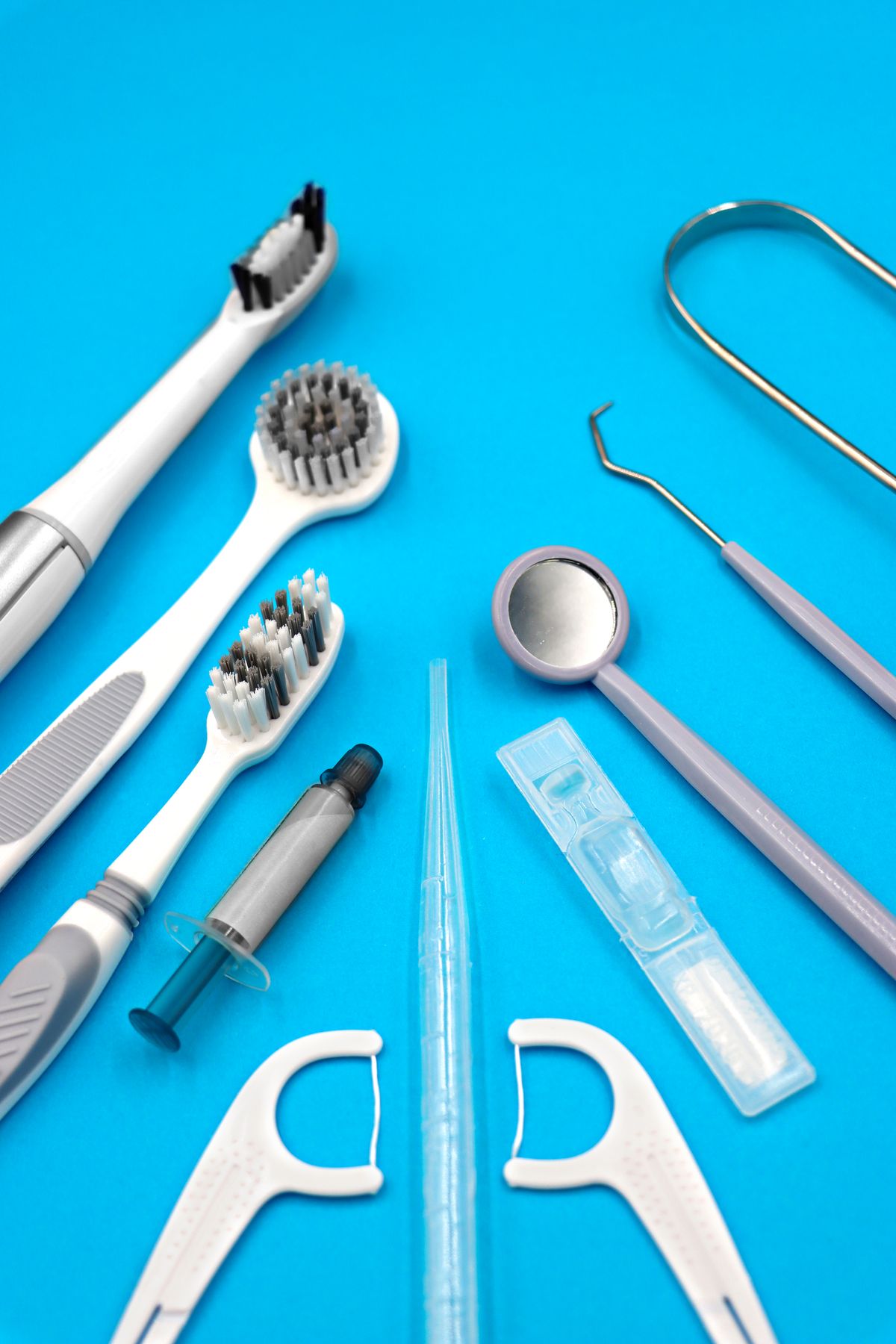
Floss vs interdental brushes vs water flosser: what each does best, what the evidence really says, and how to pick the one you will actually use daily.
Reviewed by the toothcheck Dental Team Independent dentist providing online second opinions.
Brushing cleans the outer, chewing and inner surfaces of your teeth well enough. What it cannot do is reach the narrow contact areas between neighboring teeth, which make up a large share of the total tooth surface. Plaque left there is a common starting point for cavities between teeth and for gum inflammation. That is why dentists keep asking whether you clean between your teeth, and why a crowded market of floss, tiny brushes and water jets exists.
The confusing part is that the three main options are not interchangeable, and the marketing around each overstates what the research shows. This guide compares them honestly, including where the evidence is thinner than the advice you have heard for decades, so you can match a tool to your own mouth instead of buying whatever is trending.
Quick Answer
In the floss vs interdental brushes vs water flosser debate, there is no single winner. If your teeth have gaps big enough for a small brush, interdental brushes are usually the most effective and the easiest to do well. If your teeth are tight, string floss is the cheap, portable standard. If you have braces, implants, a bridge, deep gum pockets or trouble with dexterity, a water flosser is often the most realistic option. The best tool is the one you will use every day, and many people use two.
Why cleaning between teeth matters
Plaque is a sticky bacterial film. Left on the contact surfaces and just under the gumline, it drives both tooth decay and gingivitis, the early, reversible stage of gum disease. Gum inflammation that persists can progress to periodontitis, which damages the bone that holds teeth in place. The American Dental Association recommends cleaning between your teeth once a day with floss or another interdental cleaner (https://www.mouthhealthy.org/).
A fair caveat: when researchers pool randomized trials of string floss added to toothbrushing, the findings are mixed and the overall quality of the evidence is rated low, partly because it is hard to study and because floss is often used with poor technique in trials. That does not mean cleaning between teeth is pointless. The logic of removing plaque where a brush cannot reach is sound, and the evidence for interdental brushes and for reducing gum bleeding is stronger. It does mean you should not feel guilty about floss specifically if another tool works better for you.
The three options compared
| String floss | Interdental brushes | Water flosser | |
|---|---|---|---|
| Best for | Tight, healthy contacts between teeth | Visible gaps, gum recession, gum disease, space under bridges | Braces, implants, bridges, deep pockets, limited dexterity |
| Plaque removal | Good with correct technique | Often the best where the brush fits | Somewhat less on sticky plaque, strong on debris and bleeding |
| Gum bleeding | Improves with consistent use | Improves well | Improves well |
| Skill needed | High (hard to do correctly) | Low to moderate | Low |
| Cost | Very low | Low, ongoing refills | Higher upfront, then very low |
| Portability | Excellent | Excellent | Limited (cordless models help) |
| Main drawback | Technique, poor compliance | Will not fit tight teeth, needs the right size | Bulky, messy at first, does not fully replace mechanical cleaning |
String floss
Floss is the classic. A strand of waxed or unwaxed string is slid between the teeth and curved in a C shape around each tooth, moving up and down to scrape the side surface and just under the gum edge. It costs almost nothing and fits in a pocket.
The honest problem is technique. Many people snap the floss straight down into the gum, saw back and forth, or skip the back teeth. Done poorly, it removes little plaque and can irritate the gums. Floss also struggles around wide gaps, where the string simply passes through the space without touching much. Floss picks and holders help people who cannot manage a long strand, though they can be less effective at wrapping around each tooth.
Floss is a good fit if your teeth are close together, you have a healthy mouth, and you are willing to learn the technique properly. Ask your hygienist to watch you do it once.
Interdental brushes
Interdental brushes are small bristled brushes, often cone or cylinder shaped, on a thin wire. You slide one into the gap and move it gently back and forth. In trials that compare them with floss, interdental brushes tend to remove more plaque and reduce gum inflammation more where the gap is large enough, and people often find them easier and more pleasant to use. They are widely favored for people with gum disease, gum recession, gaps between teeth, and spaces under or around bridges and implants.
The catch is fit. The brush should pass through the space with light resistance and without force. Too small and it does nothing; too large and it can injure the gum. Different areas of the mouth often need different sizes, so expect to buy two or three. If your teeth touch tightly and a brush will not go in without forcing it, do not force it. Use floss or a water flosser there instead.
Brushes wear out, so replace them when the bristles splay or bend, usually within a week or two of daily use.
Water flossers (oral irrigators)
A water flosser pushes a pressurized stream of water, sometimes pulsed, between the teeth and along the gumline. You lean over the sink, put the tip in your mouth, and trace along the gums, pausing briefly between teeth.
Studies generally find water flossers reduce gum bleeding and gingivitis well, and they are the most practical tool for several groups: people with braces (where floss threads awkwardly around wires), implants, fixed bridges and crowns, people with deep periodontal pockets, and anyone with arthritis, tremor or limited hand strength. Many people simply find them more comfortable and so are more consistent with them.
The trade-off is that a water stream is less effective at breaking up adherent plaque than a bristle or a string physically touching the surface. For that reason, a water flosser is best viewed as a strong option and a good complement, not a guaranteed replacement for mechanical cleaning. They are bulkier, cost more upfront, and can be messy until you learn to keep your lips loosely closed and lean forward. They also are not necessary for everyone. A healthy mouth with tight teeth that flosses well does not need one.
How to choose
Start from your anatomy, not the product.
- Tight contacts and healthy gums: string floss, or a floss pick if you struggle with the strand.
- Visible gaps, recession, or gum disease: interdental brushes, sized by your hygienist.
- Braces, implants, bridges or crowns: a water flosser, plus interdental brushes or a floss threader around the appliances if your dentist advises.
- Arthritis or limited dexterity: a water flosser or long-handled holders.
- Bleeding gums that do not settle after a couple of weeks of consistent cleaning: see a dentist or hygienist, because bleeding that persists can signal gum disease that needs professional treatment.
It also helps to be realistic. A tool you use once a day, imperfectly, beats a better tool that sits in a drawer. Pairing the habit with something you already do, such as brushing before bed, makes it stick. Keep in mind that cleaning between teeth works alongside brushing and does not replace it. Questions about adding mouthwash on top are covered in our guide to whether mouthwash is necessary (/blog/is-mouthwash-necessary), and if bad breath is your motivation, see /blog/bad-breath-causes-and-fixes, since the debris trapped between teeth is a common contributor.
Common mistakes
- Snapping floss into the gum instead of curving it around each tooth.
- Forcing an interdental brush that is too large, which can damage gum tissue.
- Expecting a water flosser to replace brushing, or to fully remove sticky plaque on its own.
- Cleaning between teeth only the day before a dental visit. Gum bleeding is expected at first and usually settles within one to two weeks of daily cleaning; it is not a reason to stop.
- Using high pressure on a water flosser immediately. Start low and work up.
FAQ
Is a water flosser as good as string floss? For reducing gum bleeding and gingivitis, studies generally show water flossers do well, and often as well as floss. For physically removing sticky plaque from tooth surfaces, mechanical cleaning tends to do somewhat better. A water flosser is a strong choice for braces, implants, bridges and people who cannot manage floss, but it is not automatically superior.
Are interdental brushes better than floss? Where the gap is large enough for a brush to pass without forcing it, interdental brushes tend to remove more plaque than floss in the trials that compare them, and many people find them easier to use. Where teeth touch tightly, a brush will not fit and floss or a water flosser is the better option.
Do I really have to floss if I brush well? A toothbrush cannot reach the surfaces where neighboring teeth touch, and decay and gum disease often begin there, so cleaning between teeth is widely recommended, including by the American Dental Association. The clinical-trial evidence for string floss specifically is weaker than most people assume. That is a reason to choose the between-teeth tool you will actually use, not a reason to skip cleaning between teeth.
Can I use a water flosser and floss together? Yes. Many people use a water flosser for general rinsing and bleeding control and add interdental brushes or floss for the tight spots. If you only want one tool, pick the one that fits your teeth and that you will use every day.
How do I know what size interdental brush to buy? The brush should slide into the gap with light resistance and without force. Gaps often differ across the mouth, so you may need two or three sizes. A dental hygienist can measure your gaps in a minute, which is cheaper than buying the wrong packs.
Final Word
Pick the tool that fits your teeth and your habits, not the one with the loudest advertising. Interdental brushes where gaps allow, floss where teeth are tight, and a water flosser where braces, implants, bridges or dexterity make the others hard, with a combination being perfectly reasonable. If a dentist has recommended expensive treatment because of gum disease or decay between teeth, and you want an independent view, our online dental second opinion (/online-dental-second-opinion) is one option for reviewing the plan.
Last medically reviewed: October 2026