How Thorough Should a Dental Exam Be?

If your dentist barely looked before recommending thousands in treatment, this explains what a proper dental exam actually includes - and when a rushed one is worth a second look.
Reviewed by the toothcheck Dental Team Independent dentist providing online second opinions.
A lot of people leave the dentist with the same uneasy feeling: *that was fast.* A glance in the mouth, a few numbers called out, and suddenly a treatment plan for several thousand dollars. It is hard to know whether you just saw an efficient expert or a rushed one - and whether a diagnosis made that quickly can be trusted.
This guide explains what a genuinely thorough dental examination includes, so you can tell the difference. Knowing what a proper diagnosis involves is the best protection against both under-diagnosis (missed problems) and over-diagnosis (treatment you do not need).
Quick Answer
A thorough dental exam is more than a quick look. A proper comprehensive evaluation usually includes a review of your history, a visual and tactile check of every tooth, X-rays to see what the eye cannot (decay between teeth and bone levels), a gum (periodontal) assessment with pocket measurements, a check of your bite, and an oral cancer screening. Speed alone does not prove an exam was inadequate - an experienced dentist can be efficient - but a large treatment plan produced from little more than a glance, with no X-rays shown and no findings explained, is a reasonable thing to verify. You are entitled to have your findings explained and to see the evidence.
What a Proper Dental Exam Actually Includes
The American Dental Association describes a comprehensive oral evaluation as a systematic assessment, not a spot-check. A thorough exam generally covers the following.
1. Your history and symptoms
Good diagnosis starts with listening: what brought you in, what hurts, when, and your medical and dental history. Medications, grinding, and past treatment all change the picture. A dentist who never asks is working with less than half the information.
2. A tooth-by-tooth visual and tactile check
Every tooth is examined for decay, cracks, wear, failing fillings, and defective margins - visually and often with an explorer. This is where the "one, two, three" you hear called out comes from, as findings are charted tooth by tooth.
3. X-rays - to see what the eye cannot
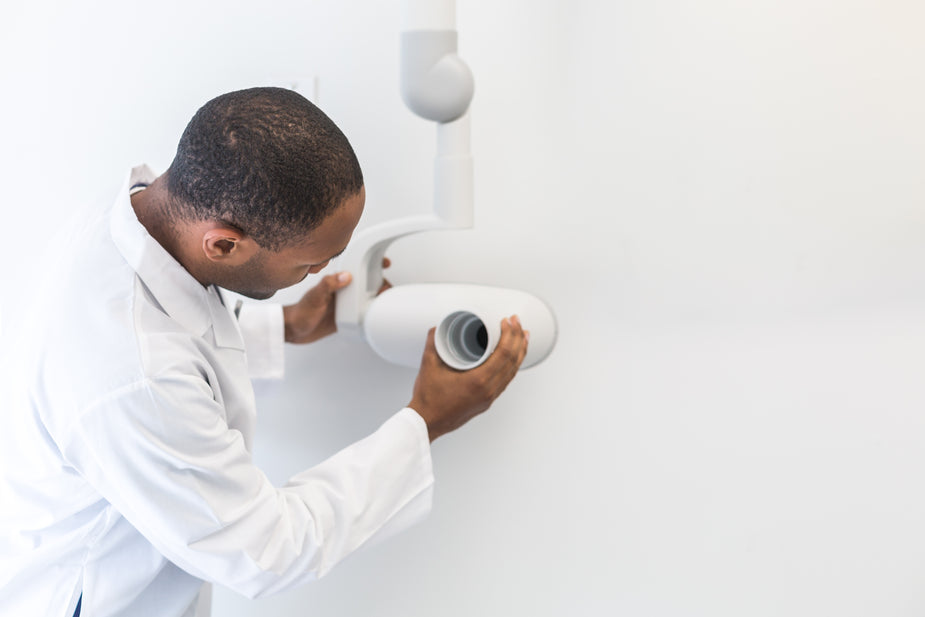
This is the part a rushed exam most often skips or glosses over. Decay between teeth and bone loss under the gums are frequently invisible to the naked eye, and are only reliably found on X-rays. The FDA and ADA selection criteria for dental radiographs stress that imaging should be based on your individual risk, not taken blindly - but a diagnosis of hidden decay with no X-ray to support it is worth questioning.
4. A gum (periodontal) assessment
A proper exam measures the depth of the pockets between your gums and teeth - the "three, two, three" numbers - and notes bleeding. This is how gum disease is actually diagnosed. A recommendation for a deep cleaning without these measurements is not well supported; our guide on verifying a gum disease diagnosis covers this.
5. A bite and function check
How your teeth meet, signs of grinding, and jaw joint function are all part of the picture. A dentist may use articulating paper to see where your bite lands.

6. An oral cancer screening
A quick but important check of the soft tissues - tongue, cheeks, floor of the mouth, and throat - for anything unusual. It takes under a minute and is part of any complete exam.
Does a Fast Exam Mean a Bad One?
Not necessarily - and this is the fair part. An experienced dentist who has your recent X-rays already on screen can complete a competent check-up efficiently. Speed by itself is not proof of a problem. Much of the "that was fast" feeling comes from the format: tight schedules, a treatment coordinator handling the money separately, and jargon delivered quickly. We wrote a whole piece for the specific experience of leaving confused after a five-minute explanation.
What *does* deserve scrutiny is a mismatch between the depth of the exam and the size of the plan. A single glance that turns into a five-figure, full-mouth recommendation - with no X-rays shown, no pocket measurements, and no tooth-by-tooth explanation - is not the same as a thorough diagnosis, no matter how confident the delivery.
Signs Your Exam May Have Been Too Rushed
- A large treatment plan with no X-rays taken or shown to support the hidden findings.
- A deep-cleaning recommendation with no periodontal pocket measurements.
- Findings you were never shown or walked through tooth by tooth.
- A plan presented by a treatment coordinator before the dentist explained the clinical reasoning.
- No questions about your history, symptoms, or habits.
None of these individually proves anything is wrong, but several together are a reasonable trigger to slow down. Our red flags for unnecessary dental work and questions to ask before treatment are built for exactly this.
What to Do If It Felt Rushed
You do not need to accuse anyone. Ask to see your X-rays and to have each recommended item explained on them. Ask what your periodontal numbers were. Request an itemised treatment plan - our guide on how to read your dental treatment plan helps you make sense of it. And for anything significant, especially if it did feel rushed, get an independent set of eyes on the imaging before you commit. A pattern of cavities found at a new office after years of clean check-ups is a classic example worth reviewing - see dentist found multiple cavities.
FAQ
How long should a dental exam take? There is no fixed number - a routine check-up with existing X-rays can be efficient, while a comprehensive first-visit exam takes longer. Time matters less than coverage: history, a tooth-by-tooth check, appropriate X-rays, gum measurements, bite, and an oral cancer screening.
What should a thorough dental exam include? A review of your history and symptoms, a visual and tactile check of every tooth, X-rays based on your risk, periodontal pocket measurements, a bite and function check, and an oral cancer screening - with the findings explained to you.
My dentist barely looked and recommended thousands in work. Is that normal? A large plan produced from a brief glance, with no X-rays shown and no findings explained, is worth verifying. Speed alone is not proof of a problem, but a mismatch between a quick exam and a big plan is a reasonable reason to seek a second opinion.
Should X-rays be part of every exam? Not every routine visit needs new X-rays - imaging should match your individual risk per FDA and ADA guidance. But hidden decay between teeth and bone loss are usually only visible on X-rays, so a diagnosis of those problems should be backed by imaging you can see.
Is it rude to ask my dentist to explain the exam findings? Not at all. You are entitled to have your findings explained and to see your own X-rays. A confident, ethical dentist welcomes this; reluctance to walk you through the evidence is itself worth noting.
Can a second opinion tell me if my exam missed something or over-called something? Yes. An independent review of your X-rays and plan can flag both findings that appear over-called and, sometimes, things worth a closer look - which is useful whether your worry is over-treatment or a rushed miss.
Final Advice
You cannot judge an exam by the clock alone, but you can judge it by what it covered and whether the size of the plan matches the depth of the look. A proper diagnosis rests on history, a careful tooth-by-tooth check, appropriate imaging, gum measurements, and an explanation you can follow - not a glance and a total.
If your appointment felt rushed and the plan felt big, you do not have to decide on the spot. Upload your X-rays and treatment plan to toothcheck for an independent second opinion, and a licensed dentist will review whether the recommendations are supported by what is actually on your imaging - in writing, usually within 72 hours. You can also start with a treatment plan review.
Last medically reviewed: July 2026