Root Canal Second Opinion: How to Get One Before You Commit
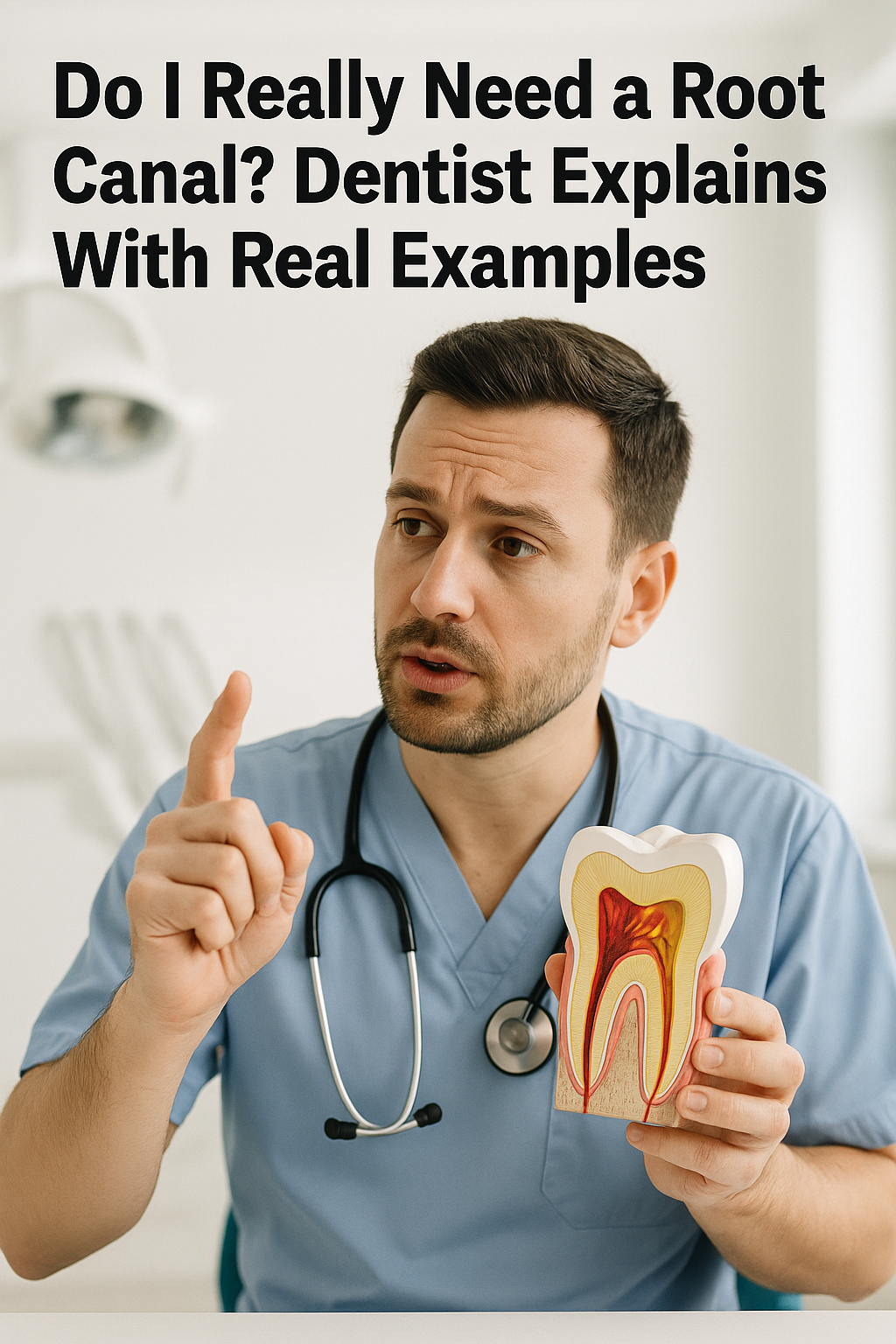
Told you need a root canal? Learn how an independent root canal second opinion works: upload your X-rays and plan, get a licensed dentist review in writing within 72 hours for a flat $59.
Reviewed by the toothcheck Dental Team Independent dentist providing online second opinions.
Quick Answer
A root canal second opinion is a review of your X-rays and treatment plan by an independent dentist who has no stake in whether the procedure happens. It matters because root canals are sometimes recommended when a simpler option, such as a filling or watching a tooth with reversible inflammation, would work. With toothcheck you upload the X-rays you already have plus the plan you were given, and a licensed dentist replies in writing within 72 hours for a flat $59. No new imaging and no office visit needed.
Why a second opinion on a root canal is worth getting
A root canal is one of the most common major treatments recommended in general dentistry, and most of them are genuinely needed. But most is not all. The decision to open a tooth and remove its nerve rests heavily on how one clinician reads a single X-ray and interprets your symptoms. Two honest, well-trained dentists can look at the same film and reach different conclusions, especially in the gray zone where a tooth is inflamed but not yet dead.
That gray zone is where second opinions earn their keep. Sometimes a tooth flagged for a root canal is actually a candidate for a large filling, a crown without root canal therapy, or simply monitoring for a few weeks to see whether the nerve settles down. The American Association of Endodontists is clear that saving natural tooth structure and choosing the least invasive effective treatment is the goal, not doing the biggest procedure available.
An independent review does not assume your dentist is wrong. It assumes you deserve a second set of eyes before committing to an irreversible procedure and a four-figure bill. If the root canal is necessary, a good reviewer will tell you so plainly, and you will move forward with more confidence. If it is questionable, you will have specific questions to ask before anyone picks up a drill. More on how patients weigh this in is a dental second opinion worth the cost.
Reversible vs irreversible: the distinction that decides everything
The whole root canal question usually comes down to the state of the pulp, the nerve and blood supply inside your tooth. Dentists sort pulp problems into two broad buckets:
- Reversible pulpitis: the nerve is irritated and inflamed, often from a deep cavity, a recent filling, or a cracked surface, but it is still alive and capable of healing. Pain is typically brief, a quick zing to cold or sweet that fades within seconds. A tooth in this state frequently does not need a root canal. Removing the decay and placing a filling or crown, then giving it time, can be enough.
- Irreversible pulpitis or a non-vital, dead nerve: the inflammation has passed the point of recovery, or the nerve has died and become infected. Classic signs are pain that lingers for many seconds after cold, pain that wakes you at night, throbbing that spreads, or a pimple-like bump on the gum. This is the tooth that genuinely needs a root canal or an extraction.
The problem is that these categories are not always obvious, and the treatment plan can get ahead of the evidence. If you were told you need a root canal but your symptoms sound more like the reversible column, short-lived sensitivity with no spontaneous or night pain, that mismatch is exactly what a second opinion is designed to catch. Our dentists walk through this logic with real cases in do I really need a root canal.
What an independent dentist actually checks on your X-ray
When you send in your films and plan, the reviewer is not guessing. They work through a concrete checklist:
- Is there a real periapical lesion? A root canal for a dead, infected nerve should usually show a dark area at the root tip on the X-ray, where bone has been lost to infection. If the plan says infection but the film shows no such lesion, that is worth questioning.
- Is the nerve truly non-vital? The reviewer weighs your reported symptoms against the imaging and any vitality testing your dentist did, such as a cold test or electric pulp test. A healthy response to cold argues against a dead nerve.
- How deep is the decay, really? Sometimes decay that looks close to the nerve on a film has not actually reached it, leaving room for a filling instead of a root canal.
- Are there cracks, prior deep fillings, or resorption that change the picture?
- What are the reasonable alternatives? A large filling, a crown alone, monitoring, or, for a badly broken tooth, comparing root canal against extraction and an implant. See root canal vs extraction for how that trade-off is weighed.
You get this back as a plain-English written report through our treatment plan review service, not a vague get-another-opinion brush-off. To be clear about limits: a records-based review cannot replace an in-person exam, and a reviewer will say so if your case truly needs hands-on testing. What it can do is tell you whether the recommendation is well-supported by what is on paper.
Red flags that specifically warrant a root canal second opinion
Not every root canal recommendation needs to be double-checked, but these situations especially do:
- You have no lingering pain, or no pain at all, yet you were told the tooth needs a root canal. A slowly dying nerve can be silent, so painless teeth sometimes do need treatment, but no symptoms and straight to root canal deserves a closer look.
- You were never shown clear X-ray evidence. If no one pointed to a dark spot at the root tip or explained why the nerve is beyond saving, ask to see it, and have someone independent review it.
- Same-day pressure. Being urged to book the procedure immediately, before you have had time to think or ask questions, is a reason to slow down, not speed up.
- The root canal was bundled with a crown and quoted as one big number. A crown is often genuinely needed after a back-tooth root canal, but bundling can obscure whether the root canal itself is justified.
- The tooth was recently filled and is just settling down. Sensitivity for days to a few weeks after a deep filling can be normal reversible irritation.
We go deeper on these in signs of an unnecessary root canal and on non-invasive options in can you avoid a root canal.
How a toothcheck root canal second opinion works
The process is built to be fast and low-friction, using the records you already have:
1. Gather your records. Request your X-rays and treatment notes from your dentist. You have a legal right to copies under HIPAA, and most offices will email them. Any recent periapical or bitewing X-ray of the tooth usually works. 2. Upload them with your plan. Add the treatment plan you were given and a short description of your symptoms through our online dental second opinion service. 3. A licensed dentist reviews it in writing. Within 72 hours you get a clear report: whether the root canal appears justified, what the X-ray does and does not show, any reasonable alternatives, and specific questions to bring back to your dentist.
No new imaging, no second office visit, no radiation. Because the review is independent and flat-fee, the reviewer has no financial reason to steer you toward one path over another.
Is a $59 root canal second opinion worth it?
Consider the math. A root canal plus the crown that usually follows commonly runs somewhere in the range of $1,000 to $2,000 out of pocket in the US, and more for molars or specialist care. You can check typical costs for your area on FAIR Health Consumer, and we break the numbers down in root canal cost: what to expect.
Against that, a flat $59 written review is a small, fixed cost to confirm a large, irreversible one. If the second opinion confirms the root canal, you have paid a modest amount for real peace of mind before committing. If it surfaces a legitimate alternative, a filling, a crown alone, or a short period of monitoring, it can save you far more than its price and spare you an unnecessary procedure. Either way, you make the decision with better information.
FAQ
Do I really need a root canal, or would a filling be enough?
It depends on whether the nerve is still alive and able to recover. If your pain is brief and triggered by cold or sweet, the pulp may be reversibly inflamed, and a filling or crown could be enough. If pain lingers, wakes you at night, or the X-ray shows infection at the root tip, a root canal is more likely truly needed. An independent review of your films and symptoms is the clearest way to tell which situation you are in.
Can you get a second opinion on a root canal from X-rays alone?
In most cases, yes. A recent periapical or bitewing X-ray of the tooth, combined with your treatment plan and a description of your symptoms, gives a reviewing dentist enough to judge whether the recommendation is well-supported. A records-based review cannot fully replace an in-person exam, and a good reviewer will tell you if your case genuinely needs hands-on testing before a decision.
What records do I need to send?
Any recent X-ray of the tooth, periapical or bitewing, the written treatment plan or estimate you were given, and a short note about your symptoms. You have a legal right to copies of your records under HIPAA, and most dental offices will email them on request.
How long does a toothcheck root canal second opinion take?
You receive a written report from a licensed dentist within 72 hours of uploading your records. There is no second office visit and no new imaging, because the review uses the X-rays you already have.
Will getting a second opinion offend my dentist?
It should not. Seeking a second opinion before an irreversible, four-figure procedure is normal and reasonable, and many dentists welcome it. Because toothcheck is independent and charges a flat fee, the reviewing dentist has no financial stake in which treatment you choose.
What if the second opinion confirms I need the root canal?
Then you proceed with real peace of mind, knowing the recommendation held up to independent scrutiny. A second opinion is not about avoiding treatment. It is about making sure the treatment you get is the one you actually need.
Final Advice
Being told you need a root canal is unsettling, and the pressure to book quickly can make it hard to think clearly. You do not have to decide on the spot. A root canal is irreversible and expensive, which makes it exactly the kind of decision that benefits from a second, independent look, especially if your symptoms are mild, you were never shown clear X-ray evidence, or the procedure was bundled with a crown and a big number.
Gather your X-rays and treatment plan, upload them to toothcheck, and a licensed dentist will tell you in writing, within 72 hours, whether the root canal appears justified and what your real alternatives are, all for a flat $59. Start your online dental second opinion or send your plan for a treatment plan review today, and make your decision with confidence instead of pressure.
Last medically reviewed: July 2026