Why Dentists Disagree on the Same X-Ray
A dentist explains the published research on diagnostic variability — why two dentists can read the same X-ray and reach genuinely different treatment plans, what the peer-reviewed data actually says, and how to resolve it when it happens to you.
Reviewed by the toothcheck Dental Team Independent dentist providing online second opinions.
If you have ever gotten a routine cleaning at one dentist and walked out fine, then visited a different dentist a few months later and walked out with a treatment plan for 4 crowns, 6 fillings, and a deep cleaning, you have experienced one of the most common and least-discussed phenomena in dentistry: legitimate disagreement between practitioners on the same case.
This is not a story about one dentist being right and the other being wrong. It is documented science. The published research is unambiguous — dentists vary substantially in how they interpret the same radiographic findings, how they apply the same diagnostic criteria, and how they translate findings into treatment recommendations. When two dentists give you different plans for the same mouth, the question is not which one to trust by reflex. It is how to find out what the right answer actually is for your situation.
This guide walks through what the research says, why dentists legitimately disagree, where the disagreement is greatest, and how to resolve it when it happens to you.
This Is Documented Science, Not Anomaly
The diagnostic variability in dentistry has been measured directly in multiple peer-reviewed studies going back four decades.
The foundational work is by Drs. James Bader and Daniel Shugars at the University of North Carolina. In their 1993 JDR paper "Agreement Among Dentists' Recommendations for Restorative Treatment", they had 1,187 teeth in 43 patients examined by an average of 6.6 different general dentists each, and measured how often the dentists agreed on whether the tooth needed restoration. Agreement was lower than most patients would assume.
The follow-up work has been remarkably consistent. The Dental AI Council surveyed 136 licensed dentists in 14 countries on the same set of radiographs. The finding: in no case did all respondents agree unanimously on a diagnosis. The highest agreement was 81% (non-metallic fillings), 65% (impacted molars), and 63% (recurrent decay). On caries — the most common diagnostic call in dentistry — there was no unanimous agreement on any case.
Reviews summarising the body of work in the Journal of Public Health Dentistry note that variance between dentists in treatment planning on the same case can reach 30 to 50% depending on the procedure type.
Bitewing radiograph interpretation specifically — the kind of X-ray used for routine caries screening — has been measured at kappa coefficients as low as 0.26 to 0.32 in some studies, which on the kappa scale is "fair agreement at best." For context, a kappa above 0.80 is considered substantial; a substantial portion of the dental literature on bitewing reading sits well below that.
This is the diagnostic ground truth in dentistry. Disagreement between practitioners on the same case is not the exception — it is the documented norm, especially for early caries, borderline restorations, and treatment planning on previously treated teeth.
6 Reasons Dentists Legitimately Disagree on the Same X-Ray
The variance is not random. The published literature identifies specific structural reasons.
1. The "Watch vs. Treat" Threshold Moves Between Practitioners
The most common driver of disagreement. Every dentist has an internal threshold for "this needs treatment now" versus "monitor and re-evaluate at the next recall." The threshold is set by training, experience, and clinical philosophy — and it varies by several years' worth of disease progression between conservative and aggressive practitioners.
A small interproximal radiolucency in outer enamel may be flagged for restoration by one dentist (treat now, before it gets bigger) and marked for monitoring by another (most early lesions arrest or remineralise with proper care). Neither dentist is misreading the X-ray. They are applying different thresholds to the same finding.
This is what the International Caries Detection and Assessment System (ICDAS) was created to standardise — but adoption varies by region and by practice, and even within ICDAS the management category at each stage allows for clinical judgment.
2. Different Training Cohorts and Decades
Dental school curricula have changed substantially over the past 30 years. A dentist trained in the 1990s was taught to drill and fill small interproximal lesions earlier than a dentist trained in the 2020s, who is taught minimal-intervention dentistry and remineralisation-first protocols. Both follow the standard of care they were trained in. The standards have shifted; the dentists in practice today have not all updated equally.
Bader and Shugars explicitly identify training-cohort effects as a measurable contributor to inter-examiner variance.
3. Specialty Perspective
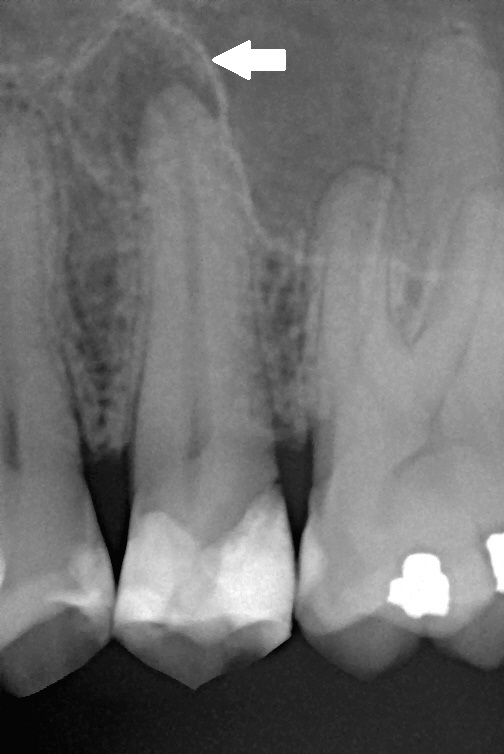
A general dentist, an endodontist, a prosthodontist, and a periodontist looking at the same X-ray will frame the case differently. An endodontist sees a borderline periapical lesion and considers whether the tooth can be saved with root canal therapy. A prosthodontist sees the same lesion in the context of a planned restoration and considers structural integrity. A periodontist focuses on the surrounding bone. A general dentist integrates all three perspectives but with less depth in each.
Research published on specialist versus general-dentist clinical decision-making has documented systematic differences in how the two groups approach the same case. The specialist is not necessarily more accurate — they are evaluating the case from their specialty lens.
4. Practice-Environment Incentives
Bader and Shugars' work measured a small but consistent effect: dentists in higher-production-pressure environments tend to recommend more treatment than dentists in lower-pressure environments, for the same clinical findings. This is not necessarily conscious or malicious — incentive structures shape the threshold-setting described in the first reason.
The relevant distinction is not "honest dentist vs. dishonest dentist." It is "this practice operates in an environment where the lower bar for treatment makes business sense" versus "this practice operates in an environment where the higher bar for treatment makes business sense." For more on how this plays out in real treatment plans, see our guide on 12 red flags of unnecessary dental work.
5. Different Patient Risk Profiles Applied to the Same Finding
A small interproximal lesion in a 25-year-old with active caries elsewhere, frequent sugar exposure, dry mouth, and irregular hygiene is genuinely different from the same lesion in a 50-year-old with no other caries, excellent hygiene, and regular fluoride exposure. The radiograph looks identical. The right treatment is opposite.
Different dentists weigh the risk profile inputs differently. This is the most clinically defensible source of variance — and the most invisible to the patient.
6. Pattern Recognition, Not Algorithmic Diagnosis
This is the deepest finding from the Bader and Shugars work. Dentists do not use a hypothetico-deductive diagnostic process — they recognise caries patterns from experience. Two clinicians with different experience trajectories will recognise different patterns in the same image. Both are using legitimate clinical judgment; they are just judging from different libraries of cases.
Where the Disagreement Is Greatest
Variance between practitioners is not uniform across all dental decisions. Published research identifies the cases where disagreement spikes:
- Borderline interproximal caries (enamel-only or just-into-dentin lesions) — the central battleground; arguably the largest contributor to overtreatment risk
- "Watch" teeth — teeth previously flagged for monitoring; new dentists frequently re-classify these as needing treatment
- Crowns vs. large fillings — the threshold for "this tooth needs a crown" varies dramatically
- Endodontic retreatment — Bader-cited research specifically notes more variance on previously root-canalled teeth than on initial root canal decisions
- Wisdom tooth extraction — agreement on whether asymptomatic third molars should be removed is famously low; see our wisdom tooth extraction second opinion guide for the detail
- Deep cleaning (scaling and root planing) thresholds — the line between prophylaxis and SRP moves substantially between practices
If your second-opinion situation involves any of these categories, the published variance is even higher than the 30 to 50% headline number.
When This Matters Most
For low-cost, low-risk findings, disagreement between dentists is not particularly worth resolving. The cost of getting it wrong either way is small.
The places where the variance translates to real harm or real cost:
- Treatment plans over $1,000 — the math on a second opinion always favours getting one; the cost-benefit analysis is in our dental second opinion cost guide
- Multiple irreversible procedures recommended at once — crowns, root canals, extractions, implants
- A "new dentist" who finds much more work than your previous dentist — possibly correct, possibly an example of the variance documented above
- Pressure to start treatment same-day — a legitimate clinical situation almost never requires same-day commitment for non-emergency procedures
- Quotes that look out of line with local averages — when fee disagreement compounds with diagnosis disagreement, see is my dentist overcharging me
How to Resolve It: The Independent Third Read
When two dentists give you different plans, the resolution is structurally the same as any other professional disagreement: a third party with no stake in the outcome reviews the same evidence and gives their read.
The criteria for what makes a third opinion useful as a tiebreaker:
- No financial relationship to either treating dentist — you do not want the third dentist to feel pressure to validate one of the other two
- Reviewing the same imaging both other dentists saw — not a fresh exam where new findings might appear (this introduces a fourth variable)
- Written, not verbal — so the report can be evaluated against the two original plans line by line
- Flat-fee compensation — so the reviewer's payment does not depend on whether they recommend more, less, or the same treatment
This is what an online dental second opinion is structurally set up to do. The reviewer has access to your X-rays and the original recommendations, has no relationship with either treating practice, and is paid the same regardless of the conclusion they reach.
What an Independent Tiebreaker Report Tells You
A useful third opinion does not just say "Dentist A is right, Dentist B is wrong." It tells you:
- Which findings are clearly visible on the imaging and which are borderline
- For each procedure recommended by either dentist, whether the imaging supports it, contradicts it, or is ambiguous
- What the reasonable treatment range is for each finding — including the option to monitor
- Where the two original plans diverge from each other and from evidence-based practice
- Whether the question is really about the imaging or about the threshold being applied to it
That final point matters. If both dentists are reading the X-ray correctly but applying different thresholds, no amount of further imaging will resolve the disagreement — what you need is a clinician who can articulate the reasonable range and help you choose a position within it.
For a deeper walk through how dentists are actually trained to read each finding on an X-ray — caries, bone loss, periapical lesions, fractures — see our dental X-ray reading guide.
FAQ
Why do dentists give different diagnoses on the same X-ray?
Documented reasons include different diagnostic thresholds for "treat now vs. monitor," different training-era standards, specialty perspective, practice-environment incentives, different weighting of patient risk profile, and pattern-recognition variance between clinicians. The variance has been measured in multiple peer-reviewed studies going back to Bader and Shugars' 1993 JDR work.
Does disagreement mean one dentist is wrong?
Usually not in a clear-cut sense. Most disagreement reflects legitimate clinical judgment differences within an acceptable range of practice. The exception is when one plan dramatically exceeds standard-of-care — for example, multiple crowns recommended on teeth that other dentists would clearly monitor or fill. That is overtreatment, and it is identifiable by independent review.
How often does this happen?
The peer-reviewed literature reports treatment-plan variance of 30 to 50% between dentists on the same case, with disagreement near-universal on borderline caries findings. The Dental AI Council's 14-country survey of 136 dentists found no case where all respondents agreed unanimously on any diagnosis.
What is the best way to resolve disagreement between two dentists?
An independent third read by a dentist with no financial relationship to either treating practice, reviewing the same imaging both saw, providing a written opinion you can compare to both plans line by line. Online dental second-opinion services are structurally set up for this — same imaging, no relationship, flat fee, written report.
Should I always get a second opinion?
No. For minor, low-cost findings the math does not favour it. For treatment plans over $1,000, for any irreversible procedure (root canal, extraction, implant), or any time two dentists have given you genuinely different recommendations, yes — the cost-benefit math strongly favours an independent read.
What if I cannot decide between the two plans?
That is exactly when a third opinion is most useful. The decision is not yours to make alone with two conflicting expert opinions — get the tiebreaker.
Can I show one dentist the other dentist's plan?
Yes, and you can ask them to address the specific differences. A confident dentist will engage with the question. A defensive one may not — and that itself is informative.
Final Read
Disagreement between dentists on the same X-ray is not a bug in the system — it is a documented feature, present in every published measurement going back four decades. The variance is greatest exactly where the stakes are highest: borderline lesions, irreversible procedures, and previously treated teeth.
The solution when it happens to you is not to pick which dentist seems more confident, friendlier, or cheaper. It is to get an independent third read of the same imaging by a clinician with no financial stake in either prior recommendation. That is what makes a tiebreaker valid.
Upload your X-rays and the conflicting treatment plans to a second opinion dentist for a written, line-by-line independent read returned in under 72 hours. If the two plans disagree on a specific tooth, our report will tell you what the evidence supports — and what the reasonable range of clinical judgment actually is.
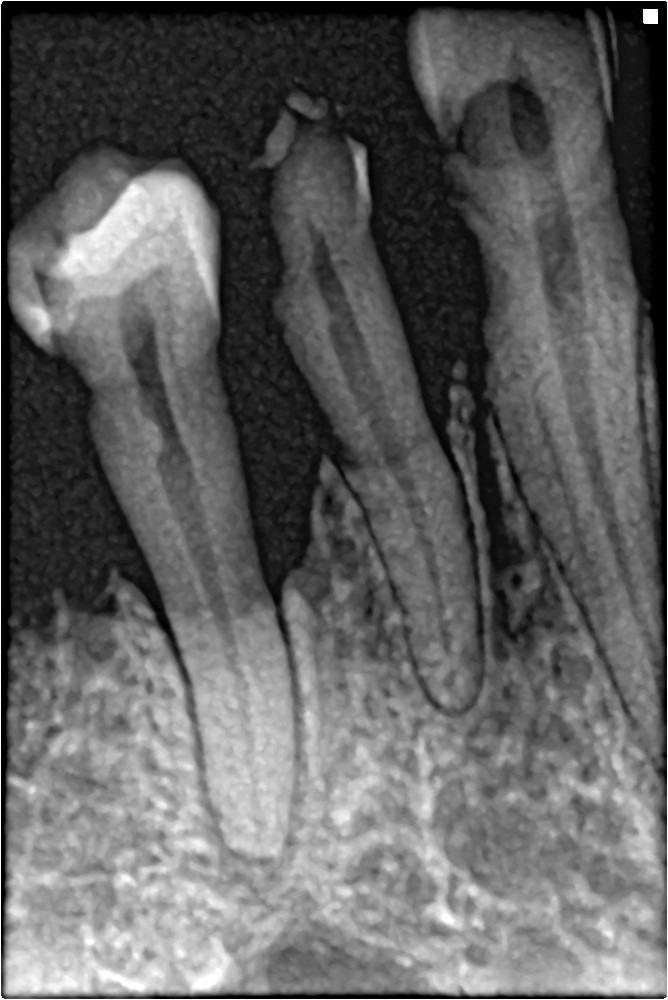
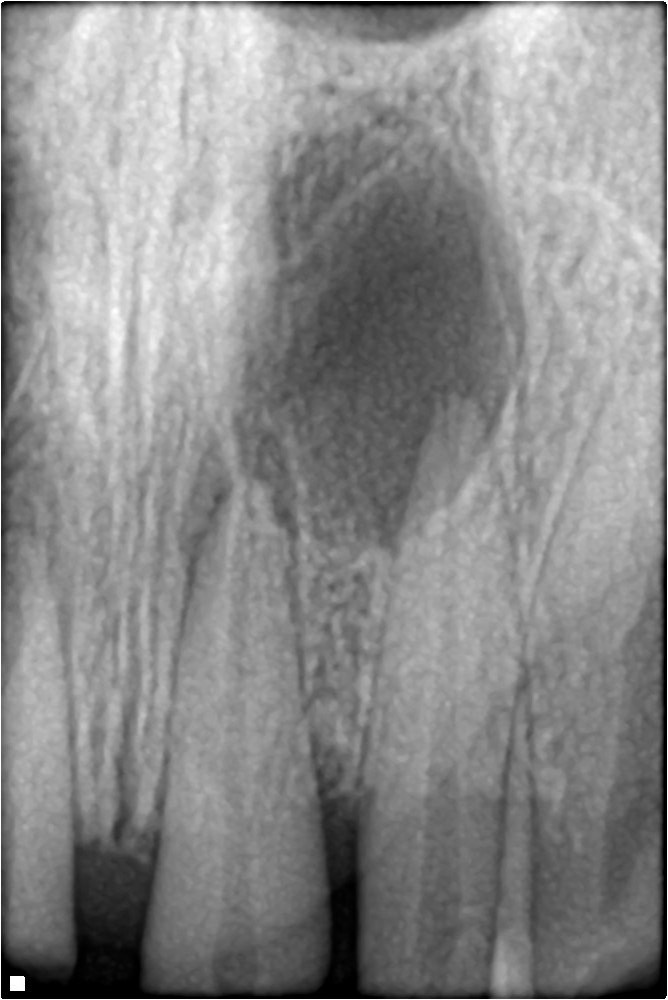
Image credits: Periapical X-ray showing bone loss by Shaimaa Abdellatif via Wikimedia Commons (CC BY-SA 4.0); chronic apical periodontitis image by Michele Gardini via Wikimedia Commons (CC BY-SA 3.0); periapical radiolucency image by Shaimaa Abdellatif via Wikimedia Commons (CC BY-SA 4.0). Used as educational examples — they do not depict toothcheck patients.
Last medically reviewed: May 2026 by the toothcheck Dental Team.