Crown vs Filling: When You Really Need a Crown (and When You Do Not)
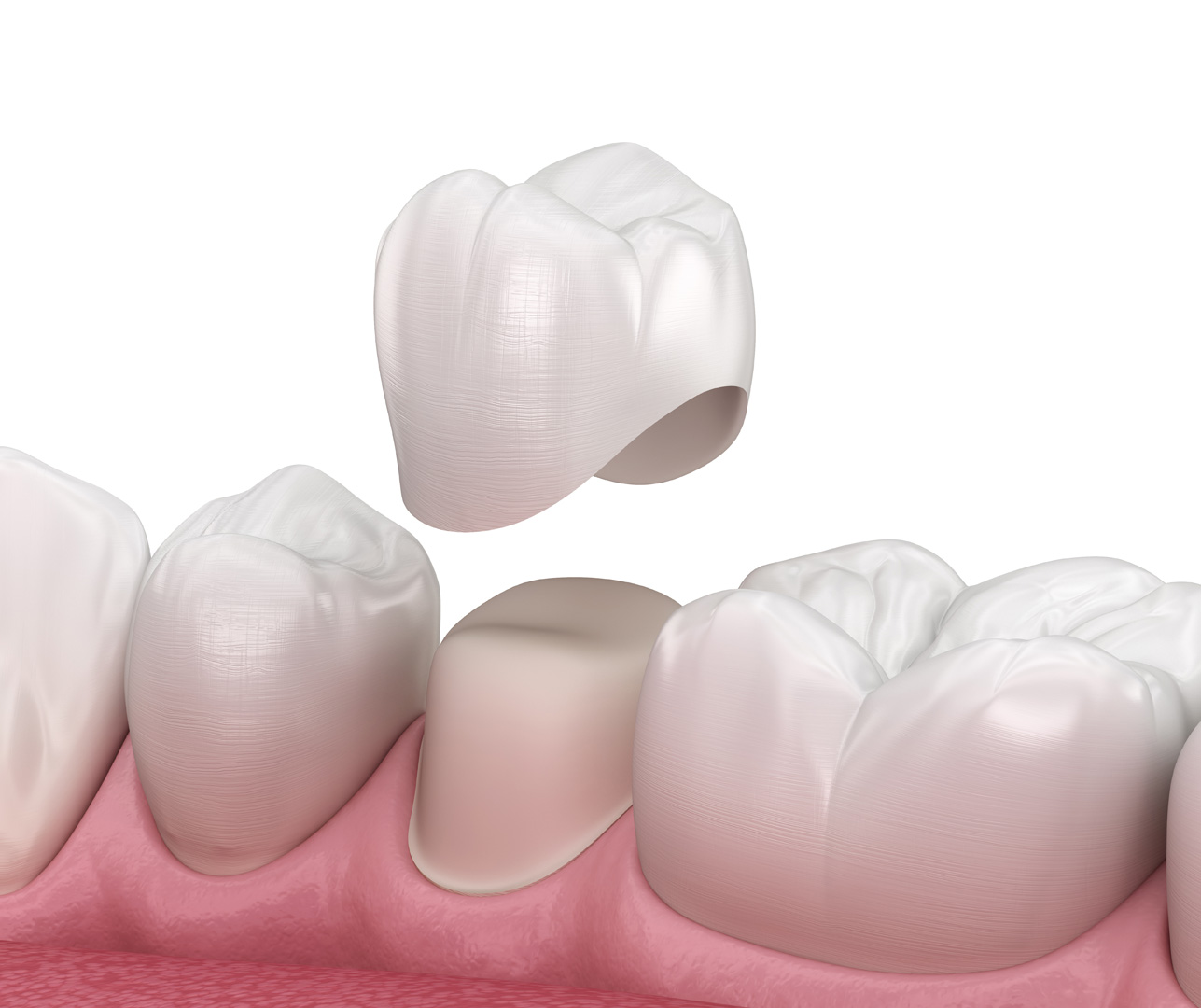
Crown vs filling: learn how much tooth each removes, when a crown is truly needed, when a filling or onlay is enough, and how to verify a crown plan.
Reviewed by the toothcheck Dental Team Independent dentist providing online second opinions.
Your dentist says the tooth needs a crown, and the quote is well over a thousand dollars. A few months ago a similar tooth just got a filling. It is fair to wonder what the difference is, and whether the bigger treatment is really necessary.
This guide explains crown vs filling in plain English: what each one is, how much tooth each removes, when a crown is genuinely the right call, and when a filling or onlay can do the job while keeping more of your natural tooth.
Quick Answer
In the crown vs filling decision, the deciding factor is how much healthy tooth is left and whether the tooth is cracked or under heavy chewing force. A filling suits small to moderate decay. An onlay suits larger damage that still leaves strong walls. A crown is the right choice when the tooth is badly broken down, cracked, or has had a root canal on a back tooth. Crowns are sometimes recommended where a filling or onlay would preserve more tooth, so it is worth understanding the reasoning before you agree.
What Is the Difference Between a Filling, an Onlay, and a Crown?
All three restore a damaged tooth, but they remove very different amounts of healthy structure.
Filling
A filling replaces the decayed part of the tooth with a material such as tooth-colored composite. The dentist removes the decay and little else. It is the most conservative option and is usually done in one visit. If you are unsure whether you need one at all, see do I really need a filling.
Onlay
An onlay is made in a lab or milled in the office and bonded onto the tooth. It covers one or more cusps but leaves the outer walls intact where they are healthy. It removes more tooth than a filling and noticeably less than a crown.
Crown
A crown is a cap that covers the entire visible part of the tooth. To fit one, the dentist reshapes the tooth on all sides, which means removing a meaningful amount of healthy enamel and dentin. That is not a reason to avoid crowns. It is a reason to choose them when they are actually needed.
When a Crown Is Genuinely the Right Call
A crown is often the best treatment, and delaying it can cost you the tooth. Common situations where a crown is justified include:
- Large decay with little tooth left. When most of the crown of the tooth is gone, a filling has nothing solid to hold onto.
- A cracked tooth. A crown holds the pieces together and protects the tooth from splitting further, especially when the crack reaches the chewing surface.
- After a root canal on a back tooth. Molars and premolars take heavy force, and root-canal-treated teeth can be more brittle. A crown is commonly recommended to protect them.
- A failed large filling. If a big filling has broken, leaked, or repeatedly decayed underneath, the tooth may need full coverage.
- Severe wear or a very weak tooth. Some teeth need full coverage to function.
If your dentist points to one of these reasons and shows it to you on the X-ray or in the mouth, a crown is likely sound advice.
When a Filling or Onlay May Be Enough
Crowns can be over-recommended, sometimes out of habit, sometimes because a crown is seen as the safer or more durable choice, and sometimes because it is more profitable. A filling or onlay deserves a serious look when:
- The decay is moderate and the tooth walls are still thick and strong.
- There is no crack, and the tooth has no history of splitting.
- An old filling is simply worn or stained but not leaking or decayed underneath. Our article on replacing all your fillings covers this.
- The tooth has not had a root canal and still has plenty of structure.
Preserving healthy tooth matters because a tooth that has been crowned cannot go back to being a natural tooth, and every time a restoration is replaced, a little more structure is typically lost.
Crown vs Filling vs Onlay at a Glance
| Factor | Filling | Onlay | Crown |
|---|---|---|---|
| Healthy tooth removed | Least | Moderate | Most |
| Best for | Small to moderate decay | Larger damage with strong walls | Cracked, heavily broken-down, or root-canal-treated back teeth |
| Typical visits | Usually one | One or two | Usually two, or one with in-office milling |
| Typical US cost | Roughly 150 to 450 dollars | Roughly 800 to 1,500 dollars | Roughly 1,000 to 2,000 dollars or more |
| Can you upgrade later? | Yes, to an onlay or crown | Yes, to a crown | Not reversible |
Costs vary by region, material, and dentist, so treat these as ballpark ranges, not quotes.
Why Crowns Are Sometimes Over-Recommended
Most dentists recommend crowns in good faith. Some simply prefer a more aggressive approach to protecting teeth, and the tooth really may be at risk. But there are known patterns worth being aware of:
- Treating a tooth that is stable. A tooth with a small, stable crack line or an old filling that is still sealed does not always need to be crowned preventively.
- Skipping the middle option. Some practices do not offer onlays, so the choice becomes a filling or a crown.
- Financial incentives. A crown is a larger, higher-value procedure than a filling.
None of this means your dentist is acting in bad faith. It means a large treatment is worth understanding. Our guide to unnecessary dental work red flags covers the signs to watch for.
Questions to Ask Before Agreeing to a Crown
- Exactly why does this tooth need a crown rather than a filling or onlay?
- How much healthy tooth is left, and can you show me on the X-ray?
- Is there a crack? Where, and how deep?
- What happens if we wait, or if we do a filling or onlay now?
- Will the tooth need a root canal as a result of the crown preparation?
A confident dentist will welcome these questions. Vague answers like "it is just safer" deserve a follow-up.
Getting a Second Opinion Before a Crown
A crown is a big-ticket, irreversible decision, which makes it a good candidate for a second look. A reviewer can examine your X-rays and see whether the remaining tooth structure supports a filling or onlay, or whether the crown really is needed. Here is more on how X-rays can be reviewed for a second opinion.
If the second reviewer agrees that a crown is needed, you proceed with confidence. If not, you may save significant money and keep more of your tooth. For general information on restorations, the American Dental Association is a reliable reference.
Two Ways toothcheck Can Help
Request a conservative network dentist. toothcheck is building a Trusted Network of conservative, minimally invasive US dentists who commit in writing to the least-invasive effective option. These are dentists who reach for a crown when it is needed, and consider a filling or onlay when that will do the job. The network is request-based, live in a few select US metros, and still growing. You can request a conservative network dentist and toothcheck follows up within 72 hours.
Get an online second opinion. For 59 dollars, a licensed dentist reviews your X-rays and treatment plan and returns a plain-English written report. You find out whether the crown looks justified, whether a filling or onlay is a reasonable alternative, and what to ask next. Learn more about the online dental second opinion.
Active problems should be treated promptly. The goal is not to delay needed care, but to avoid removing healthy tooth that did not need to go.
FAQ
Is a crown better than a filling?
Neither is better in general. A filling is the right choice when enough healthy tooth remains to support it, while a crown is the right choice when a tooth is cracked, heavily broken down, or needs full protection. The best option is the one that does the job while removing the least healthy tooth.
How do I know if I need a crown or a filling?
It mostly depends on how much sound tooth structure is left and whether the tooth is cracked or under heavy chewing load. Ask your dentist to show you the X-ray and the tooth, and to explain why a filling or onlay would not hold up. A clear, specific answer is a good sign.
What is an onlay, and is it a middle option?
An onlay is a custom-made restoration that covers part of the chewing surface, including one or more cusps, but leaves more of your natural tooth than a full crown. It can be a good fit when a filling is too small but a crown would remove more tooth than necessary.
Can a large filling be replaced with a crown later?
Yes. Starting with a filling or onlay does not close the door on a crown later if the tooth needs one. The reverse is not true, because tooth removed for a crown cannot be put back.
How can toothcheck help me decide about a crown?
For 59 dollars, a licensed dentist reviews your X-rays and treatment plan and sends a plain-English written report on whether the crown looks justified and what alternatives exist. You can also request a conservative network dentist, and toothcheck follows up within 72 hours. The network is live in a few select US metros and still growing.
Is a crown always needed after a root canal?
On back teeth, a crown after a root canal is often recommended because the tooth can be weakened and chews with heavy force. Front teeth with plenty of remaining structure sometimes do well with a filling alone. It depends on how much tooth is left, so ask your dentist to explain the reasoning for your tooth.
Final Thoughts
Crowns are a valuable, sometimes essential treatment, and a filling is not always the better choice. What matters is that the restoration matches the actual condition of your tooth, and that you understand why. If you want a dentist whose approach is to protect as much natural tooth as possible, request a conservative network dentist and we will follow up within 72 hours.
Last medically reviewed: October 2026