Root Canal Retreatment: What Happens When a Root Canal Fails
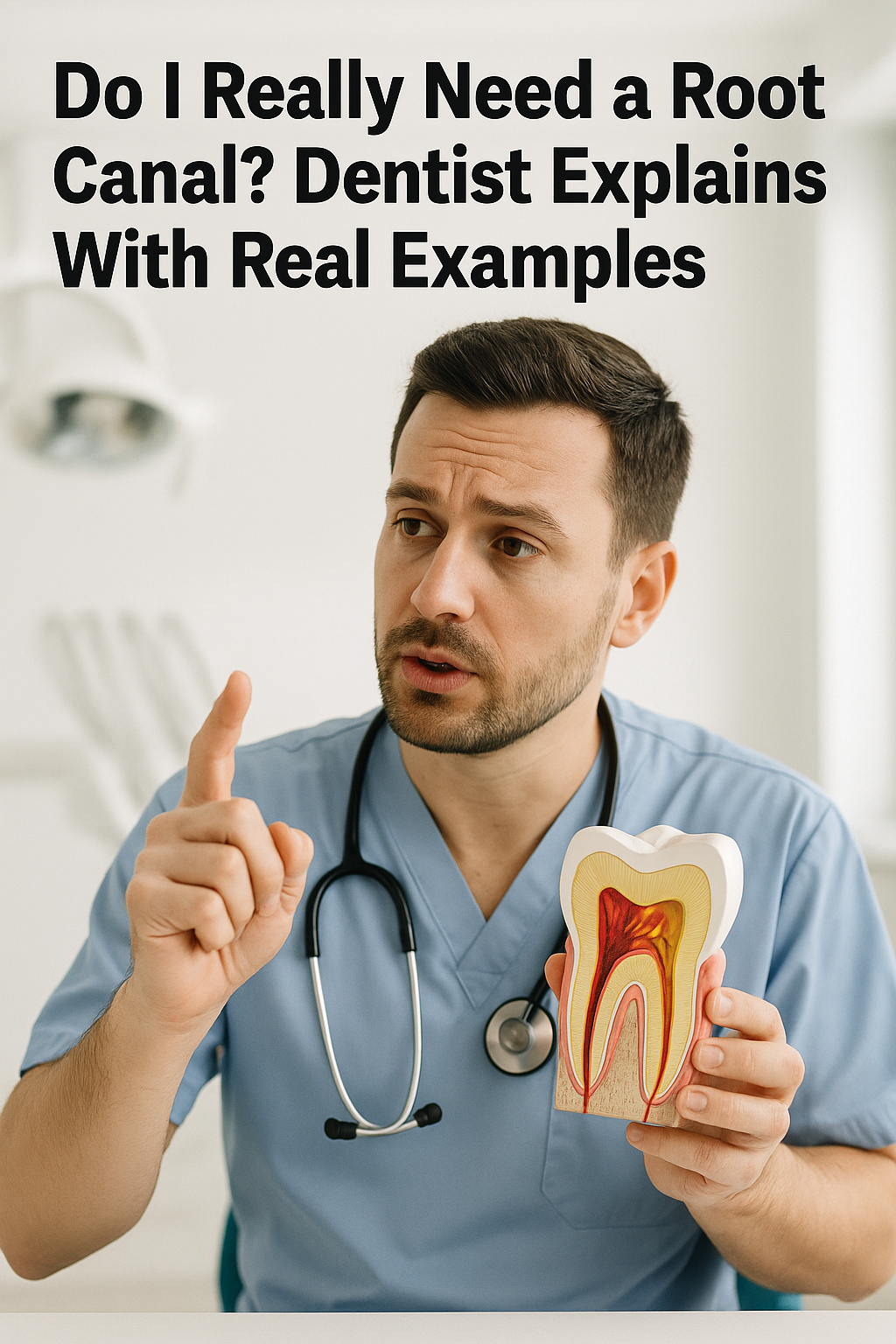
Learn what happens when a root canal fails, when retreatment is necessary, and how to decide.
Reviewed by the toothcheck Dental Team Independent dentist providing online second opinions.
If you had a root canal months or years ago and that tooth is now hurting again, you are not alone. Between 5% and 15% of root canals fail over time, and retreatment is a well-established, predictable procedure to save the tooth.
But not every painful root canal needs retreatment, and not every failed root canal is worth re-treating. Understanding when retreatment is the right choice can save you time, money, and unnecessary procedures. If your dentist has recommended retreatment and you are unsure, an independent second opinion can provide clarity.
Quick Answer: Most Failed Root Canals Can Be Saved With Retreatment
If your root canal tooth hurts or shows an abscess on X-ray, retreatment is often the best option. The dentist removes old filling material, re-cleans the canals, and places new filling material. Success rates are 70-85%.
If you have no symptoms but an X-ray shows a small lesion, the decision is not always clear-cut. Some small lesions can be monitored. This is where a second opinion is most valuable.
Why Root Canals Fail
1. Missed or Untreated Canals
The most common reason for failure, according to the American Association of Endodontists, is untreated canal space. Teeth vary in anatomy. Upper molars can have 4 or more canals. A study in the Journal of Endodontics found that nearly 25% of retreated cases involve at least one missed canal.
2. Incomplete Cleaning of the Original Canals
Bacteria can survive in complex root canal anatomy. Even with proper technique, tiny branches (lateral canals) and difficult curves may harbor infection. Research published in the International Endodontic Journal shows that standard cleaning techniques leave some areas untouched in approximately 40% of cases.
3. Leaking Crown or Filling
A crown that does not seal properly allows bacteria from saliva to re-enter the root canal system. This is one of the most preventable causes of failure. Delaying crown placement after a root canal increases the risk of reinfection.
4. Vertical Root Fracture
A crack running from the crown down through the root is essentially untreatable. If a vertical fracture is present, retreatment will not work and extraction is usually required. This accounts for approximately 10-15% of root canal failures.
5. New Decay Exposing Filling Material
If decay develops under the crown and reaches the root filling, bacteria can re-infect the tooth. Good oral hygiene and regular dental checkups can prevent this.
Symptoms of Root Canal Failure
Not all failed root canals cause symptoms. Many are detected only on routine X-rays.
Symptoms you might notice: pain when chewing or biting, tenderness or pressure sensation, gum swelling near the treated tooth, a pimple (fistula) that drains pus, a bad taste in the mouth, or the tooth feeling higher than surrounding teeth.
Signs only visible on X-ray: an abscess at the root tip, widening of the periodontal ligament space, incomplete root filling, or missed canals.
When Retreatment Is Recommended
Retreatment is the preferred option when: the tooth has good bone support, the tooth is restorable (enough structure remains above the gumline), the cause of failure is correctable (missed canal, incomplete cleaning, leaking crown), no vertical root fracture is present, and you want to save the natural tooth.
For more about the decision process, see Dentist Says I Need a Root Canal
When Extraction and Implant May Be Better
Extraction may be the smarter choice when: a vertical root fracture is confirmed, the tooth has extensive bone loss, the tooth is not restorable, or retreatment has already failed once.
The Retreatment Procedure Step by Step
1. Access: the dentist drills through the existing crown to reach the root canals 2. Removal: old filling material is removed using files and ultrasonic instruments 3. Re-cleaning: the canals are disinfected using sodium hypochlorite, often with a microscope 4. Refilling: clean, dry canals are filled with new biocompatible material 5. Restoration: a new permanent crown is placed within 1-2 weeks
Microscope assistance finds missed canals in up to 30% of cases.
Retreatment vs. Apicoectomy
| Approach | Success Rate | When Used |
|---|---|---|
| Conventional retreatment | 70-85% | Missed canals, incomplete cleaning, leaking crown |
| Apicoectomy (surgery) | 60-85% | Retreatment not possible or has failed |
Is Retreatment Worth It?
A retreatment costs $800-$2,500 plus a new crown ($1,000-$3,000). Extraction and implant costs $3,000-$6,000+, making retreatment more affordable when the tooth has a reasonable chance of long-term success. However, if the prognosis is poor, repeated retreatments can become a financial drain.
Good retreatment candidates: clearly identifiable cause, good bone support, commitment to quality crown. Consider extraction when: failure cause is unclear, bone loss is significant, or periodontal disease is also present.
Red Flags in Retreatment Recommendations
Be cautious if a dentist recommends retreatment but: did not show you the reason for failure on an X-ray, cannot explain why the first root canal failed, recommends extraction without discussing retreatment, or does not examine the quality of the existing crown. See Red Flags of Unnecessary Dental Work
Why a Second Opinion Matters
Retreatment recommendations often change after an independent review. Common findings include: the original dentist missed a canal that a specialist can treat, the tooth has a fracture that retreatment cannot fix, the pain is actually from a different tooth, or the crown just needs replacement.
See The Importance of an Unbiased Second Opinion Dentist
FAQ
How do I know if my root canal has failed? Signs include persistent pain, swelling, a pimple on the gum, tenderness to chewing, and an abscess on X-ray.
Can a failed root canal heal on its own? No. Treatment is always necessary.
How successful is retreatment? Approximately 70-85%.
When should I choose extraction? When the tooth has a vertical fracture or extensive bone loss.
Is retreatment covered by insurance? Most dental plans cover it at 50%.
Final Advice
Root canal failure is not the end of the road. Retreatment is a proven, predictable procedure. But it is not always the right choice.
Before agreeing to retreatment or extraction, get an independent review.
Upload your X-rays to ToothCheck. Get a clear second opinion in under 72 hours.
Last medically reviewed: June 2026