AI vs Dentist: 5 Things AI X-Ray Tools Miss
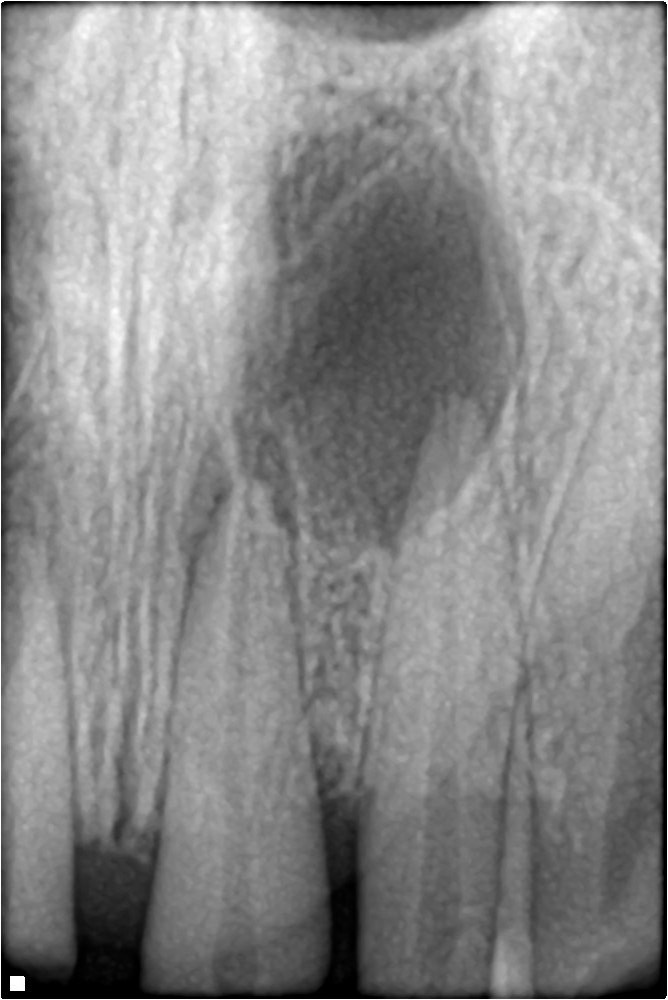
AI dental X-ray tools achieve high accuracy on isolated detection tasks, but published research has documented five specific things a human dentist still catches that algorithms miss. A dentist walks through each one with citations from peer-reviewed sources.
Reviewed by the toothcheck Dental Team Independent dentist providing online second opinions.
AI dental X-ray tools are now in roughly one in three US dental practices and the rate is climbing fast. Pearl, Overjet, Denti.AI, and a half-dozen smaller vendors all market the same headline benefit: catch more findings, sooner, with higher consistency than a human eye alone. The published accuracy numbers are real — a 2024 randomised controlled trial in dental caries detection found AI-assisted reading slightly outperformed independent dentists on sensitivity, and Overjet's own published validation work shows the system detecting 43% more calculus and 27% more early caries than visual examination alone.
The numbers are not the whole story. The same body of literature documents five specific things every commercial AI dental tool currently misses — and each one matters more in your individual case than a marketing-friendly accuracy number. This article walks through the five, with citations, and explains when an independent human read is still the right call.
What AI Dental X-Ray Tools Genuinely Do Well
Before the limitations, the honest version of what AI does well — because credibility on this topic requires it.
- Calibration assistance. A single reader's caries-detection threshold drifts over the course of a clinical day. AI applies the same threshold to every image. Published research in Scientific Reports shows AI matching or modestly exceeding average reader performance for specific, well-defined detection tasks (caries, missing teeth, periapical radiolucencies).
- Speed. AI flags a panoramic radiograph in seconds versus the several minutes of systematic reading a thorough human review takes.
- A useful second set of eyes for the treating dentist. A 2025 BDJ Open systematic review frames AI dental tools as decision-support, not autonomous diagnosis — the consensus position in published clinical literature.
The five things below are not a claim that AI is broken. They are the documented places where the tools fail, and the reasons a human read still has independent value.
1. AI Does Not Correlate Findings With Your Symptoms
A periapical radiolucency at the apex of a tooth root looks the same on the image whether the tooth is acutely infected and painful or whether the lesion is an old healed scar from a root canal you had ten years ago. The radiograph is the same; the clinical situation is opposite.
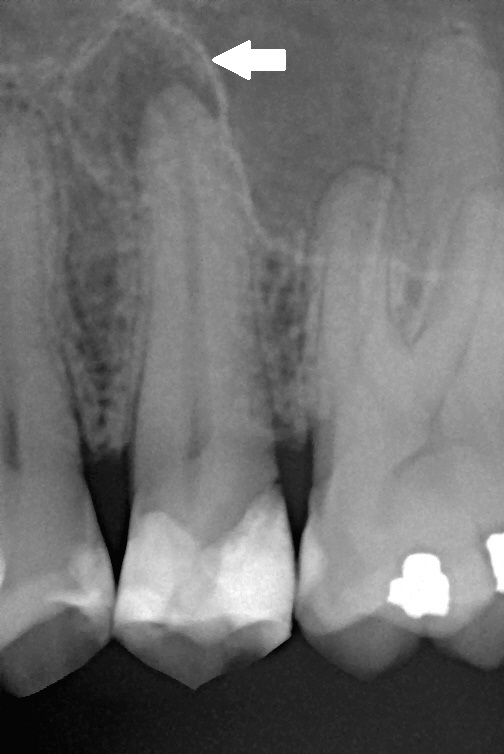
The American Association of Endodontists' clinical guidance on pulpal and periapical diagnosis is explicit on this point: diagnosis requires radiographic findings plus pulpal sensitivity testing plus percussion testing plus symptom history. None of those last three is something a commercial AI tool can do. The tool reports the finding; the dentist reaches the diagnosis.
In practice this means AI tools flag findings that, on history and exam, turn out not to need intervention. The 2025 BDJ Open systematic review of AI deployment in dentistry concluded that AI applications "lack the ability to synthesize a patient's history, chief complaint, or physical examination" — and that this gap is the strongest argument for keeping a human in the diagnostic loop.
2. AI Cannot Compare Your Current X-Ray to Previous Ones
Change over time is one of the most diagnostically valuable signals in dental radiology. A 4 mm interproximal radiolucency that has been the same size for five years is fundamentally different from a 4 mm radiolucency that was not there six months ago — the first is monitoring territory, the second is active disease.
Current commercial AI tools — Pearl, Overjet, Denti.AI, the major players — read a single image at a time. Temporal comparison is technically possible and is being researched (a recent diagnostic accuracy study evaluated AI panoramic interpretation against a human reference at a single time point), but it is not standard in clinical deployment as of 2026.
A human reader, looking at your previous bitewings alongside your current ones, makes the change-over-time call instantly. The same finding on a single image, without that comparison, may legitimately get a different treatment recommendation. This is one of the most consequential differences in real clinical practice.
3. AI Confuses Artifact With Pathology
A radiograph contains real findings (caries, bone loss, periapical lesions, fractures) and also a long list of artifacts that can look like findings but are not:
- Cervical burnout — a darkening at the neck of the tooth between enamel and bone that mimics an interproximal cavity
- Mach band effect — an optical illusion at the boundary between enamel and dentin
- Metal scatter — the bright halo around amalgam fillings or crowns that creates a dark margin
- Sealant or composite restoration — radiolucent restorative materials that can look like decay
- Cone-cut shadows — operator error at the edge of the film
- Normal anatomic radiolucencies — mental foramen, incisive foramen, maxillary sinus floor
The BDJ Open 2025 review cites a specific published case in which an AI tool flagged a fissure sealant as caries — the authors note that "focusing solely on the AI's output could have led to unnecessary intervention due to automation bias." The technical issue is that AI tools are trained on labeled datasets where labeling errors propagate; the systems are confident in patterns they have learned, including incorrect ones.
A trained human reader recognises most artifacts in under a second. AI tools currently do not, and the misreads cluster in the direction of more findings rather than fewer — the failure mode that, downstream, translates into more procedures.
4. AI Does Not Synthesize Your Medical History
Dental treatment is profoundly modified by systemic medical context:
- Bisphosphonates or denosumab — extractions and implants carry a meaningful risk of medication-related osteonecrosis of the jaw; treatment plans are restructured around this
- Anticoagulants and antiplatelet medications — surgical procedures require coordination with the prescribing physician
- Diabetes — affects wound healing, periodontal disease progression, and infection risk
- Bleeding disorders — modify surgical approach
- Recent or ongoing chemotherapy or radiation — defers non-urgent work
- Pregnancy — defers non-essential X-rays and certain medications, per ACOG and ADA joint guidance
- Immunosuppression — affects threshold for treating asymptomatic findings
Every one of these changes what should be done about a given radiographic finding. The American Dental Association's evidence-based dentistry framework treats medical history as a primary input to treatment planning — not a secondary footnote.
An AI tool has none of this. It sees the radiograph and reports the radiographic finding. The treating dentist (or an independent reviewer with access to your history) is the only party who synthesises the medical picture with the radiographic one.
5. AI Cannot Judge Clinical Relevance — Finding Is Not the Same as Treatment Need
This is the highest-leverage limitation, and the one most directly linked to overtreatment risk.
AI tools count findings. Dentists weigh them. The same small interproximal lesion in outer enamel might warrant:
- Monitoring and remineralisation for a low-risk patient with good hygiene, low caries history, regular fluoride exposure, and no symptoms
- Restoration for a high-risk patient with active caries elsewhere, dry mouth, frequent sugar exposure, and evidence of progression
The radiograph is identical. The right call is opposite. This is exactly the territory where AI's higher sensitivity gets translated into "more disease found" headlines — which is true at the finding-detection level but which does not, and should not, translate one-for-one into procedures.
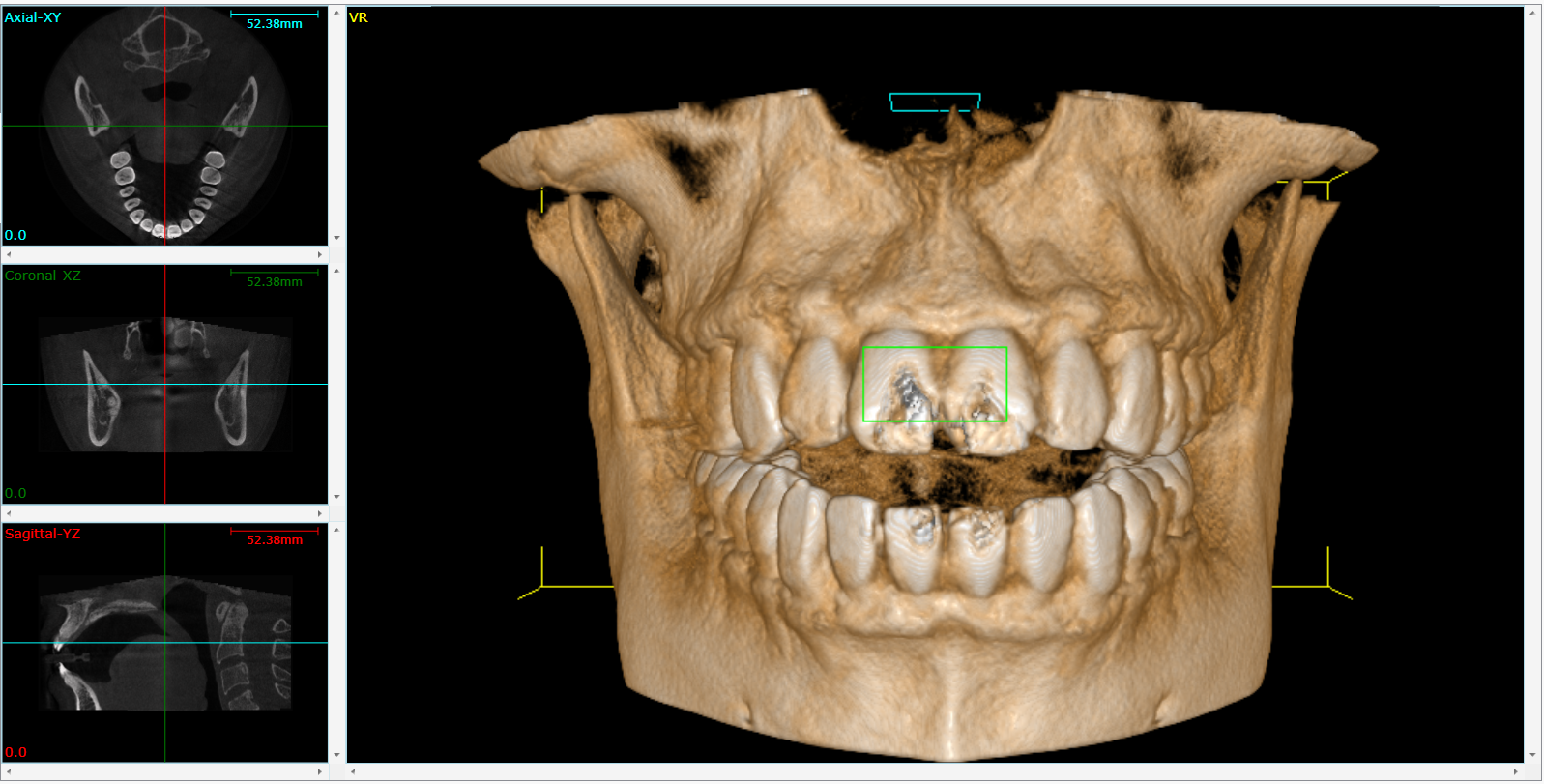
Pearl markets that its system "detects 37% more disease" than visual examination alone. Overjet reports detecting 43% more calculus and 27% more early caries. Both numbers are accurate at the detection level. Both numbers, taken without the relevance filter that a dentist applies, are a recipe for finding more billable procedures than would otherwise have been recommended.
The International Caries Detection and Assessment System (ICDAS) — the global standard for caries staging — combines radiographic finding with clinical exam, patient risk profile, and progression rate to assign a management category. Each of those inputs except the first is invisible to AI.
What Patients and Dentists Actually Say
The peer-reviewed data on trust matches the limitations above.
A 2024 controlled study published in PMC of dentists, dental students, and patients on the introduction of AI in dentistry asked who should make the final diagnosis. The results:
- 86.8% of dentists said a qualified human clinician should make the final diagnosis
- 76.6% of dental students agreed
- 67.7% of patients agreed
- Only 3.8% of dentists, 10.4% of students, and 10.8% of patients said they would trust a diagnosis made entirely by AI
The consensus across professional and patient populations is that AI is a useful tool inside a clinical workflow, not a replacement for the clinician.
The Structural Issue: AI Inside a Treating Practice Is Not an Independent Second Opinion
Several major AI vendors — including Pearl and Software of Excellence — explicitly market their tools as a "second opinion." The framing makes intuitive sense from inside a practice. From the patient's side, it conflates two different things:
- A second set of eyes for the treating dentist, which is a useful internal calibration tool
- A second opinion, which by clinical and legal definition is an evaluation by a different practitioner with no financial relationship to the treating practice
An AI tool running inside your existing dentist's office cannot be the second of these. The tool runs on the same imaging, in the same practice, where the same financial incentives apply to acting on the findings. If the AI surfaces 37% more findings, the practice — not the AI — decides which to act on. The practice gets paid for the action.
This is not a criticism of any specific tool or any specific dentist. It is a description of how the incentive structure works. An independent second opinion, by the standard definition used by the American Dental Association, requires an evaluator with no financial stake in the outcome of the recommendation. For the full structural breakdown — including the four common second-opinion arrangements that look independent but are not — see independent dental second opinion: why it matters that the reviewer is not selling you anything.
When AI Is Useful — and When You Still Need a Human Read
AI in your dentist's office is reasonable for:
- Routine screening between recall visits
- A single finding on a low-stakes treatment plan
- Calibration support for the treating dentist
A human read is the right call for:
- Any treatment plan above $1,000
- Conflict between two dentists' findings on the same imaging
- Symptoms that do not match the radiographic finding
- Cases where you have previous X-rays available for change-over-time comparison
- Anything irreversible — root canal, extraction, implant
- Anyone with significant medical history (bisphosphonates, anticoagulants, immunosuppression, pregnancy)
For a deeper walk through what dentists actually look for on a radiograph — and what AI tools cannot weigh — see the dental X-ray reading guide.
How to Ask Your Dentist About AI Findings (Without Being Adversarial)
Most dentists welcome informed patient questions. Useful, non-confrontational ones:
- "Did the AI flag this, or did you find it visually first?"
- "If the AI had not flagged it, would you still recommend treatment?"
- "What is the risk profile if I monitor this for six months instead of treating now?"
- "Can I have copies of my X-rays so I can keep them for comparison next visit?"
A dentist who responds well to these questions is signaling alignment with evidence-based practice. A dentist who is dismissive of them is signaling something else. For a deeper read on warning signs that may indicate overtreatment recommendations, see our guide on 12 red flags of unnecessary dental work.
FAQ
Is AI dental X-ray analysis accurate?
For specific isolated detection tasks (cavities, calculus, missing teeth, certain periapical findings) commercial AI tools achieve published sensitivity and specificity comparable to or slightly above average human readers. Accuracy at the diagnostic level — which requires clinical context, history, and symptom correlation — has not been validated in any commercial tool because the tools do not have access to those inputs.
Should I refuse if my dentist uses AI?
No. AI as decision support in a clinical workflow is reasonable and increasingly standard. The question to ask is whether the act-on-the-finding decision was made by the dentist on clinical grounds (not on AI output alone), and whether you have had the opportunity to discuss alternatives like monitoring.
Does AI replace the dentist?
No, and no major published study or regulatory framework supports that framing. The FDA's clearance of dental AI tools classifies them as decision-support, not autonomous diagnostic devices. The BDJ Open 2025 systematic review concludes the same.
Is an "AI second opinion" inside my dentist's office a real second opinion?
No. By the ADA's own framework, a second opinion is an evaluation by a different practitioner with no financial relationship to the treating practice. AI running inside your dentist's office is a useful clinical tool but it is not, by that definition, a second opinion.
Why might an AI flag a cavity that is not there?
The most common reasons are cervical burnout (an optical artifact at the tooth neck), metal scatter near restorations, fissure sealants or radiolucent composite restorations interpreted as caries, and labeling errors in the training dataset that propagate into the AI's predictions. The published Pearl-fissure-sealant case in BDJ Open 2025 is one documented example.
How can I get an independent second opinion on my dental X-rays?
An online dental X-ray review service like toothcheck has a licensed dentist read your imaging with no financial stake in whether you proceed with treatment. The report includes finding identification, comparison with your previous imaging if you provide it, and explicit clinical context. Reports are typically delivered in under 72 hours.
Final Read
AI dental X-ray tools are useful. They are not a substitute for a clinician — no major published study or regulatory framework treats them as one — and they are not an independent second opinion, by definition, when they run inside the practice that will profit from the findings.
When the stakes are low (routine screening, small findings, no treatment plan attached) AI in your dentist's office is fine background calibration. When the stakes are real (a quoted treatment plan, an irreversible procedure, a finding that does not match your symptoms, or a disagreement between two dentists) the right tool is a human read by a dentist with no financial stake in the outcome.
For a written, finding-by-finding read of your X-rays by a licensed dentist in under 72 hours, see our dental X-ray review service. For a deeper walk through what dentists actually look for on a radiograph — and what AI tools cannot weigh — see the dental X-ray reading guide.
Image credits: Chronic apical periodontitis image by Michele Gardini via Wikimedia Commons (CC BY-SA 3.0); CBCT image by Panda 51 via Wikimedia Commons (CC BY-SA 4.0); periapical radiolucency hero image by Shaimaa Abdellatif via Wikimedia Commons (CC BY-SA 4.0). Images used as educational examples — they do not depict toothcheck patients.
Last medically reviewed: May 2026 by the toothcheck Dental Team.