Independent Dental Second Opinion: No Conflict
A dentist explains what "independent" actually means in a dental second opinion — the ADA Code of Ethics requirement, the principal-agent problem in dentistry, and four common sources of bias most patients never spot.
Reviewed by the toothcheck Dental Team Independent dentist providing online second opinions.
When you Google "dental second opinion near me," you get two kinds of results. The first is local dental practices offering "free second opinion consultations." The second is online services that charge $20–$150 to review your X-rays and treatment plan. Most patients pick the free option without thinking about what the word "independent" actually means.
The structural difference between those two categories matters more than the price. The published American Dental Association Code of Ethics is explicit on this point: a dentist providing a second opinion "should not have a vested interest in the ensuing recommendation to ensure the patient receives quality, unbiased care." That sentence, taken seriously, rules out most of what is marketed as a dental second opinion today.
This guide walks through what "independent" actually means in clinical and ethical terms, the four common second-opinion arrangements that look independent but aren't, and what to look for in a reviewer when the stakes are real.
What "Independent" Actually Means
In every other branch of medicine, a second opinion has a precise structural meaning: an evaluation by a different practitioner with no financial relationship to the treating provider. The point of independence is to remove the structural pull toward agreeing with — or upselling beyond — the original recommendation.
In dentistry, four conditions together make a second opinion structurally independent:
1. The reviewing dentist has no financial relationship with the treating practice. No shared ownership, no referral arrangement, no employment overlap. 2. The reviewer is paid a flat fee regardless of what they recommend. Their income does not depend on whether they agree with the original plan, recommend more, or recommend less. 3. The reviewer does not perform the procedures they are evaluating. They cannot personally profit from converting you into a patient. 4. There is no social or referral relationship to the treating dentist. No "I went to dental school with your dentist" — that pull is well-documented in the professional-courtesy literature.
A reviewer meeting all four conditions is structurally independent. A reviewer meeting fewer than four has some level of structural pull that the patient should know about before relying on the opinion.
The Underlying Problem: Why Independence Is Necessary in the First Place
The reason independence matters in dentistry — more than in many service industries — is a well-documented economic structure called the principal-agent problem, applied to medicine.
In a 2022 paper in the Journal of the American Dental Association titled "How to manage the principal-agent problem in dentistry"00188-X/fulltext), the authors describe the issue precisely: patients (the principals) rely on dentists (the agents) for treatment recommendations the patients themselves cannot evaluate, because the dentist has years of training the patient does not have. When the dentist's income depends on the procedures they recommend, the structural conflict is built in — even when the individual dentist is acting in good faith.
A 2025 paper in British Dental Journal, "Ethics on the edge: commodification, credence and care in general dental practice," frames the same issue more bluntly: dentistry is a *credence good* (a service whose quality the buyer cannot fully verify, even after the work is done), and credence-good economics predicts overtreatment as a baseline tendency without external counter-pressure.
Published empirical work on financial conflicts of interest in dentistry confirms the structural concern is not theoretical. Dentists, like physicians, receive industry payments that can shape practice patterns at the population level.
None of this is a claim that individual dentists are dishonest. It is a description of the structure they operate inside — and why an independent reviewer, whose income does not depend on whether you proceed with treatment, has a structurally different incentive than your treating dentist or a competing local practice.
4 Common Second-Opinion Arrangements That Are Not Actually Independent
Each of these is reasonable in context and may produce a useful opinion. None of them meets the four-condition definition of independence above.
1. The "Free Second Opinion" From a Competing Local Practice
The single most common second-opinion arrangement in the US. A different dental practice down the road offers to review your treatment plan and X-rays at no charge.
What the practice gets out of it: a chance to convert you into a patient. If they confirm the original plan, they may offer to perform it themselves. If they disagree with the original plan, they almost always offer an alternative plan that they would perform.
This is not necessarily a bad arrangement. The opinion may be honest and well-reasoned, and the competition between practices is part of how price discovery works. But by the ADA's definition of "vested interest," a competing local practice is not structurally independent. They are not in a neutral position when reviewing your plan — they are in a position where their financial outcome depends on you switching to them.
When this opinion is useful: as one of multiple inputs, especially when comparing the proposed price.
When this opinion is not enough: when the entire question is whether the original plan is necessary at all, or when you suspect overtreatment. A competing practice has structural reasons to either confirm the original plan (so you switch to them) or replace it with a different plan (so you switch to them) — neither outcome rules out the third possibility, which is that no treatment is needed.
2. AI Software Inside Your Existing Dentist's Office
Pearl, Overjet, Denti.AI, and several other vendors explicitly market their dental AI tools as a "second opinion." The marketing language is reasonable inside the practice: the AI is a second set of eyes alongside the dentist's read.
From the patient's perspective, this is a different thing. The AI runs on the same imaging, inside the same practice, where the same financial incentives apply. If the AI surfaces 37% more findings (Pearl's marketing number), the practice — not the AI — decides which to act on. The practice gets paid for the action.
We covered the five structural limitations of AI dental X-ray tools — including the documented case of Pearl AI misreading a fissure sealant as caries — in AI vs. dentist: 5 things AI dental X-ray tools miss. The summary: AI as decision support for your dentist is reasonable. AI as your "second opinion" is, by the ADA's own definition of vested interest, not independent.
3. A Family-Friend Dentist
A common informal arrangement. You have a relative, a college friend, or a long-standing acquaintance who happens to be a dentist. You ask them to review your X-rays.
This arrangement removes the financial-incentive problem (assuming they are not also offering to perform the work) but introduces a different one: social and professional courtesy. Dentists are deeply networked. Substantially disagreeing with another dentist's plan is socially costly within the profession. A family-friend dentist asked to review a colleague's plan — even one they have never met — has structural pull toward not contradicting it.
When this opinion is useful: as a sanity check on a clearly egregious plan, where the disagreement is obvious enough to overcome the social pull.
When this opinion is not enough: on a borderline plan, where the social cost of disagreeing exceeds the cost of letting it go.
4. A Specialist Referred by Your Treating Dentist
Your dentist recommends a root canal and refers you to an endodontist. You go to the endodontist, who confirms the diagnosis. Is that a second opinion?
By any structural definition: no. The endodontist has a referral relationship with the treating dentist; future referrals depend on the relationship continuing. The economics of specialty practice depend on referral flow. A specialist who systematically disagrees with referring dentists' plans will stop receiving referrals.
This is not a hidden conspiracy. It is the well-understood economics of specialty referral patterns, documented in healthcare-economics literature for decades.
When this opinion is useful: for the technical detail of the procedure itself — whether the specialist can do it well, what the success rates are, what the alternatives are.
When this opinion is not enough: as confirmation that the original treatment decision was correct. The specialist is structurally aligned with the referring dentist on that question.
The ADA's Own Position
The position implied by all of this is the position the ADA Code of Ethics already takes formally. From the ADA's own framework:
> "A dentist who has a patient referred by a third party for a 'second opinion' regarding a diagnosis or treatment plan recommended by the patient's treating dentist should render the requested second opinion in accordance with the Code of Ethics. The dentist rendering the second opinion should not have a vested interest in the ensuing recommendation to ensure the patient receives quality, unbiased care."
The sentence in bold is the operative one. The ADA's own ethics framework requires what most "second opinions" do not provide. The five fundamental principles underpinning the Code — patient autonomy, nonmaleficence, beneficence, justice, and veracity — all converge on the same structural requirement.
This is the framework. The question is which second-opinion arrangements actually satisfy it.
What True Independence Looks Like in Practice
An independent dental second opinion has specific structural features. The patient-facing checklist:
- The reviewing dentist is not in your geographic market. Cannot offer to perform the work even if they wanted to.
- The compensation is a flat fee paid before the review. The reviewer is paid the same whether they confirm the original plan, recommend less, or recommend more.
- The deliverable is a written report. Verbal opinions cannot be cross-checked against the original plan line by line.
- The reviewer has no referral relationship to the treating dentist. Specifically asked and disclosed.
- The service performs reviews only, not treatment. Removes the structural temptation to recommend "come see us instead."
This is the operational definition of an independent second opinion in dentistry. Online second-opinion services like toothcheck are built around all five features — the structure of the service is the answer to the structural problem.
How to Verify Independence in Any Reviewer
Whether you are evaluating an online service or an in-person practice, ask these four questions before relying on the opinion:
1. "Do you have any financial relationship with my treating dentist or practice?" 2. "Are you paid the same fee whether you recommend more, less, or the same treatment?" 3. "Do you perform the procedures you are evaluating?" 4. "Will you provide a written report I can compare to my original plan line by line?"
The structurally-independent answers are: no, yes, no, yes. A reviewer who gives a different combination is not necessarily dishonest, but they are not structurally independent and the opinion should be weighted accordingly. For the broader checklist on what an itemised treatment plan should look like, see our treatment plan review service.
The Cost-Benefit Math
A "free" second opinion is not free if it costs you a $2,000 procedure you did not need. A $50 independent online second opinion is the cheapest insurance policy on a four-figure treatment plan.
The math:
- Free in-person second opinion at a competing practice: $0 upfront, but the structural incentive points toward either confirming the plan or replacing it with a different plan, both of which result in you spending money
- AI "second opinion" inside your treating practice: $0 upfront, but structurally aligned with the practice that produced the original recommendation
- Independent online second opinion: $20–$150 upfront, with no structural alignment toward any specific outcome
- Independent in-person second opinion at a distant practice: $150–$400 plus travel time, structurally independent but practically expensive
For a deeper breakdown of when each makes financial sense, see our dental second opinion cost guide. The short version: for any treatment plan over $1,000, independence is the highest-leverage variable in the second opinion and is worth a modest fee.
When Independence Matters Most
Some second-opinion situations are reasonable to handle with a competing local practice or a family friend. Others require structural independence:
- Treatment plans over $1,000, especially over $5,000 (full-mouth, smile makeover, multiple implants)
- Multiple irreversible procedures recommended in one visit
- A new dentist who found substantially more work than your previous dentist — see why two dentists can recommend different treatments
- Pressure to start treatment same-day
- Cases involving an unusual procedure or a procedure with several legitimate alternatives
- Any case where you suspect overtreatment but cannot verify it yourself — see 12 red flags of unnecessary dental work
- Treatment plans where the fee itself looks out of line — see is my dentist overcharging me
FAQ
What makes a dental second opinion truly independent?
Four structural conditions: the reviewing dentist has no financial relationship with the treating practice, is paid a flat fee regardless of what they recommend, does not perform the procedures they are evaluating, and has no referral or social relationship to the treating dentist. The ADA Code of Ethics explicitly states that a dentist providing a second opinion "should not have a vested interest in the ensuing recommendation."
Are "free" second opinions from another dental practice independent?
Usually not. A practice offering a free second opinion is, in most cases, a competing practice hoping to convert you into a patient. By the ADA's definition of vested interest, that is not independent. The opinion may still be useful, but it should not be your only second opinion on a high-stakes plan.
Is an AI second opinion inside my dentist's office independent?
No. AI tools running inside your treating dentist's office are useful clinical decision-support, but they are not independent by the ADA's definition. We cover the structural and clinical limitations in detail in AI vs. dentist: 5 things AI dental X-ray tools miss.
What is the principal-agent problem in dentistry?
The structural conflict that arises whenever a patient relies on a dentist whose income depends on the procedures they recommend. The patient cannot easily verify whether a recommendation is correct because of information asymmetry. JADA published a 2022 paper00188-X/fulltext) specifically on how to manage this problem in dentistry; independent review with no procedural revenue is one of the standard solutions.
Is my dentist legally required to support my right to a second opinion?
The ADA Code of Ethics, under the principle of Patient Autonomy, frames patient self-determination as a primary obligation. A dentist who is dismissive of your request for a second opinion is acting outside the ethics framework their own professional body has published. Most state dental boards reference the ADA Code in their licensure standards.
How can I verify a second-opinion service is actually independent?
Ask: do you have any financial relationship with my treating practice; are you paid the same fee regardless of what you recommend; do you perform the procedures you are evaluating; will you give me a written report? The structurally-independent answers are no, yes, no, yes.
When is paying for independence worth it versus accepting a free opinion?
For low-cost findings, the math does not particularly favour paying. For any treatment plan over $1,000, for any irreversible procedure, or for any case where you have already received conflicting recommendations, independence is the highest-leverage variable in the second opinion and worth a modest fee. The cost-benefit math is in our dental second opinion cost guide.
Final Read
The word "second opinion" is doing more work than most patients realise. The arrangements that look like a second opinion — a free consultation at another local practice, an AI tool inside your own dentist's office, a family-friend dentist, a specialist your dentist referred you to — each have specific structural pulls that the ADA Code of Ethics anticipates and addresses. None of them is necessarily dishonest. None of them is structurally independent.
The structural answer is a reviewer with no financial relationship to your treating practice, paid a flat fee regardless of what they recommend, who does not perform the procedures they are evaluating. That is what toothcheck is built around. The cost is a small fraction of any procedure it might save you from doing unnecessarily.
For complex treatment plans, upload your written plan with your X-rays for a line-by-line independent review. For imaging-focused questions, upload your X-rays for an independent dental X-ray review. The written report comes back in under 72 hours, with no structural pull toward any specific conclusion.
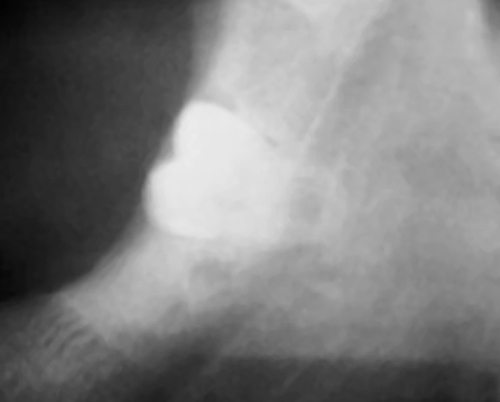
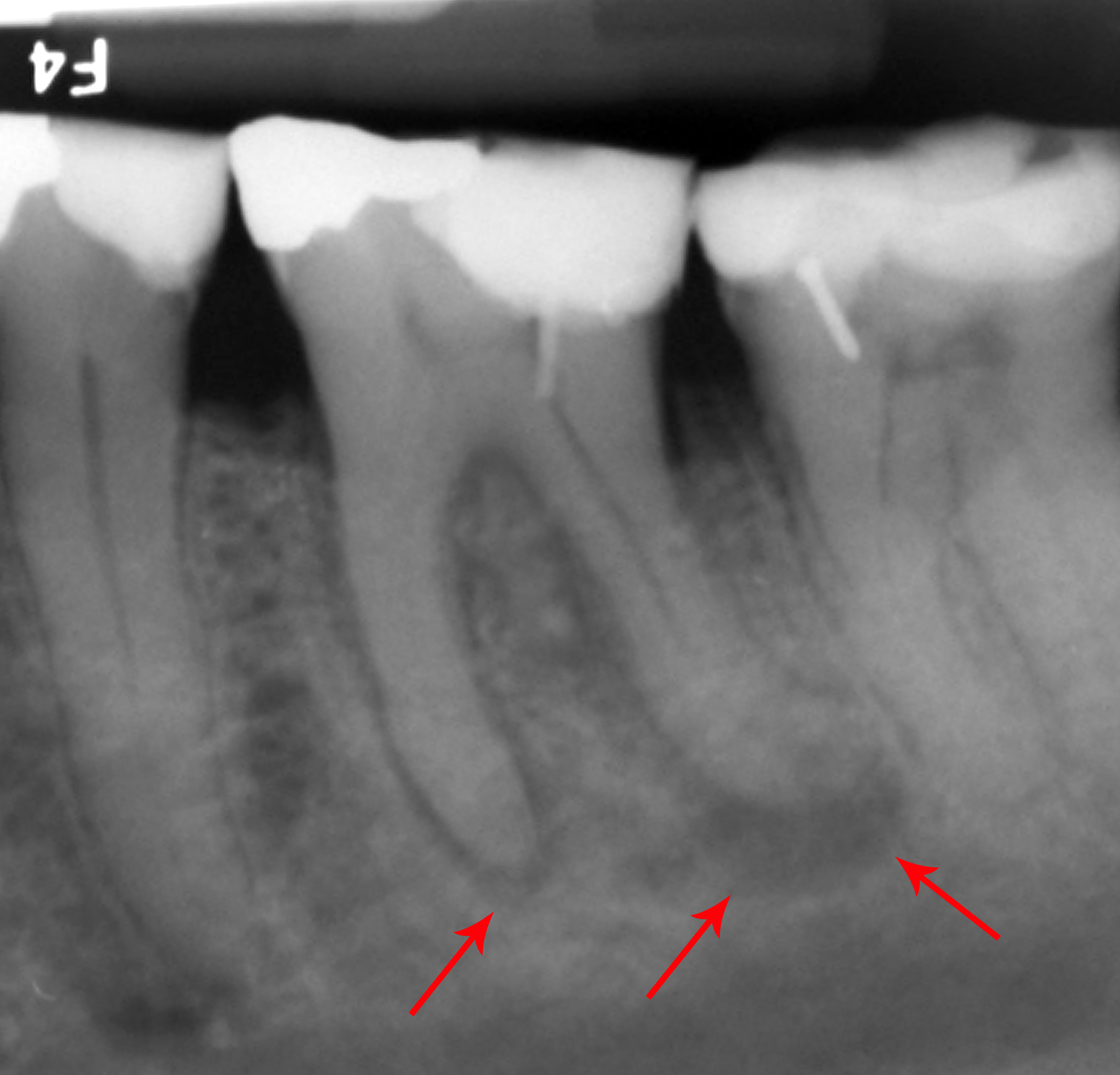
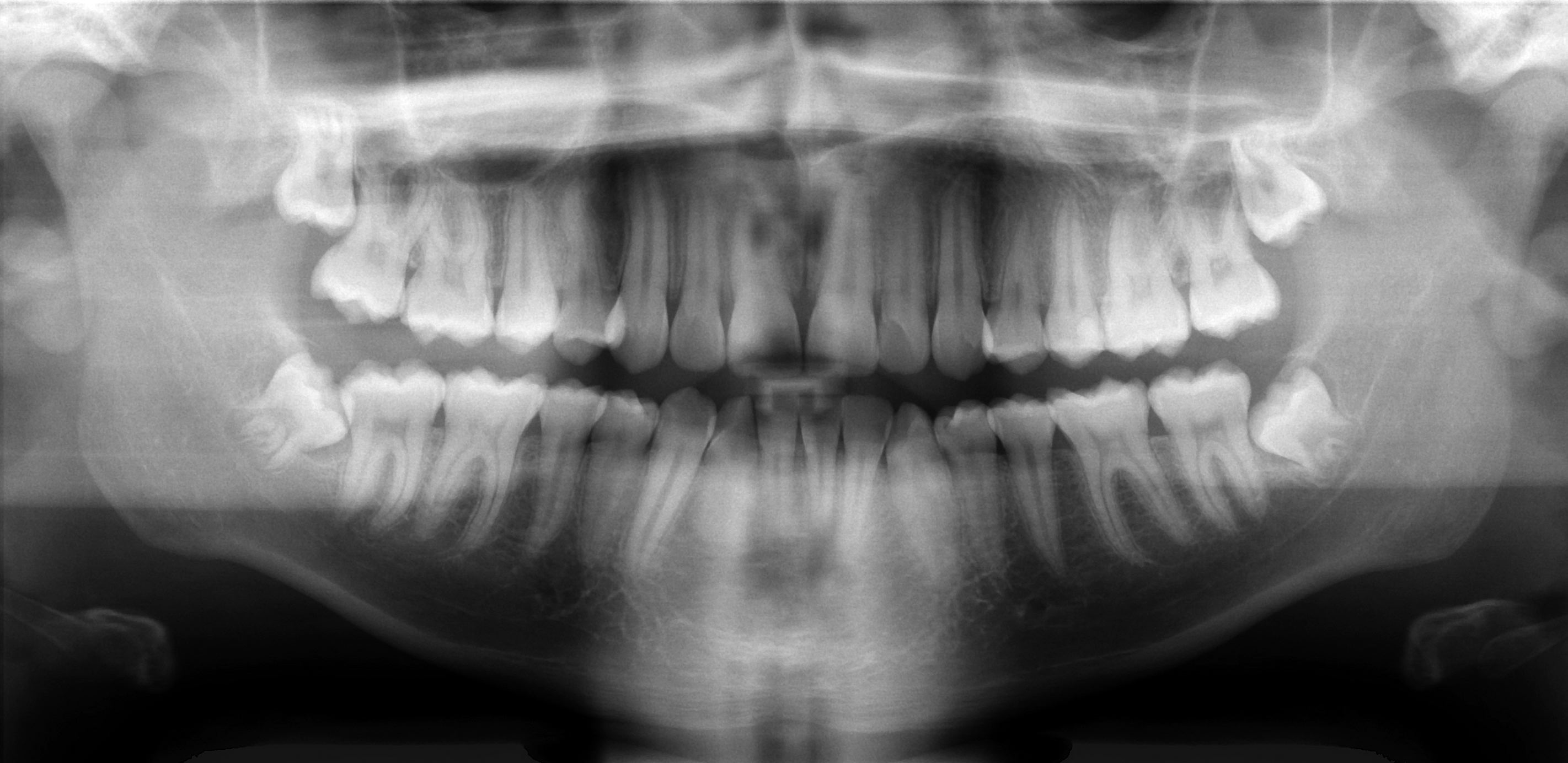
Image credits: Impacted wisdom tooth radiograph by Coronation Dental Specialty Group via Wikimedia Commons (CC BY-SA 3.0); periapical abscess radiograph by Coronation Dental Specialty Group via Wikimedia Commons (CC BY-SA 3.0); panoramic radiograph by Coronation Dental Specialty Group via Wikimedia Commons (CC BY 3.0). Used as educational examples — they do not depict toothcheck patients.
Last medically reviewed: May 2026 by the toothcheck Dental Team.