Dental Procedure Codes: Read Your Treatment Plan
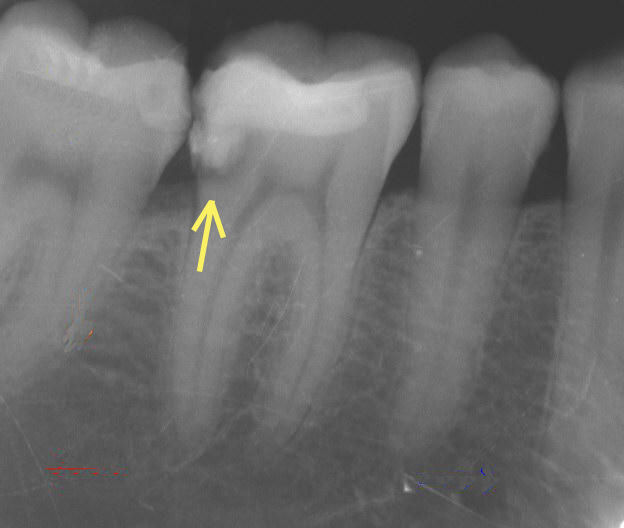
Learn how to read dental procedure codes (CDT codes) on your treatment plan, understand what each code means, spot billing red flags, and compare prices like an informed patient.
Reviewed by the toothcheck Dental Team Independent dentist providing online second opinions.
Most patients look at a dental treatment plan and see a list of mysterious codes, numbers, and dollar amounts. D2750. D2391. D4341. These look like random alphanumeric strings — but they are actually the most important tool you have for understanding (and questioning) what your dentist is recommending.
These codes are called CDT codes (Current Dental Terminology), maintained by the American Dental Association and updated annually. Every dental procedure performed in the United States has a unique code. If your dentist submits a claim to your insurance company, that code determines how much the insurance company will pay and what your out-of-pocket cost will be.
According to the National Association of Dental Plans (NADP), understanding your CDT codes is the single most effective way to catch billing errors, compare prices between providers, and spot treatment plans that may include unnecessary procedures.
This guide breaks down the most common CDT codes, explains what they actually mean, and shows you how to spot red flags in any treatment plan.
Quick Answer
Every dental procedure has a 4- or 5-character CDT code starting with the letter D:
- D0xxx: Preventive (cleanings, exams, X-rays)
- D2xxx: Restorative (fillings, inlays, onlays)
- D27xx: Crowns (D2740–D2799)
- D3xxx: Endodontics (root canals)
- D4xxx: Periodontics (gum treatment, deep cleanings)
- D5xxx: Prosthodontics (dentures, bridges, implants)
- D6xxx: Oral surgery (extractions)
- D7xxx: Orthodontics (braces, aligners)
- D8xxx: Adjunctive services (sedation, emergency visits)
The first digit after D tells you the category. The next three digits get increasingly specific. Here's the bottom line: if you can read the code, you can check whether the procedure matches your symptoms, compare prices across providers, and spot plans that include unnecessary work.
How to Read Your Treatment Plan
A standard treatment plan looks something like this:
| Tooth | Code | Description | Fee |
|---|---|---|---|
| 14 | D2750 | Crown — porcelain fused to high noble metal | $1,450 |
| 14 | D2950 | Core buildup | $350 |
| 19 | D2391 | Resin-based composite — 3 surfaces | $320 |
| 18 | D3330 | Root canal — molar | $1,600 |
| — | D0220 | Intraoral periapical X-ray | $55 |
Here's how to read each piece, step by step. Start by looking at the tooth number and matching it to where you actually feel symptoms. If pain is on the upper right but codes are on the lower left, that's worth flagging right away.
The Tooth Number
Most dentists use the Universal Numbering System:
- 1–16: Upper teeth, right to left
- 17–32: Lower teeth, left to right
- 18, 19: Lower left first and second molars
- 14: Upper left first molar
The CDT Code
Each code has a standard description. You can look up any code at the ADA's CDT Code lookup or the American Dental Association's online code search tool.
The Fee
This is the dentist's listed fee. It may or may not reflect what you actually pay after insurance. You can verify fees against the FAIR Health Consumer database at fairhealthconsumer.org, which shows customary fees by ZIP code. If your dentist's fee is significantly above the regional average, that's worth asking about — and could save you hundreds of dollars.
The Most Common Dental Codes and What They Mean
Preventive Codes (D0xxx)
| Code | Description | Typical Cost |
|---|---|---|
| D0120 | Periodic oral evaluation (regular checkup) | $40–$100 |
| D0150 | Comprehensive oral evaluation (new patient) | $80–$200 |
| D0210 | Full mouth X-rays (intraoral) | $100–$250 |
| D0220 | Intraoral periapical X-ray (one tooth) | $25–$75 |
| D0274 | Bitewing X-rays (4 images) | $40–$100 |
| D1110 | Prophylaxis (regular cleaning) | $75–$200 |
| D1208 | Fluoride varnish application | $25–$60 |
Red flag: If a dentist bills D4341 (deep cleaning) when only D1110 (regular cleaning) is appropriate, that is one of the most common forms of dental overbilling. For more details, see Do I Really Need a Deep Cleaning?.
Restorative Codes (D2xxx)
| Code | Description | Typical Cost |
|---|---|---|
| D2140 | Amalgam filling — 1 surface | $150–$300 |
| D2161 | Amalgam filling — 3 surfaces | $200–$400 |
| D2391 | Composite filling — 3 surfaces | $200–$450 |
| D2394 | Composite filling — 4+ surfaces | $250–$550 |
| D2610 | Inlay — porcelain, 1 surface | $700–$1,500 |
| D2642 | Onlay — porcelain, 3 surfaces | $800–$1,800 |
| D2750 | Crown — porcelain fused to high noble metal | $1,100–$2,500 |
| D2752 | Crown — porcelain fused to base metal | $900–$2,000 |
| D2790 | Crown — all ceramic | $1,200–$3,500 |
Red flag: D2750 on a tooth with a small cavity is a warning sign. For the difference between crown and filling indications, see Crown vs Filling: How Dentists Decide — and When to Push Back.
Endodontic Codes (D3xxx)
| Code | Description | Typical Cost |
|---|---|---|
| D3110 | Pulp cap (protective dressing on exposed nerve) | $50–$150 |
| D3220 | Pulpotomy (partial nerve removal) | $100–$300 |
| D3310 | Root canal — anterior (front tooth) | $800–$1,500 |
| D3320 | Root canal — premolar | $900–$1,800 |
| D3330 | Root canal — molar | $1,200–$2,500 |
| D3346 | Root canal retreatment — molar | $1,500–$3,000 |
Red flag: D3310, D3320, or D3330 recommended without clear X-ray evidence or spontaneous pain. For guidance, see Dentist Says I Need a Root Canal — What Should I Do Next?.
Periodontal Codes (D4xxx)
| Code | Description | Typical Cost |
|---|---|---|
| D4341 | Scaling and root planing — 4+ teeth per quadrant | $200–$400 per quadrant |
| D4342 | Scaling and root planing — 1–3 teeth per quadrant | $100–$250 per quadrant |
| D4910 | Periodontal maintenance (after deep cleaning) | $80–$200 |
| D4249 | Crown lengthening (gum reshaping) | $500–$1,500 |
Red flag: D4341 billed on all four quadrants in one visit when you have healthy or mildly inflamed gums is the most overdiagnosed periodontal code.
Oral Surgery Codes (D7xxx/D6xxx)
| Code | Description | Typical Cost |
|---|---|---|
| D7111 | Extraction — coronal remnant (baby tooth) | $100–$250 |
| D7140 | Extraction — erupted tooth (simple) | $150–$350 |
| D7240 | Extraction — impacted wisdom tooth | $400–$1,200 |
| D7953 | Bone graft for implant | $300–$1,200 |
For guidance on wisdom tooth evaluations, see Wisdom Tooth Extraction: Do You Really Need It?.
How to Spot Billing Red Flags
1. Multiple D4341 (Deep Cleanings) Without Periodontal Charting
Before any deep cleaning is recommended, your dentist should perform full periodontal probing and record pocket depths on 6 points per tooth. If you weren't probed, the D4341 recommendation is questionable. Here's how to ask: "Can you show me my pocket depth chart so I can understand why a deep cleaning is needed?" A dentist who can't provide it likely hasn't done the exam.
2. Crown Codes on Teeth With Small Cavities
D2750 (crown) on a tooth with a small shadow on an X-ray that could be treated with D2391 (3-surface filling) is a sign the treatment plan may be overaggressive. For the difference between crown and filling indications, see Crown vs Filling: How Dentists Decide.
3. Root Canal Codes Without Pulp Testing
D3330 (molar root canal) should only be billed after cold, heat, and percussion tests confirm irreversible pulpitis or necrosis. If no such tests were performed, the diagnosis may be incomplete. For guidance, see Dentist Says I Need a Root Canal.
4. Bundling of Multiple Expensive Procedures at Once
If your treatment plan lists a root canal (D3330), core buildup (D2950), crown (D2750), and possibly an extraction on another tooth all in one visit, ask whether each procedure is independently justified. A single bad tooth doesn't mean every nearby tooth needs work, and dentists who pile on procedures in one visit deserve extra scrutiny.
5. Codes That Do Not Match Your Symptoms
A patient with brief cold sensitivity should not see D3330 on their treatment plan. The symptoms need to match the code. If they don't, that's a clear sign you should get a second opinion.
How Dental Insurance Reads These Codes
Insurance companies use CDT codes to determine:
- Whether the procedure is covered (your plan's list of covered services)
- What they will pay (the "allowed amount" for each code in your region)
- Your frequency limits (e.g., bitewings once per year, crowns every 5+ years)
- Whether the procedure is basic or major (major procedures like crowns and implants have lower coverage percentages)
Understanding the codes helps you ask better follow-up questions, such as "My plan says D2750 has a 50% coinsurance after deductible — can you confirm what my estimated out-of-pocket will be?"
Step-by-Step: How to Review Your Own Treatment Plan
Here's a simple process you can follow at home:
1. Match the codes to your symptoms. Does the code match what you're actually feeling? If you have brief cold sensitivity but see D3330 (molar root canal), flag it. 2. Check for multiple expensive codes. A root canal (D3330) at $1,600 plus a crown (D2750) at $1,450 plus a buildup (D2950) at $350 adds up fast. Ask if each is independently justified. 3. Look up the fees. Go to fairhealthconsumer.org and enter your ZIP code. Compare your dentist's fees to the regional average. 4. Ask for alternative codes. If D2750 (crown) is on the plan, ask whether D2391 (filling) or D2642 (onlay) could work instead. 5. Get a second opinion before signing. If anything feels off, upload your plan to an independent reviewer.
How to Get a Second Opinion on a Treatment Plan
If your treatment plan contains codes that seem excessive or do not match your symptoms, you have options:
1. Ask your dentist to explain each code and why it is recommended for your specific case 2. Look up the codes at fairhealthconsumer.org or the ADA code search tool 3. Compare the fees with regional averages on fairhealthconsumer.org 4. Get an online second opinion — upload your treatment plan and X-rays for an independent review
At ToothCheck, a separate treatment-plan review service called the Dental Treatment Plan Review provides a comprehensive evaluation of all recommended procedures with cost analysis. This is the most straightforward way to check whether every code on your plan is appropriate.
FAQ
What does the D mean in dental codes? The D stands for Dental. It is the prefix for all CDT (Current Dental Terminology) codes maintained by the American Dental Association.
How can I tell if a dental code is being overused? Compare the code to your symptoms. If the code describes a major procedure (crown, root canal) but your symptoms are mild (brief sensitivity, pain only when chewing), the code may not match your actual needs.
What is the most overdiagnosed dental code? D4341 (scaling and root planing per quadrant) is widely considered the most overdiagnosed code in dentistry, followed closely by D3330 (molar root canal).
Can I look up a dental code myself? Yes. The ADA offers a CDT code search tool, and FAIR Health Consumer provides fee estimates by ZIP code.
Does a second opinion check my treatment plan codes? Yes. An independent review evaluates every recommended CDT code against your X-rays, symptoms, and clinical records to verify each code's appropriateness.
Final Advice
Dental codes are not secret. They are a standardized language that any patient can learn to read. The time you spend understanding the codes on your treatment plan is the best investment you can make in avoiding unnecessary treatment and overbilling.
If something on your treatment plan does not add up — whether it is a crown on a healthy tooth, a deep cleaning on healthy gums, or a root canal on a tooth that does not hurt — get a second opinion.
Upload your treatment plan and X-rays to ToothCheck for an independent review in under 72 hours.
References: 1. American Dental Association. CDT 2025: Current Dental Terminology. https://www.ada.org/en/publications/cdt 2. National Association of Dental Plans. Understanding Your Dental Benefits. https://www.nadp.org/ 3. FAIR Health Consumer. Dental Cost Estimator. https://www.fairhealthconsumer.org/ 4. Journal of Dental Research. Variation in treatment planning for periodontal procedures. 2022. 5. PubMed Central. Overdiagnosis in dentistry: a systematic review. PMC Journal.
Last medically reviewed: June 2026