Dental Crown vs Implant: How to Choose
Dental crown vs implant — when is each clinically appropriate? An independent dentist walks through the ferrule rule, the published 10-year survival data, peri-implantitis prevalence, the failure modes of each, and how to evaluate a recommendation against the evidence.
Reviewed by the toothcheck Dental Team Independent dentist providing online second opinions.
If your dentist has discussed both a crown and an implant for the same tooth, the decision is rarely a matter of preference. It is a clinical judgement about whether the tooth itself can be reliably restored — and once that is settled, the choice is largely made.
This guide walks through the actual decision framework dentists use, the published survival data for each option, the failure modes you should know about, and how to evaluate the recommendation you have been given against the evidence.
Quick Answer
If your tooth can be reliably restored — meaning enough sound tooth structure remains above the gum line and the root is structurally intact — a crown on the existing tooth is the preferred option. The American Association of Endodontists' clinical guidance explicitly favours natural-tooth preservation when restorability is realistic.
If the tooth cannot be reliably restored — insufficient remaining tooth structure for the ferrule, vertical root fracture, severe bone loss, or failed endodontic prognosis — extraction with implant placement is the more durable long-term option.
The Clinical Decision Point: the Ferrule Rule
The single most important variable in the crown-versus-implant decision is the ferrule — the band of healthy tooth structure above the gum line that the crown grips. Without an adequate ferrule, the crown is mechanically destined to fail.
Published consensus in the Journal of Endodontics ferrule effect literature review01149-6/abstract) and the International Endodontic Journal is clear: at least 1.5–2.0 mm of sound coronal tooth structure is needed for an adequate ferrule. When less remains, no amount of post-and-core reinforcement compensates — the tooth fails at the margin under occlusal load.
Posts and cores do not strengthen teeth. Preservation of natural coronal dentin is the primary determinant of long-term restorative success. When ferrule cannot be predictably achieved, surgical crown lengthening or orthodontic extrusion can sometimes recover it; when neither is feasible, extraction and implant is the structurally honest answer.
This is the question every patient considering crown vs. implant should ask: *how much sound coronal tooth structure do I have, and is it enough for an adequate ferrule?*
When the Tooth Cannot Be Saved
Four findings make a tooth non-restorable and tip the decision to implant:
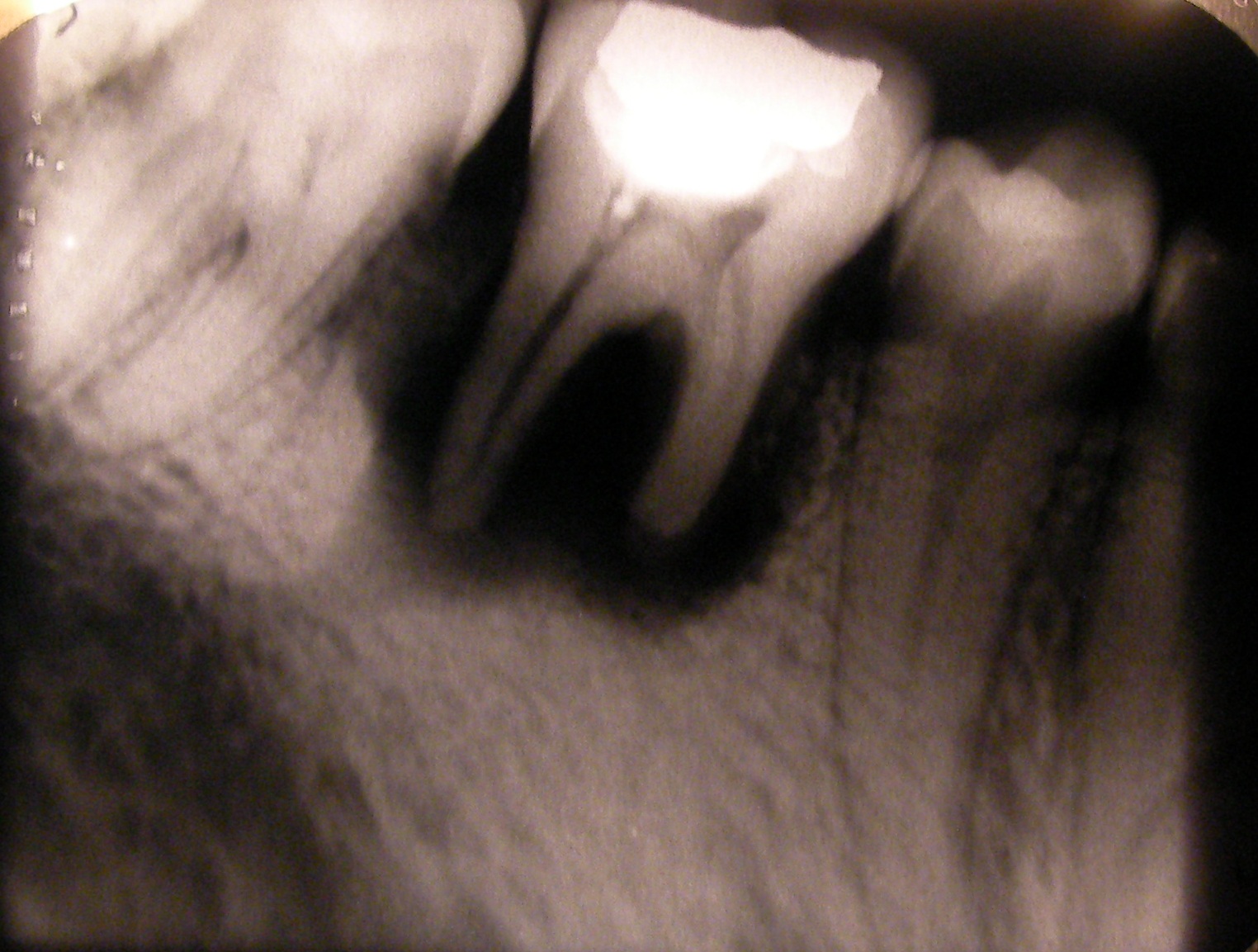
1. Insufficient ferrule — less than 1.5 mm of sound tooth structure above the gum line after decay removal 2. Vertical root fracture — confirmed on examination or CBCT, fundamentally compromises long-term prognosis. See our dental X-ray reading guide for what root pathology looks like on imaging 3. Severe periodontal bone loss — when supporting bone is reduced below ~50% of root length, the tooth is mechanically compromised 4. Failed previous endodontic treatment with poor retreatment prognosis — when a root canal has failed and the underlying anatomy cannot be cleaned successfully, retreatment is unlikely to succeed
For more on when a root canal is and is not the right path before resorting to extraction, see Do I Really Need a Root Canal? and our deeper guide on endodontist vs general dentist for root canals.
What a Dental Crown Actually Is
A crown is a custom-made cap — typically porcelain-fused-to-metal, all-ceramic (e.max, zirconia), or full-cast metal — that covers the prepared tooth from the gum line up. It restores function and protects what remains of the tooth structure beneath.
Crowns are used after root canal treatment, on cracked teeth, on teeth with large failed fillings, and on teeth where decay has removed too much enamel to support a direct restoration. The decision whether a tooth needs a crown at all (versus a large filling or onlay) is itself a frequent point of overdiagnosis — see Do I Really Need a Crown?.
Published crown survival data
Crown longevity depends heavily on the underlying tooth, the material, and the patient's oral hygiene:
- Ceramic single crowns: systematic reviews report 5-year survival around 93–94%
- Porcelain-fused-to-metal (PFM): 5-year cumulative survival approximately 84%
- Zirconia single crowns: 15-year cumulative failure rate around 28% per a recent BDJ Open prospective study
Crowns placed on root-canal-treated teeth fail more often than crowns on vital teeth — endodontic treatment is itself the single most significant risk factor for crown failure. This is why the ferrule question matters so much in the decision.
What a Dental Implant Actually Is
A dental implant is a titanium (occasionally zirconia) screw placed into the jawbone where a missing or extracted tooth used to be. Over 3–6 months it integrates with the surrounding bone — a biological process called osseointegration. Once integrated, an abutment is attached, and a crown is placed on top.
A single-tooth implant has three components:
- The implant fixture (the screw in the bone) — typically lasts 20+ years
- The abutment (the connector between fixture and crown) — replaceable
- The crown on top — replaceable every 10–15 years
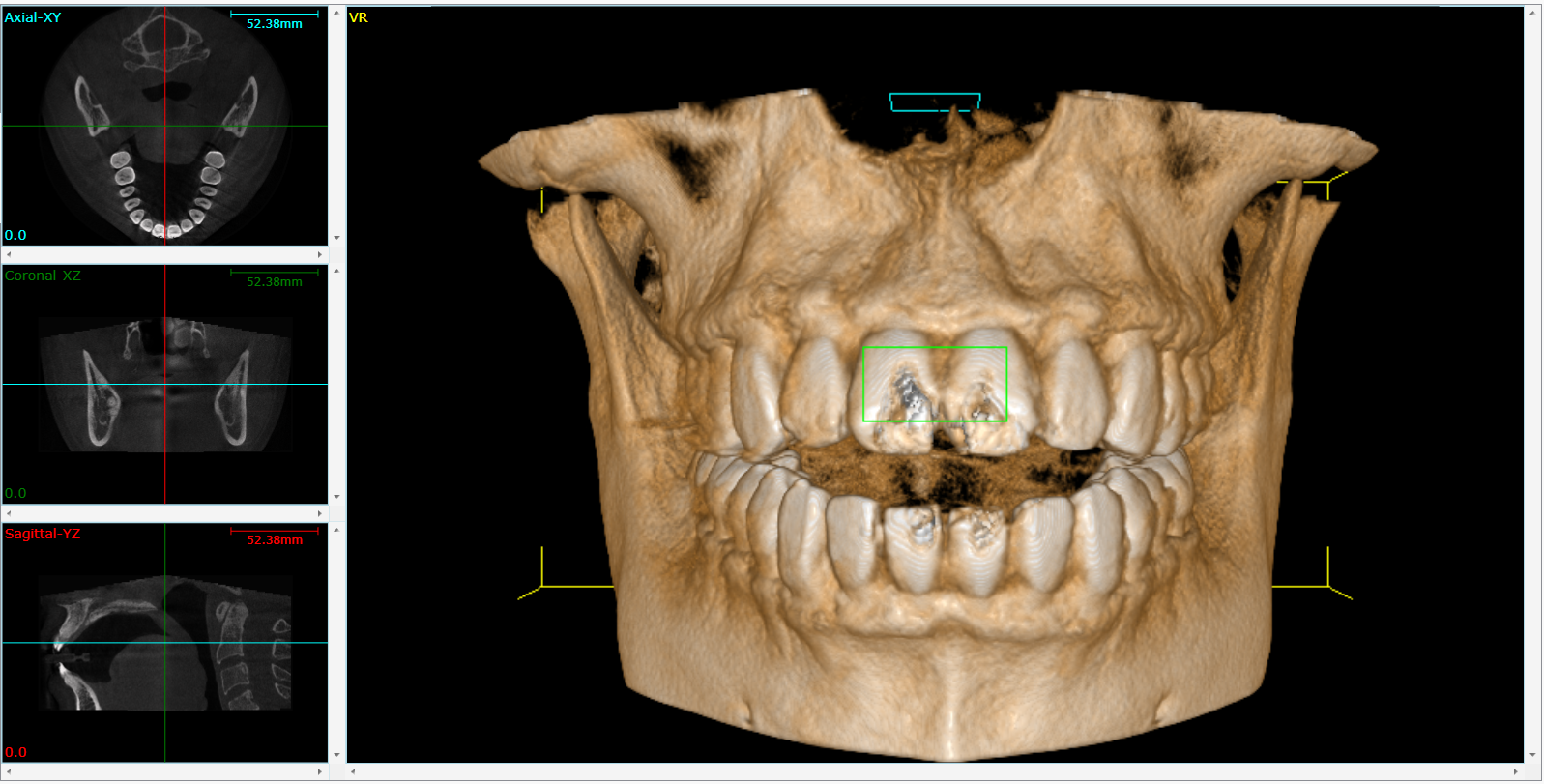
For implant cases, CBCT imaging is the standard pre-operative scan — bone height, density, sinus floor proximity, and inferior alveolar nerve location are all measured before surgery.
Published implant survival data
A recent systematic review and meta-analysis published in the Journal of Dentistry reported 10-year implant survival of 96.4% (95% CI 95.2%–97.5%), with implant-level prediction interval 91.5%–99.4%. Earlier reviews put 20-year survival around 90% in well-selected patients. These are excellent outcomes — but they are not guaranteed.
Implant Failure Modes — the Downside Most Articles Skip
Implant survival numbers are high, but failure exists and is worth understanding before committing.
Peri-implantitis
The most common biological failure. Peri-implantitis is inflammatory bone loss around an integrated implant — analogous to advanced periodontitis around a natural tooth. Published systematic reviews put prevalence at:
- **~20% of patients and 12–18% of implants** at the population level
- **~22% patient-level incidence** within 20 years of function per the recent AO/AAP systematic review
Treatment options for peri-implantitis are limited and have variable success. Prevention — meticulous oral hygiene, smoking cessation, regular professional cleanings — is the primary defence.
Mechanical failures
Screw loosening, abutment fracture, porcelain chipping. Mechanical failures are typically repairable without removing the implant.
Early implant failure
Loss of integration in the first 6 months. Usually attributable to infection, micromotion during healing, or patient factors (uncontrolled diabetes, heavy smoking, bisphosphonate use).
Patient-specific risk factors
The literature identifies clear risk factors for implant failure:
- Smoking — meaningful increase in failure rate
- Uncontrolled diabetes — affects bone healing
- Bisphosphonates / denosumab — risk of medication-related osteonecrosis of the jaw
- History of periodontitis — predicts higher peri-implantitis incidence
- Bruxism (grinding) — mechanical stress on the implant
If you have any of these, the crown-versus-implant calculus changes — saving the natural tooth becomes more attractive.
Bone Grafting and Site Preparation
Implant placement requires adequate bone volume — both height (to accommodate the implant length) and width (to fully cover the implant body). When bone has been lost (from previous extractions, periodontal disease, or trauma), site preparation may be needed before implant placement:
- Socket preservation — bone graft material placed immediately after extraction to prevent bone collapse
- Ridge augmentation — bone graft added to deficient sites before implant placement
- Sinus lift — additional bone added below the maxillary sinus to support upper-jaw implants
- Block grafts — solid bone harvested from elsewhere in the body and grafted to the implant site
Each of these adds time (3–9 months of additional healing), cost ($500–$3,000+), and surgical complexity to the implant case. They are routine procedures but they are not free, and they should be disclosed up front.
Anterior vs Posterior — Where the Decision Often Differs
The crown vs. implant trade-off depends on tooth location:
Anterior (front) teeth
- Aesthetics matter intensely — colour, translucency, gum-line contour
- Bone loss after extraction is more visible (visible gum recession)
- Immediate implant placement may help preserve gum architecture
- Crowns on anterior teeth often look excellent because lab control is high
Posterior (back) teeth
- Aesthetics matter less — bite force matters more
- Posterior teeth absorb 200+ lbs of bite force; crowns and implants both handle this well
- Posterior implants benefit from CBCT planning due to inferior alveolar nerve proximity (lower jaw) and maxillary sinus (upper jaw)
- Patients with bruxism need night guards regardless of which option is chosen
Cost Comparison
The headline costs differ substantially upfront and converge over time. Real US ranges:
- Crown on natural tooth: $1,000–$2,500 (single porcelain crown). For state-by-state and international cost detail, see How Much Does a Dental Crown Cost in 2026?.
- Root canal + crown (when needed before crown): $1,800–$4,500. See Root Canal Cost: What to Expect.
- Implant + abutment + crown (no grafting): $3,000–$6,000+
- Implant with site preparation: $4,500–$9,000+
- Bridge (3-unit, requires preparation of adjacent teeth): $2,500–$5,500
Lifetime cost
Over a 25–30 year horizon, the costs converge:
- A crown on a root-canal-treated tooth typically needs replacement every 10–15 years
- An implant fixture typically lasts 20+ years; the crown on top may need replacement at 10–15 years
- A 3-unit bridge typically lasts 10–15 years but compromises the adjacent teeth that hold it
When Both Options Are Genuinely Available
In the borderline cases — when there is just enough ferrule, marginal periodontal support, or a previously root-canalled tooth — both options can be clinically defensible. In those cases, the patient-specific factors matter:
- Age — a 30-year-old with 50+ years of expected life favours preserving natural teeth where possible (an implant placed now will likely need maintenance over time)
- Bone quality — better bone favours implant; compromised bone favours crown if restorable
- Bruxism — heavy grinders put higher stress on crowns and implants both
- Cost tolerance — upfront vs. lifetime
- Surgery tolerance — implants require surgery, healing, and a 3–6 month wait
If the recommendation you have received does not address these factors explicitly, it is fair to ask why.
Red Flags to Watch For
For crown recommendations:
- Crown recommended for a tooth that has a small or moderate cavity (a filling or onlay may be sufficient — see Do I Really Need a Crown?)
- Multiple crowns recommended without clear X-ray evidence
- Crown recommended on a tooth with insufficient ferrule without addressing surgical crown lengthening or extraction as alternatives
For implant recommendations:
- Extraction recommended without explaining whether the tooth could be saved
- Implant recommended without CBCT imaging (best practice for any non-trivial implant case)
- Site preparation costs ($500–$3,000+) disclosed only after the headline price has been agreed
- Pressure to decide before bone healing has been evaluated
See 12 Red Flags of Unnecessary Dental Work for the broader checklist.
How to Evaluate a Crown-vs-Implant Recommendation
Before agreeing to either option:
1. Ask to see your X-rays and the specific structural finding that drove the recommendation. If the recommendation is "extract and implant," the dentist should be able to point to insufficient ferrule, a confirmed root fracture, severe bone loss, or another non-restorability finding. 2. Ask about the alternative. If a crown is being recommended, ask whether an onlay or large filling would work. If an implant is being recommended, ask why a crown on the existing tooth is not viable. 3. Get an itemised written treatment plan including CDT procedure codes (D2740 for a crown, D6010 for implant body, D6056 for prefabricated abutment, D6058 or D6068 for the implant crown). 4. For high-cost plans, get an independent second opinion. The cost of an independent dental treatment plan review is a small fraction of either procedure.
FAQ
Is a crown cheaper than an implant?
Yes upfront — a single crown is typically $1,000–$2,500 in the US versus $3,000–$6,000+ for an implant with crown. Over 25–30 years, lifetime costs converge. The right framing depends on your age and oral health trajectory.
Which lasts longer?
Implants generally last longer. Published systematic reviews put 10-year implant survival at ~96.4%, while crowns on root-canal-treated teeth typically need replacement every 10–15 years.
Can a crown be placed on an implant?
Yes — every single-tooth implant restoration ends with a crown on top. The crown is replaceable independently of the implant fixture beneath.
Is it better to crown a tooth or pull it and implant?
Save the tooth if it is reliably restorable — adequate ferrule, sound root, good periodontal support. Choose implant if the tooth is genuinely non-restorable. The clinical question is what the imaging and exam actually show.
What if I do not have enough bone for an implant?
Bone grafting and ridge augmentation are routine procedures that build up the implant site before placement. They add time (3–9 months of additional healing) and cost ($500–$3,000+) but make implants possible in most cases.
Does insurance cover implants?
Most US dental insurance plans cover crowns at 50% of allowed amount but cover implants partially or not at all. Many plans cover the crown on top of the implant but not the implant fixture itself. Verify with your insurer before committing.
Can I get a second opinion before extraction?
Yes — and you should, for any case where extraction and implant has been recommended. The published research on diagnostic variability between dentists is in our statistics article, and the practical case for independence is in our independence guide.
Final Advice
The crown-vs-implant question is rarely about preference. It is about whether the existing tooth can be reliably restored — and the answer is dictated by remaining tooth structure (the ferrule), root integrity, periodontal support, and endodontic prognosis. When the answer to all four is yes, save the tooth. When the answer to any of them is clearly no, extract and implant is the more durable path.
Before agreeing to extraction, get an independent review. Upload your X-rays and the recommended treatment plan to toothcheck for a written, finding-by-finding read from a licensed dentist in under 72 hours.
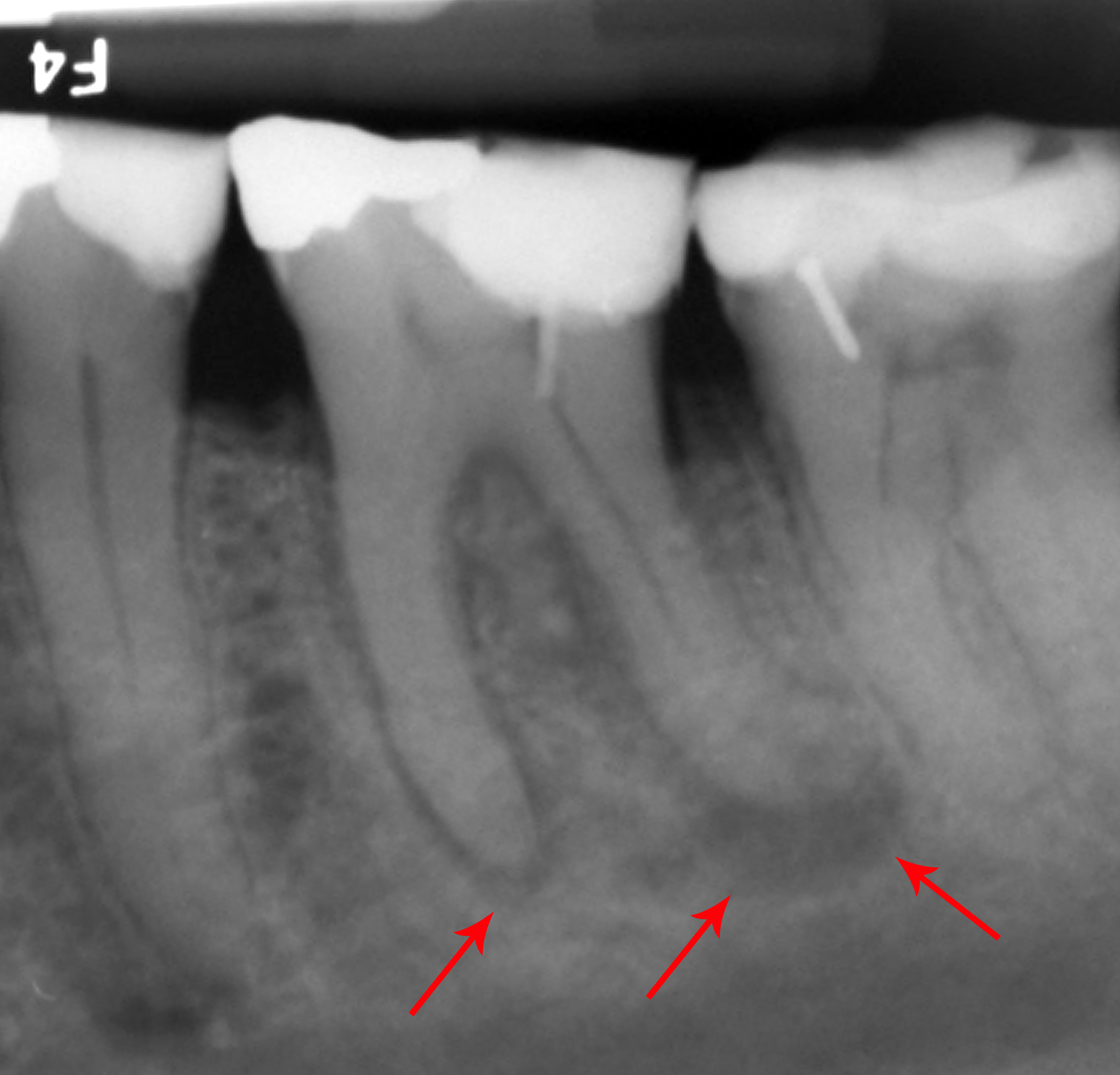
Image credits: Periapical abscess radiograph by Coronation Dental Specialty Group via Wikimedia Commons (CC BY-SA 3.0); root resorption image released into the public domain by Dentlavkesh via Wikimedia Commons; CBCT scan image by Panda 51 via Wikimedia Commons (CC BY-SA 4.0). Used as educational examples — they do not depict toothcheck patients.
Reviewed by the toothcheck Dental Team.
Last medically reviewed: May 2026