Crown Second Opinion: Is That Crown Really Necessary?
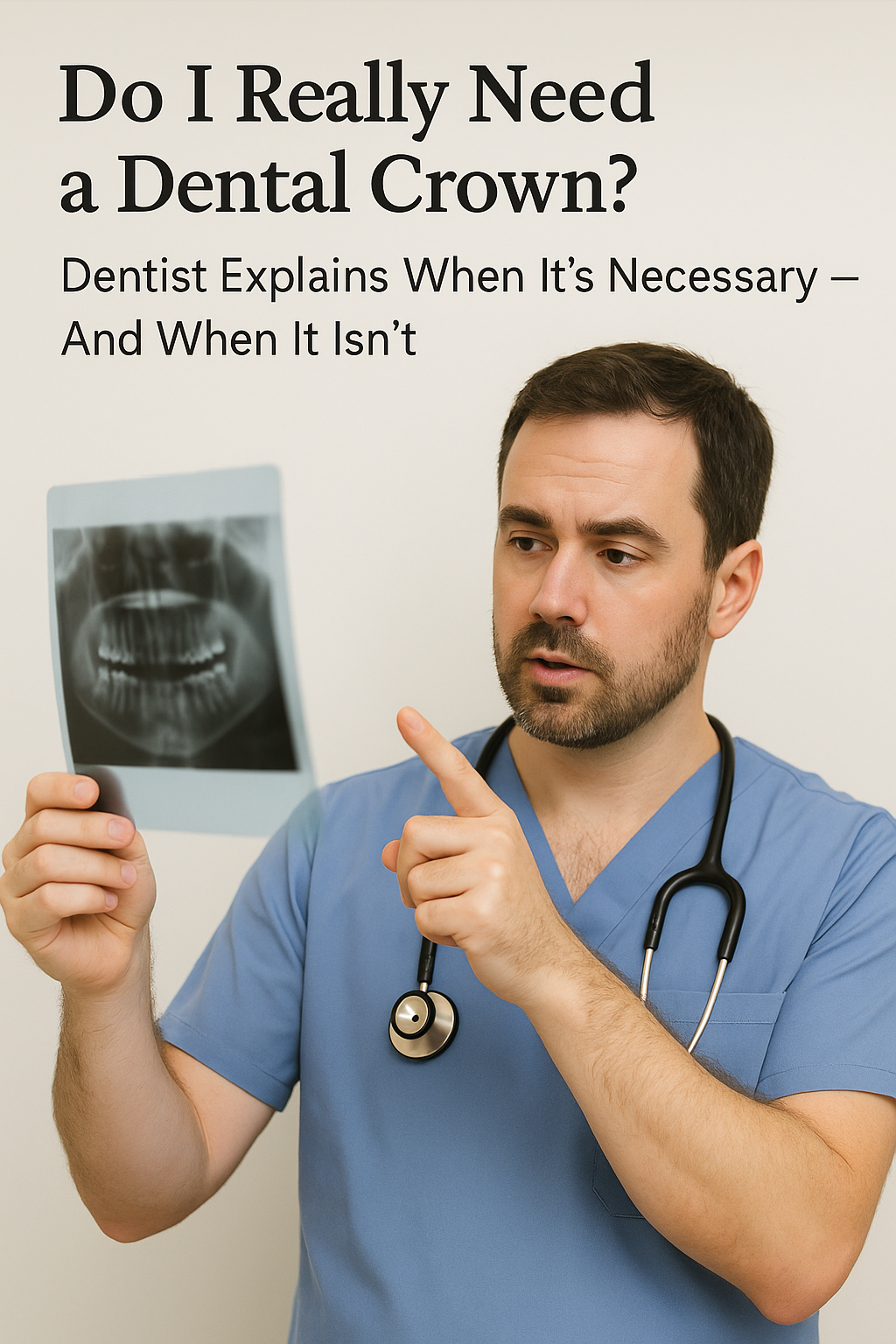
Told you need a crown? An independent licensed dentist reviews your X-rays and treatment plan in writing within 72 hours for a flat $59, so you know whether a filling or onlay would do.
Reviewed by the toothcheck Dental Team Independent dentist providing online second opinions.
Quick Answer
If a dentist says you need a crown, it is reasonable to pause before you agree. Crowns are among the most over-recommended procedures in dentistry, partly because a full-coverage crown bills far more than a filling, and partly because crown it to be safe feels cautious. But crowning is not free of cost to the tooth: it permanently grinds away healthy enamel and dentin that you never get back. A crown is genuinely the right call for some teeth, yet many teeth flagged for crowns can be restored with a filling or a more conservative onlay. An independent second opinion reviews your existing X-rays and written plan and tells you, in plain language, whether full coverage is truly justified. toothcheck does exactly this for a flat $59, usually within 72 hours.
Why crowns get over-recommended
A crown is a lab-made cap that covers the entire tooth down to the gumline. Placing one is a bigger, more profitable procedure than a filling, so there is a built-in incentive to reach for it. Add the natural wish to be thorough, and crown it to be safe becomes a common phrase in busy offices. That does not mean bad faith. It means the recommendation deserves a check, because the tradeoff is real. To seat a crown, a dentist typically removes a significant amount of sound tooth structure all the way around, and that is irreversible: a crowned tooth can never go back to a small filling. When the same protection can be achieved by keeping more of your own tooth, that is almost always the better outcome.
What an independent dentist actually checks
An honest second opinion is not a rubber stamp, and not automatic suspicion. It is a careful look at whether your own X-rays support full coverage. A reviewer works through a short, specific list.
Is there a genuine crack? A cracked tooth, or one with symptoms of a crack such as sharp pain on releasing a bite, can need the wrap-around protection a crown provides. A tooth with no crack and no crack symptoms usually does not.
How much healthy tooth is left? Crowns make sense when so little sound structure remains that a filling would not hold or would leave thin walls prone to fracture. If most of the tooth is intact and the cavity is small to moderate, a filling or onlay often protects it just as well while removing far less tissue.
Would a filling or onlay hold? An onlay is a middle path: a lab-made restoration that covers the weakened part of the tooth without sacrificing the whole thing. Many teeth pushed toward crowns are strong candidates for onlays, and a good reviewer weighs this directly.
Is there enough ferrule? Ferrule is the band of solid tooth structure a crown needs to grip. After a root canal or a large break, the reviewer checks whether enough sound tooth remains for a crown to succeed. This is exactly the detail a rushed same-day recommendation can skip.
When a crown IS genuinely necessary
Skepticism about over-treatment does not mean crowns are a scam. There are clear, evidence-based reasons a tooth truly needs one, and a good reviewer says so plainly.
After a root canal on a back tooth. Molars and premolars take heavy chewing load and turn brittle once the nerve is removed, so full coverage is standard and well justified. For the reasoning, see why do I need a crown after a root canal.
A cracked tooth. A real crack that runs into the body of the tooth can widen under biting force until the tooth splits. A crown holds it together and is often the tooth-saving choice.
A very large or failed filling. When decay or an old restoration has undermined most of the tooth, a filling has nothing solid to bond to, and a crown or onlay is reasonable protection against fracture.
The point of a second opinion is not to talk you out of care you need. It is to make the diagnosis match the treatment, so you get full coverage when warranted and keep your tooth when not.
Crown, onlay, or filling
Think of these as a ladder from most conservative to most aggressive: filling, then onlay, then crown. The right rung depends on how much healthy tooth remains and whether the tooth needs wrap-around protection. Because the honest answer often sits between two options, a written review that names the alternative beats a simple yes or no. Our guide on crown vs filling, which is better walks through how the choice is made.
Crown-specific red flags
None of these proves over-treatment, but each is a reason to get a second opinion before you sit in the chair.
A crown recommended on a tooth with no crack and only a small filling. Full coverage for a minor cavity is a mismatch worth questioning.
Multiple crowns proposed at once. A plan for several crowns is a large, irreversible, expensive commitment that deserves independent review before you start.
A crown pushed same-day, with pressure to decide now. Urgency is rarely a reason to skip verification; a tooth that has been fine for months is not usually an emergency that cannot wait 72 hours.
A crown recommended purely for looks on a healthy tooth. Cosmetic goals are valid, but a healthy tooth can often be improved with a veneer or bonding that removes far less structure.
The phrase we should crown it to be safe, with no crack, no large cavity, and no failed restoration to point to. Safe for the tooth usually means keeping more of it, not less. If any of this sounds like your visit, our piece on is my dentist overcharging me covers the money side.
How a toothcheck second opinion works
You do not need another in-person exam to get clarity. You already have what a reviewer needs: the X-rays and treatment plan from the office that recommended the crown.
Upload your existing X-rays and your written plan or quote. You have a legal right to copies of these records under HIPAA, and any office should provide them on request. A licensed, independent dentist then reviews them, with no stake in selling you a crown. You get a written report, usually within 72 hours, stating in plain language whether the crown looks justified, whether a filling or onlay is a reasonable alternative, and what to ask your dentist next. Start on the online dental second opinion page, or send the full plan through dental treatment plan review.
Cost, and whether it is worth it
A single crown commonly runs from about $900 to over $2,000, depending on material and location. You can sanity-check typical fees for your area with FAIR Health, an independent nonprofit cost lookup, and confirm the procedure codes on your quote against the ADA CDT code set. Against a $1,500 crown you were not sure you needed, a flat $59 review is inexpensive insurance. If it confirms the crown, you proceed with confidence. If it points to a filling or onlay, you may keep more of your own tooth and avoid a four-figure procedure. Either way you decide with information instead of pressure. To go deeper on when full coverage is warranted, see do I really need a crown and when is a crown actually necessary.
FAQ
Do I really need a crown, or would a filling work?
It depends on how much healthy tooth remains and whether there is a crack. Small to moderate cavities in an otherwise sound tooth can often be restored with a filling or onlay. A crown is warranted when little solid structure is left or the tooth is cracked. An independent review of your X-rays can tell you which applies.
When is a crown actually necessary?
A crown is genuinely needed after a root canal on a back tooth, for a truly cracked tooth, or when a very large or failed filling has left too little solid structure for a filling to hold. In those cases, full coverage protects the tooth from splitting under normal chewing force.
What are the red flags that a crown may be unnecessary?
Warning signs include a crown on a tooth with no crack and only a small filling, several crowns recommended at once, a crown pushed the same day under pressure, a crown suggested purely for looks on a healthy tooth, or a vague crown it to be safe with nothing on the X-ray to justify it.
How much does a crown cost, and is a $59 second opinion worth it?
A single crown commonly runs from about $900 to over $2,000. A flat $59 written review is inexpensive certainty: it either confirms the crown or points to a more conservative option that may save both tooth structure and money.
Is an online second opinion on a dental crown safe and private?
Yes. A licensed dentist reviews the same X-rays and treatment plan your dentist used, with no financial stake in selling you a crown. You have a right to copies of your records under HIPAA, and toothcheck handles them privately.
Will getting a second opinion delay my treatment?
Rarely in a way that matters. A tooth that has been symptom-free is seldom a true emergency, and toothcheck returns a written report usually within 72 hours, so you lose little time before an irreversible procedure.
Final Advice
A crown is sometimes exactly right and sometimes more than the tooth needs. The only way to tell the difference is to have someone with no stake in the sale look at the same evidence. Before you commit to an irreversible, four-figure procedure, gather your X-rays and treatment plan and upload them for an independent, written second opinion. In under 72 hours, for a flat $59, you will know whether that crown is truly necessary. Start your review on the online dental second opinion page, or send your plan through dental treatment plan review.
Last medically reviewed: July 2026