Why Do I Need a Crown After a Root Canal? A Dentist Explains
You already paid for the root canal - so why a crown too? A dentist explains why a root-canal-treated tooth is brittle, when a crown is genuinely needed, and when it is not.
Reviewed by the toothcheck Dental Team Independent dentist providing online second opinions.
You just paid for a root canal, you were relieved it was over, and then you were told you also need a crown - often for another $1,000 to $2,000. It is one of the most common questions patients bring to us, usually with an understandable edge of suspicion: *I already fixed the tooth. Why does it need something else?*
It is a fair question, and the short answer is that the root canal and the crown do two completely different jobs. This guide explains why a treated tooth is more fragile than it looks, when a crown is genuinely the right call, and the situations where it is reasonable to ask whether you truly need one.
Quick Answer
A root canal removes the infected or dying nerve from inside the tooth, but it does not make the tooth stronger - if anything, the tooth is left weaker and more brittle. A crown caps the tooth and holds it together against the heavy forces of chewing. For back teeth (molars and premolars), which do the grinding, a crown after a root canal is usually genuinely necessary, and research suggests these teeth last significantly longer when crowned. For some front teeth with minimal damage, a filling alone can sometimes be enough. If a crown has been recommended and you are not sure it is warranted, that is a reasonable thing to verify before you spend.
What a Root Canal Actually Does (and Does Not Do)
Inside every tooth is the pulp - the living nerve and blood supply. When decay, a crack, or trauma lets bacteria reach the pulp, it becomes inflamed or infected, which is what causes that deep, lingering toothache. A root canal treats the *infection*: the dentist removes the pulp, cleans and shapes the canals inside the roots, and seals them.

What a root canal does not do is restore the tooth's strength. To reach the pulp, the dentist has to drill an access hole through the top of the tooth, and there is usually already decay or an old filling that prompted the problem in the first place. So by the time the root canal is finished, a lot of the original tooth structure is gone. On top of that, a tooth without its pulp no longer has its internal blood supply, and over time tends to become more brittle and prone to fracture. The American Association of Endodontists - the specialists who perform root canals - is clear that the final restoration is part of completing the treatment, not an optional extra.
In other words: the root canal saved the tooth from infection. The crown is what keeps the saved tooth from cracking apart afterward.
Why a Crown Protects the Tooth
A crown is a custom cap that fits over the entire remaining tooth. Its job is mechanical: it holds the weakened tooth together and spreads the force of your bite across the whole tooth instead of concentrating it on thin, undermined walls.
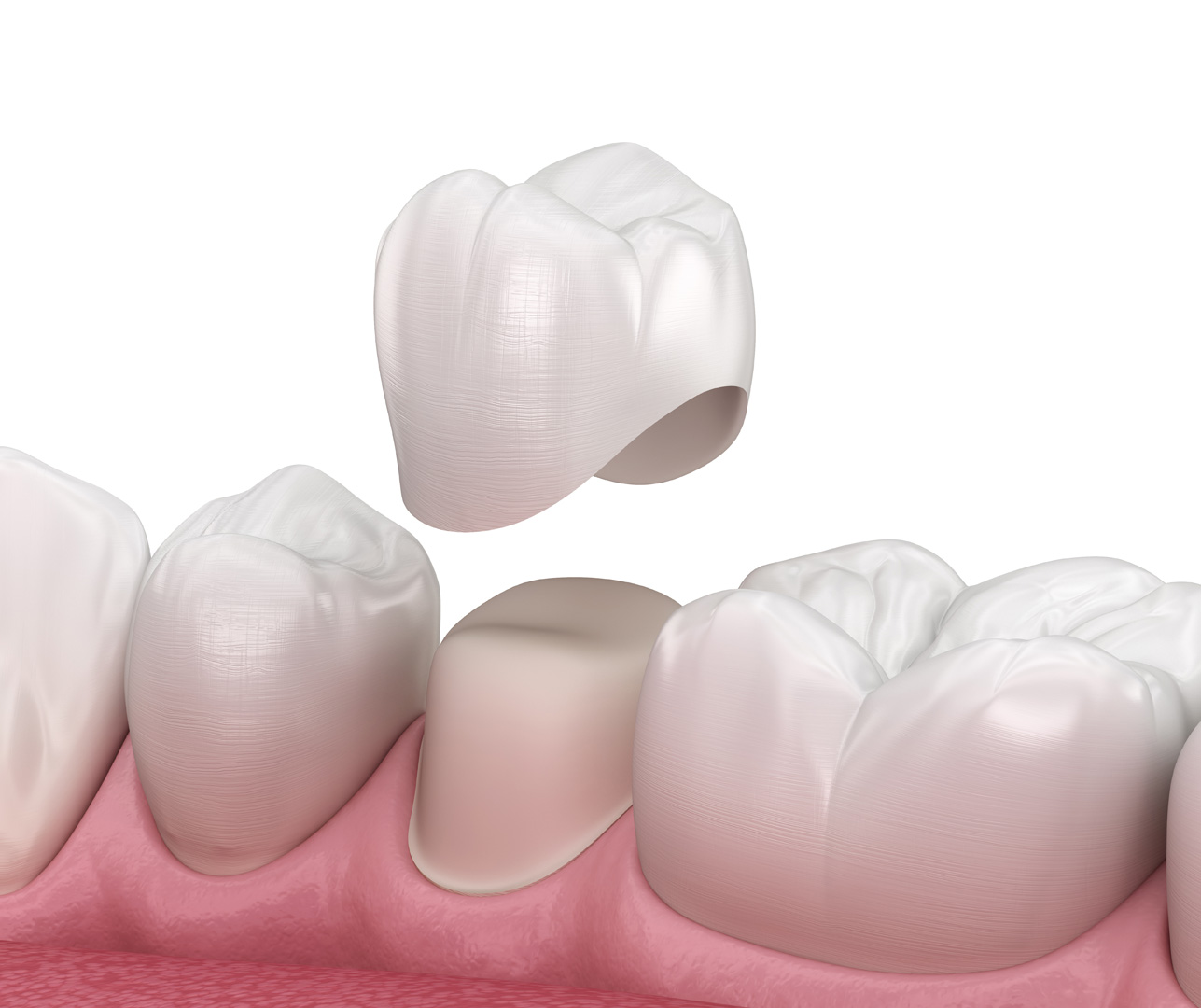
This matters most on the back teeth. Your molars and premolars absorb hundreds of pounds of force every time you chew, and a root-canal-treated molar left with only a filling is at real risk of a vertical fracture - the kind of crack that runs into the root and often means losing the tooth entirely. That is the worst outcome: paying for a root canal, skipping the crown, and then losing the tooth anyway a year or two later. Multiple clinical studies and systematic reviews have found that root-canal-treated back teeth restored with a crown survive substantially longer than those restored with a filling alone, which is why crowning posterior teeth after a root canal is standard of care.
When a Crown May Not Be Necessary
Standard of care is not the same as "always." There are genuine situations where a full crown may not be required, and a good dentist will tell you:
- Some front teeth (incisors and canines). These teeth are single-rooted, take far less chewing force, and if the access hole is small and the tooth is otherwise intact, a well-bonded filling can sometimes be enough. Front teeth are also often crowned for appearance rather than pure necessity, so it is fair to ask which reason applies.
- Teeth with very little structure lost. If the root canal was done through a small, conservative opening and the walls of the tooth are largely intact, a filling or an onlay (a partial-coverage restoration) may be a reasonable middle option.
- A tooth with a poor long-term outlook. If the tooth is questionable for other reasons, it may not make sense to invest in a crown at all.
The honest rule of thumb: back tooth = crown is usually justified; front tooth = it depends. If your root canal was on a molar, a crown is very likely appropriate. If it was on a front tooth and you are being quoted for a crown, it is worth asking whether a filling would hold. For the broader question of when a crown is truly indicated, see when is a crown actually necessary and our dentist explainer on whether you really need a crown.
Timing: Why the Crown Should Not Wait Too Long
One thing patients are rarely told clearly: if you do need the crown, delaying it is risky. A root-canal-treated tooth is at its most vulnerable in the months right after treatment, and the longer it goes with only a temporary or a plain filling, the higher the chance it cracks or that bacteria leak back down the canals and cause the whole root canal to fail. If you cannot do the crown immediately, ask your dentist how long is safe to wait. For what happens when a treated tooth fails, see my root canal failed, now what.
What This Should Cost - and How to Sanity-Check It
A crown after a root canal is billed as a separate procedure from the root canal itself, and often there is also a "core buildup" line to rebuild the tooth's core before the crown is placed. That can make the total feel like it keeps climbing. It helps to see the whole plan itemized so you understand each piece - our guide on how to read your dental treatment plan walks through it, and how much a crown should cost gives real 2026 price ranges to check yours against. If the numbers or the necessity feel off, root canal versus extraction is also worth reading, because occasionally the more honest conversation is whether the tooth was worth saving at all.
FAQ
Do all root canals need a crown? No. Back teeth (molars and premolars) that take heavy chewing force almost always need a crown, and studies show they last much longer with one. Some front teeth with minimal damage can be restored with a filling alone. The tooth position and how much structure is left determine the answer.
Why is the crown a separate charge from the root canal? Because they are two different procedures with different purposes. The root canal treats the infection inside the tooth; the crown is the restoration that rebuilds and protects it afterward. They are billed separately even when done at the same practice.
What happens if I skip the crown on a back tooth? The tooth is at real risk of a vertical fracture, which often cannot be repaired and leads to losing the tooth. That is the worst-case outcome - paying for the root canal and then losing the tooth anyway - which is exactly what the crown is meant to prevent.
Can I get a filling instead of a crown after a root canal? Sometimes, mainly on front teeth or when very little tooth structure was lost. On molars it is usually not advisable. Ask your dentist specifically whether a filling or an onlay would hold for your tooth, and why or why not.
How long can I wait to get the crown? Not long. A treated tooth is most vulnerable in the months after the root canal, and waiting increases the risk of fracture or re-infection. If you cannot do it right away, ask your dentist how long is safe in your specific case.
Is being told I need a crown after a root canal a sign of overtreatment? Usually not, especially on a back tooth - it is standard of care. It becomes worth questioning on a front tooth with minimal damage, or if the reasoning was not explained. When in doubt, an independent review can confirm whether the crown is genuinely needed.
Final Advice
Being told you need a crown right after paying for a root canal feels like being charged twice, but they really are two different jobs: one saves the tooth from infection, the other keeps the saved tooth from breaking. On a molar, the crown is almost always worth it. On a front tooth, it is reasonable to ask whether a filling would do.
If you want to be sure before you spend another four figures, upload your X-rays and treatment plan to toothcheck for a plain-English independent second opinion. A licensed dentist will tell you whether the crown is genuinely needed for your specific tooth - in writing, in under 72 hours. You can also start with a treatment plan review.
Last medically reviewed: July 2026