Crown vs Veneer: Which One Does Your Tooth Actually Need?
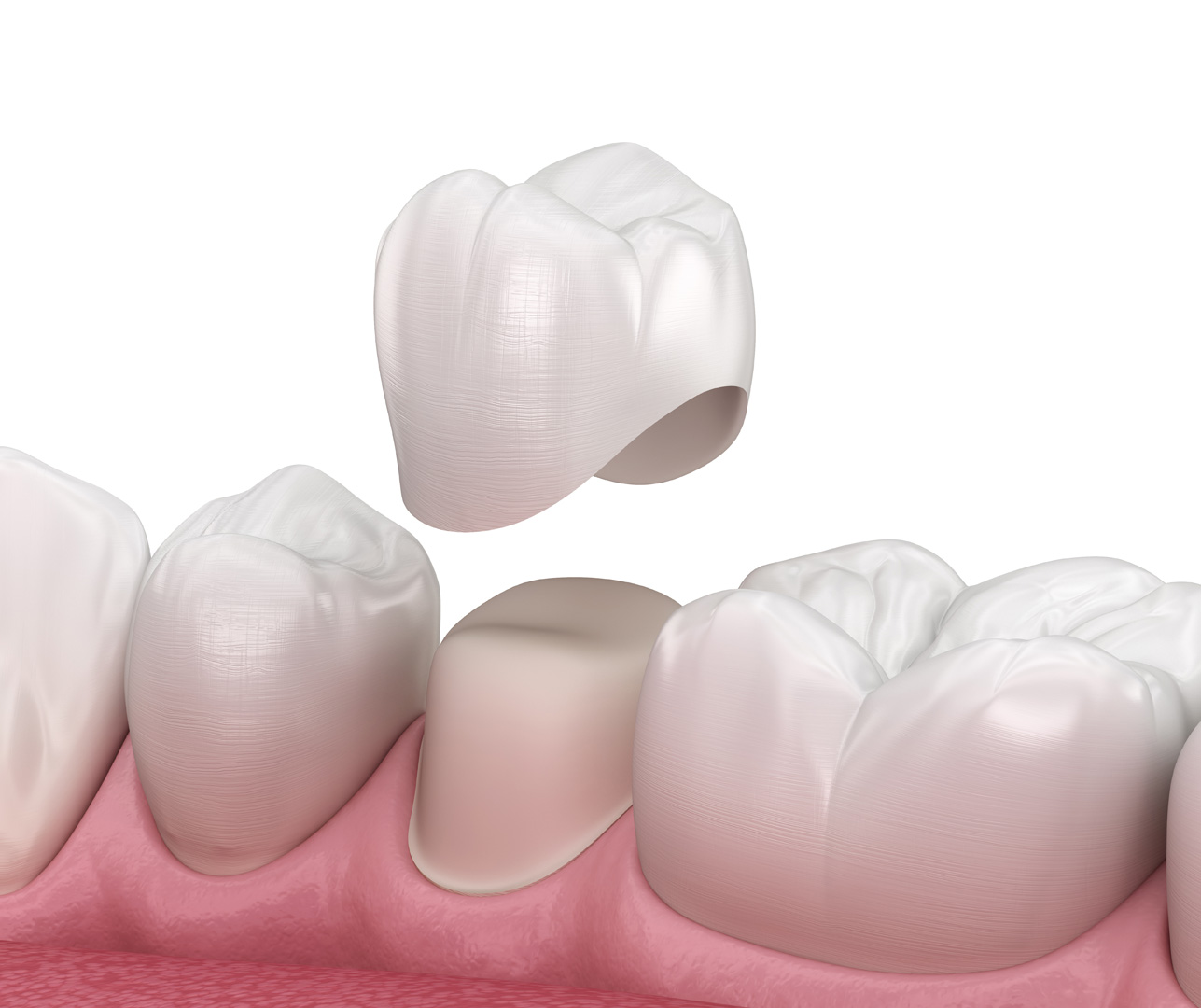
Dental crown or veneer? Learn the key differences between crowns and veneers, when each is the right choice, and how to avoid unnecessary treatment.
Reviewed by the toothcheck Dental Team Independent dentist providing online second opinions.
If your dentist recommended a tooth restoration and used the word "crown" or "veneer," you may have wondered: what is the actual difference, and which one is right for me?
Dental crowns and veneers are both tooth-shaped caps that cover a tooth's surface. But they serve fundamentally different purposes and are designed for different clinical scenarios.
A crown covers the entire tooth — all the way around, 360 degrees — and restores a tooth that is structurally compromised. A veneer covers only the front-facing surface of the tooth and is primarily a cosmetic enhancement.
According to the American Dental Association (ADA), a crown is indicated when a tooth cannot be adequately restored with a filling due to insufficient remaining tooth structure. A veneer, by contrast, is classified as a cosmetic procedure intended to improve appearance, not restore function.
This distinction matters — and it is also the source of one of the most common dental treatment confusions. Patients are sometimes told they need a crown when a veneer would suffice, or offered a veneer when only a crown can protect the tooth long-term.
This guide explains exactly when each treatment is appropriate, what your dentist's recommendation really means, and how to know whether you should seek a second opinion before deciding.
If you are uncertain about a crown or veneer recommendation, an online dental second opinion can review your X-rays and help you make the right choice.
Quick Answer: Crown vs. Veneer at a Glance
| Feature | Crown | Veneer |
|---|---|---|
| Coverage | Entire tooth, 360° | Front surface only |
| Primary purpose | Restore structure and function | Cosmetic enhancement |
| Enamel removal | ~2 mm from all surfaces | ~0.3–0.5 mm from front only |
| When it is needed | Structural damage, large fillings, root canal, fractures | Discoloration, chips, gaps, mild misalignment |
| Typical lifespan | 10–15 years | 7–15 years |
| Insurance coverage | Usually partially covered (medically necessary) | Usually not covered (cosmetic) |
| Cost | $800–$3,000 per tooth | $800–$2,500 per tooth |
| Procedure invasiveness | Moderate-to-high | Low-to-moderate |
What Is a Dental Crown?
A dental crown is a custom-made cap that covers the entire visible portion of your tooth above the gumline. It is designed to restore the tooth's shape, size, strength, and appearance.
Crowns are made from various materials, including:
- Porcelain-fused-to-metal (PFM) — Strong and natural-looking, with a metal core beneath porcelain
- All-ceramic or all-porcelain — Most natural appearance, ideal for front teeth
- Zirconia — Extremely strong, good for molars
- Gold alloy — Highly durable, rarely chips or fractures
- E-max (lithium disilicate) — Excellent strength and aesthetics
When Is a Crown the Right Choice?
A crown is the appropriate treatment when the tooth needs structural reinforcement. The ADA's clinical practice guidelines describe crowns as indicated when a tooth "cannot be adequately restored with a direct filling." This typically means:
After a root canal treatment
Root-canal-treated teeth are more brittle and prone to fracture. A crown protects the tooth from breaking under normal chewing forces. This is the single most common reason for crown placement.
A large filling that has failed or is at risk of failing
When more than 50% of the natural tooth structure is replaced by filling material, the remaining tooth walls are weakened. A crown holds the tooth together and distributes chewing forces evenly.
A cracked or fractured tooth
Some cracks extend deep enough that the tooth cannot be repaired with a filling alone. A crown holds the tooth together and prevents the crack from spreading.
A tooth with extensive decay
When a cavity is too large for a filling but the tooth can still be saved, a crown restores both function and appearance.
Structural weakness from wear or grinding
Teeth that have been heavily worn down by bruxism (grinding) may need crowns to restore proper height and protect against further damage.
For a more detailed breakdown of when crowns are truly necessary, see Do I Really Need a Crown?.
What Is a Dental Veneer?
A dental veneer is a thin shell, typically made of porcelain or composite resin, that is bonded to the front surface of a tooth. Unlike a crown, a veneer does not wrap around the entire tooth. It is designed to improve appearance, not to restore lost structure.
When Is a Veneer the Right Choice?
Veneers are classified as cosmetic dentistry. They are appropriate when the tooth is structurally sound but has aesthetic concerns that the patient wants to address.
Discoloration that does not respond to whitening
Some stains — from tetracycline, fluorosis, or trauma — penetrate too deeply for professional whitening. A veneer covers the discoloration and provides a uniform appearance.
Small chips or minor fractures
A veneer can repair a chipped front tooth with minimal enamel removal. If the chip is confined to the enamel layer, a veneer is often sufficient.
Gaps between teeth (diastema)
Small gaps between front teeth can be closed with veneers without orthodontic treatment.
Minor misalignment or irregular tooth shape
Veneers can correct slightly rotated, uneven, or undersized teeth for a more uniform smile.
Worn enamel from acid erosion
When enamel has worn thin but the tooth is still structurally sound, veneers can protect the remaining enamel and improve appearance.
The American Academy of Cosmetic Dentistry (AACD) notes that a well-made porcelain veneer preserves more natural tooth structure than a crown because far less enamel is removed.
Key Differences Between Crowns and Veneers
Amount of Tooth Structure Removed
This is arguably the most important difference. A crown requires removing approximately 2 mm of enamel from every surface of the tooth — all the way around. This is irreversible; the tooth will always need a crown afterward.
A veneer removes only 0.3–0.5 mm from the front-facing surface. The tooth retains most of its natural structure, and in some minimal-prep veneer cases, little to no enamel is removed.
Coverage Area
- Crown: Wraps around the entire tooth, including the biting surface (occlusal table). This provides full structural reinforcement.
- Veneer: Covers only the front surface (labial/buccal aspect). The biting surface and back of the tooth remain unchanged.
Purpose
- Crown: Medically necessary restoration. The tooth is failing structurally and needs support.
- Veneer: Cosmetic enhancement. The tooth is healthy and strong but looks imperfect.
Anesthesia Requirements
- Crown: Almost always requires local anesthetic because the preparation is invasive and the tooth may have a live nerve.
- Veneer: Often placed with minimal or no anesthetic, depending on the depth of preparation and the patient's sensitivity.
Longevity
- Crown: 10–15 years on average with proper oral hygiene and regular dental visits. Zirconia and gold crowns can last significantly longer.
- Veneer: 7–15 years. Porcelain veneers are more brittle and can chip under heavy biting forces, especially in patients who grind their teeth.
Cost
- Crown: $800–$3,000 per tooth depending on material, location, and provider. Insurance partially covers medically necessary crowns.
- Veneer: $800–$2,500 per tooth. Most insurance does not cover veneers because they are classified as cosmetic.
For a deeper look at crown costs and how insurance stacks up, see Crown Cost: What to Expect.
When a Veneer Won't Work (and You Need a Crown)
There are specific scenarios where a veneer is not an option, and a crown is the only appropriate restoration:
The tooth has had a root canal. Root-canal-treated teeth are hollow and structurally compromised. They need full-coverage protection. A veneer cannot provide this.
The tooth has a large filling. If more than half the tooth structure is already replaced by filling material, a veneer will not reinforce it. The tooth needs a crown to hold it together.
The biting surface is damaged. If the occlusal (chewing) surface is worn, cracked, or affected by decay, a veneer cannot restore it. Only a crown can rebuild the biting surface.
A crack extends beyond the enamel. Cracks that reach the dentin or deeper make the tooth vulnerable to fracture. A veneer offers no protection against propagation of the crack.
The tooth is posterior (back tooth). Veneers are rarely used on molars because these teeth endure the heaviest chewing forces. Crowns are designed to handle this load.
For more detail on when a crown is necessary, see Do I Really Need a Crown?.
When a Crown Is Overkill (and a Veneer Will Do)
Conversely, some crown recommendations are excessive. A veneer may be the better choice when:
The tooth is healthy but discolored. A crown for cosmetic whitening removes 2 mm of healthy enamel unnecessarily. A veneer removes 0.3–0.5 mm and achieves the same aesthetic result.
A small chip is confined to the enamel. A crown for a tiny chip on an otherwise strong tooth is over-treatment. A veneer or even simple bonding is sufficient.
The gap between front teeth is the only concern. Crowns to close a diastema shave down healthy teeth. Veneers or composite bonding achieve the same cosmetic result with far less tooth reduction.
The tooth has minor shape irregularities. A slightly rotated or uneven front tooth can be made uniform with a veneer. A crown would remove too much healthy structure.
When the Choice Is Unclear: What to Ask Your Dentist
If your dentist recommended one of these treatments and you are not sure which is correct, ask these five questions:
1. "Is this tooth structurally compromised, or is this a cosmetic concern?" — If the answer is cosmetic, you may not need a crown. 2. "How much enamel will be removed?" — A crown removes far more. If the answer is vague, push for specifics. 3. "Can you show me on my X-ray why a filling or veneer won't work?" — A good dentist can point to the evidence. 4. "Is the biting surface affected?" — If yes, a crown is more appropriate. If no, a veneer may suffice. 5. "What happens if I do nothing?" — If the answer is "nothing bad," ask whether treatment is truly urgent.
If the answers are unclear or you feel pressured, an independent review can help. See Is My Dentist Overcharging Me? for a broader guide on fair pricing and red flags.
Prosthetic Similarities: Crowns, Veneers, and Onlays
It is helpful to understand where crowns and veneers sit on the spectrum of dental restorations:
| Restoration | Coverage | Typical Use |
|---|---|---|
| Filling | Inside the cavity only | Small-to-moderate decay |
| Inlay | Inside the tooth cusps | Moderate decay, custom fit |
| Onlay | Covers one or more cusps | Larger decay, partial coverage |
| Veneer | Front surface only | Cosmetic enhancement |
| Crown | Entire tooth, full coverage | Structural failure, large damage |
For a comparison between crowns and fillings specifically, see Crown vs Filling: Which Is Better?.
Red Flags: When a Crown or Veneer Recommendation May Be Wrong
A crown recommended for pure cosmetics on a healthy tooth. A crown removes far too much healthy enamel for a purely aesthetic issue. If the tooth has no structural problems, ask about a veneer instead.
A veneer recommended for a tooth after a root canal. A veneer cannot protect a root-canal-treated tooth from fracture. If your dentist recommends a veneer on a tooth that has had a root canal, that recommendation is incorrect.
Multiple crowns on healthy teeth. Some practices recommend crowns on every tooth receiving a filling, even for small cavities. This is a hallmark of upselling.
Treatment recommended without X-rays. No dentist can properly assess whether you need a crown or veneer without X-rays. If your dentist "looked and decided" without imaging, get a second opinion.
Recommendation from a chain or corporate practice. Corporate-owned dental practices often have production targets. According to research published in the Journal of the American Dental Association, treatment planning can vary significantly based on practice ownership structure.
Crown vs. Implant: When Extraction Is on the Table
If your dentist recommended an implant instead of a crown, a different question arises: can the tooth be saved at all? If the tooth is salvageable with a crown, a crown is almost always preferable to extraction and implantation. Natural teeth, even with crowns, outperform implants in virtually every long-term study when the supporting structures are healthy.
For a full comparison, see Crown vs. Implant: Which Tooth Replacement Is Right for You?.
The Cost Difference Matters
The cost of a crown versus a veneer can be similar — both range from roughly $800 to $3,000. But the key difference is what your insurance covers:
- Crown (medically necessary): Insurance typically covers 50–80% after deductible
- Veneer (cosmetic): Insurance typically covers 0%
This means a crown might cost you $200–$600 out of pocket, while a veneer could cost the full $1,000–$2,500. Understanding your insurance coverage before you decide is crucial.
For a state-by-state breakdown of crown costs, see How Much Does a Dental Crown Cost in 2026?.
Can You Get a Crown Instead of a Veneer or Vice Versa?
Technically, a crown can always be used where a veneer is appropriate (the opposite is not true — a veneer cannot replace a crown when structural reinforcement is needed). But that does not mean a crown is the better choice. Using a crown unnecessarily removes much more healthy tooth structure and costs you or your insurance more money.
The most conservative, least invasive restoration that achieves the goal is the right one.
The Role of a Second Opinion
Crown versus veneer decisions are not always straightforward. A general dentist may lean toward a crown (more durable, more predictable) while a cosmetic dentist may recommend a veneer (less invasive, better aesthetic result). Both may be "correct" depending on the clinical scenario and the dentist's training.
When you are unsure, an independent second opinion — from a dentist who does not perform the treatment — can give you the clarity you need. Learn more about how online dental second opinions work.
References
1. American Dental Association. "Crowns." ADA Oral Health Topics. https://www.ada.org/resources/ada-library/oral-health-topics/crowns 2. American Academy of Cosmetic Dentistry. "Porcelain Veneers." AACD Patient Resources. https://aacd.com/porcelain-veneers 3. National Library of Medicine. "Dental Veneers: A Review of the Literature." PMC. https://pmc.ncbi.nlm.nih.gov/articles/PMC9983741/ 4. National Library of Medicine. "Survival Rates of Crowns and Veneers: A Systematic Review." PMC. https://pmc.ncbi.nlm.nih.gov/articles/PMC8675468/ 5. Journal of the American Dental Association. "Variation in Dental Treatment Planning." https://jada.ada.org/article/S0002-8177(21)00686-3/fulltext00686-3/fulltext)
FAQ
Can I switch from a crown to a veneer after the tooth is prepared?
No. Once a tooth is prepared for a crown (2 mm removed from all surfaces), too much enamel has been removed for a veneer. The tooth now needs a crown permanently. This is why it is essential to be sure about the treatment before preparation begins.
Do veneers ruin your natural teeth?
No — when done properly by an experienced dentist, veneers are a safe cosmetic treatment. However, they are irreversible because a thin layer of enamel is removed. You cannot go back to your natural teeth after veneers.
Which hurts more: getting a crown or a veneer?
Crowns typically involve more discomfort because more tooth structure is removed and local anesthetic is required. Veneers are less invasive and often require minimal or no anesthetic.
Can I get only one veneer?
Yes. A single veneer can be matched to your adjacent natural tooth if the color, shape, and size are carefully planned. However, for multiple front teeth, matching is easier when all veneers are done at the same time.
Are there alternatives to crowns and veneers?
Yes. Dental bonding (composite resin applied directly to the tooth) is the least invasive option for small chips, gaps, and discoloration. It is less expensive and reversible, though it does not last as long as a veneer or crown.
How long does the procedure take?
- Crown: Two appointments, about two weeks apart. The first appointment is preparation and temporary crown; the second is permanent cementation.
- Veneer: Usually two appointments, but some same-day systems are available.
- Bonding: Completed in a single appointment.
Will a crown or veneer match my other teeth?
Both are custom-shaded to match your natural teeth. High-quality ceramic crowns and veneers (especially e-max and layered porcelain) achieve excellent color matching.
How long do dental crowns last compared to veneers?
On average, crowns last 10–15 years and veneers last 7–15 years with proper care. For a deeper dive into crown longevity and what affects it, see How Long Do Dental Crowns Last?.
Can a crown or veneer fall off?
Both are cemented or bonded in place and should not fall off under normal circumstances. Crowns can become loose if the underlying tooth decays or if the cement fails. Veneers have a very strong bond to enamel and rarely debond unless subjected to extreme force.
What if I grind my teeth?
If you grind or clench your teeth (bruxism), a crown is generally more durable than a veneer. Veneers can chip under heavy grinding forces. A nightguard is recommended for either restoration if you grind.
Final Advice
Crowns and veneers serve different purposes. A crown restores a tooth that is structurally failing. A veneer enhances the appearance of a tooth that is already healthy and strong.
Before committing to either:
- Understand why each treatment is being recommended
- See the evidence on your X-rays
- Ask about less invasive alternatives
- Compare costs with and without insurance
- Get an independent second opinion if anything is unclear
If you have been told you need a crown and are unsure, or want to know whether a veneer might be a better option, ToothCheck can help. Crown pain after placement is another common concern — if you are already experiencing discomfort, see Crown Pain After Placement: Is This Normal?. Upload your X-rays and treatment plan for an independent dental second opinion in under 72 hours.
Last medically reviewed: June 2026