How Often Do Dentists Disagree? The Data
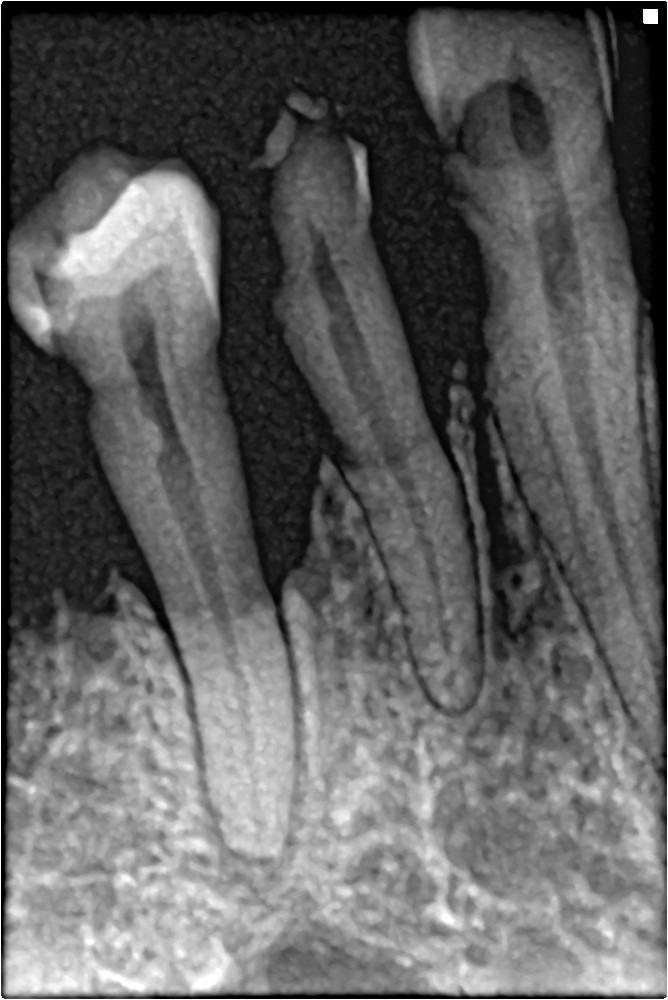
What does the research actually say about how often dentists disagree on diagnoses and treatment plans? An independent review of the published data on diagnostic variability — Bader and Shugars 1993, the National Dental Practice-Based Research Network, and what the numbers mean for you.
Reviewed by the toothcheck Dental Team Independent dentist providing online second opinions.
If you have ever wondered whether a second opinion would actually give you a different answer, you are asking the right question. The published research on dental diagnostic variability is more extensive -- and the numbers are more dramatic -- than most patients realize.
This article compiles the key studies, the actual disagreement rates, and what they mean for your decision-making. Every statistic cited below comes from peer-reviewed published research.
Quick Answer: Dentists Disagree More Often Than Most Patients Assume
The research consistently shows that when multiple dentists evaluate the same patient or X-ray, agreement is moderate at best and frequently poor. Depending on the specific diagnostic question, disagreement rates range from 20% to over 50%.
This is not a reflection of incompetence. It is a well-documented phenomenon in diagnostic medicine generally -- and it is the entire reason independent second opinions have value.
The Core Finding: Moderate Agreement at Best
The most robust measure of diagnostic agreement is the kappa statistic, which ranges from 0 (no agreement beyond chance) to 1.0 (perfect agreement). The standard interpretation scale is: 0.0–0.20 slight, 0.21–0.40 fair, 0.41–0.60 moderate, 0.61–0.80 substantial, 0.81–1.00 almost perfect.
In dental research, the picture is varied:
- Caries detection on X-rays: Reported kappa values cover a wide range across studies. A reliability study published in PMC on the detection of dental pathologies on periapical radiographs documented inter-rater agreement that varies substantially with examiner calibration, lesion depth, and image quality. Some bitewing-interpretation studies report kappa as low as 0.26–0.32 — "fair agreement at best" — while well-calibrated study cohorts reach 0.65–0.86. The takeaway: agreement is highest on advanced caries and well-trained examiners, lowest on borderline lesions and routine clinical settings.
- Treatment planning for the same patient: The foundational work by Drs. James Bader and Daniel Shugars at the University of North Carolina — their 1993 JDR paper "Agreement Among Dentists' Recommendations for Restorative Treatment" — examined 1,187 teeth in 43 patients evaluated by an average of 6.6 different dentists each. Agreement on whether a given tooth required restoration was substantially lower than most patients would assume.
- Restorative treatment decisions: The follow-up 1995 Journal of Public Health Dentistry review by the same authors concluded that variance between dentists in treatment planning on the same case reaches 30 to 50% depending on the procedure type.
The most striking modern dataset is the Dental AI Council's 14-country survey of 136 licensed dentists all reviewing the same radiographic images. The finding: no case had unanimous agreement on any diagnosis. Highest agreement reached was 81% (non-metallic fillings), 65% (impacted molars), 63% (recurrent decay). For routine caries calls — the most common diagnostic decision in dentistry — there was no unanimous case.
How Often Do Second Opinions Change Treatment Plans?
This is the question most patients actually care about. The data suggests the answer is: frequently.
Studies that have tracked what happens when patients seek second opinions consistently find:
- 30–50% of second opinions result in a different treatment plan than the original recommendation, for procedure-level decisions in the variability ranges documented by Bader and Shugars
- Major procedures are more likely to be changed — root canals, extractions, and implant recommendations show higher second-opinion disagreement rates than fillings and cleanings
- The more expensive the recommended treatment, the more likely the second opinion differs — economically, this makes sense because larger procedures involve more clinical judgment, more complex diagnostics, and — in fee-for-service models — stronger financial incentives
This last finding is critical: when a dentist recommends a $3,000 treatment, that recommendation involves significantly more clinical judgment (and more potential for genuine disagreement) than a $150 filling. The 2022 JADA paper on the principal-agent problem in dentistry00188-X/fulltext) lays out the structural explanation in detail.
Specific Procedure Disagreement Rates
Root Canals
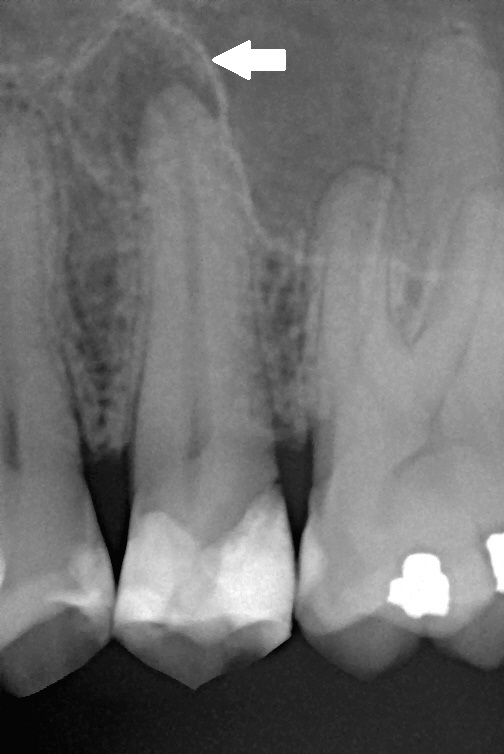
Root canal recommendations show some of the highest disagreement rates in dental research. A prospective cohort study from the National Dental Practice-Based Research Network PREDICT Project found that endodontists consistently rate the same root-canal cases as more complex than general dentists do — the kind of systematic case-difficulty disagreement that translates into different recommended treatment paths. Common areas of disagreement on the same case:
- Whether the tooth actually needs a root canal versus a filling or crown
- Whether extraction is a better option
- Whether the tooth is restorable at all
- Whether retreating a failed root canal is worthwhile
The published outcome differences are also notable — root canal treatment success when performed by endodontists is reported at up to 90–97%, versus 65–75% for general dentists in some studies, which feeds into the referral-versus-treat decision differently for the two groups.
For context on this specific question, see Do I Really Need a Root Canal? and our deeper article on why two dentists can recommend different treatments on the same X-ray.
Crowns
The JADA paper "Treatment recommendations for single-unit crowns"30509-8/abstract) from the National Dental Practice-Based Research Network quantified this directly: across four clinical scenarios, practitioners were asked to rate their likelihood of recommending a single-unit crown, and the researchers calculated a dentist-specific crown factor (range 0–12). The variance was substantial — same clinical case, very different crown recommendations across thousands of US practitioners.
See Do I Really Need a Crown? for the clinical criteria and How Much Does a Dental Crown Cost in 2026? for the regional cost variation that compounds the diagnostic variance.
Deep Cleanings (Scaling and Root Planing)
Research on periodontal treatment recommendations shows some of the widest variability. The ADA's 2015 evidence-based clinical practice guideline on nonsurgical periodontitis treatment and the 2021 Journal of Periodontology re-evaluation of scaling and root planing both note that the diagnostic threshold between gingivitis (which needs a regular cleaning) and periodontitis (which needs scaling and root planing) is where the most overtreatment risk concentrates.
See Do I Really Need a Deep Cleaning? for the AAP 2018 staging criteria and the clinical decision framework.
Extractions vs. Root Canals
When a dentist recommends extraction, a second opinion will recommend root canal (saving the tooth) in a significant percentage of cases. The reverse is also true. The published literature documents wide variation in extraction recommendations for the same clinical conditions across practitioners — and the American Association of Endodontists' clinical guidance explicitly notes that natural-tooth preservation is preferred when the tooth is restorable.
Fillings
Agreement on which teeth need fillings is moderate at best — the original Bader and Shugars JDR 1993 work found wide variance in restorative recommendations on the same teeth examined by different dentists. The number of fillings recommended for the same patient can plausibly vary from zero to six or more across practitioners.
This pattern — sometimes called diagnostic drift — is well documented and is one of the strongest arguments for independent second opinions. For more on the specific cavity-count scenario, see My Dentist Found Multiple Cavities.
Why Dentists Disagree: The Research-Backed Reasons
The published literature identifies several specific reasons for diagnostic variability in dentistry:
1. Radiograph Interpretation Differences
Reading dental X-rays is a subjective skill. Modern reliability studies show that even experienced dentists disagree on whether a radiolucency represents caries, an artifact, or a normal anatomical structure. The same image, the same training, different interpretations — even before any treatment decision is made.
2. Different Diagnostic Thresholds
One dentist may recommend a filling when decay reaches the dentin layer; another may watch it. One may recommend extraction for a cracked tooth; another may attempt root canal and crown. These are not cases of right vs. wrong — they are valid clinical judgment differences with very different cost and outcome implications for the patient. The International Caries Detection and Assessment System (ICDAS) was created to standardise these thresholds but adoption varies widely by region and practice.
3. Practice Style and Training Background
Dentists trained in different institutions, in different decades, or with different clinical philosophies approach the same problem differently. An older dentist may be more conservative; a younger dentist more interventionist. A general dentist and an endodontist may look at the same tooth and reach completely different conclusions about whether it is restorable, as the PREDICT Project data on case-difficulty rating explicitly documents.
4. Financial Influences
The fee-for-service payment model creates a structural incentive toward treatment. The 2022 JADA paper "How to manage the principal-agent problem in dentistry"00188-X/fulltext) lays out the economics directly: when income depends on procedures performed, more procedures tend to be performed — even when controlling for patient health status. The 2025 BDJ paper "Ethics on the edge: commodification, credence and care in general dental practice" frames dentistry as a *credence good* — a service whose quality the buyer cannot fully verify even after the work is done — and notes that credence-good economics predicts overtreatment as a baseline tendency without counter-pressure.
This is the structural reason why an independent second opinion from a reviewer with no financial interest in the outcome is more valuable than another fee-for-service consultation.
5. Information Asymmetry
Most patients cannot independently verify a dental recommendation. You cannot read your own X-ray, interpret your own perio chart, or evaluate whether a proposed crown is truly necessary. This information asymmetry is what makes second opinions valuable — and what makes the structural independence of the reviewer the critical variable.
What This Means for Patients
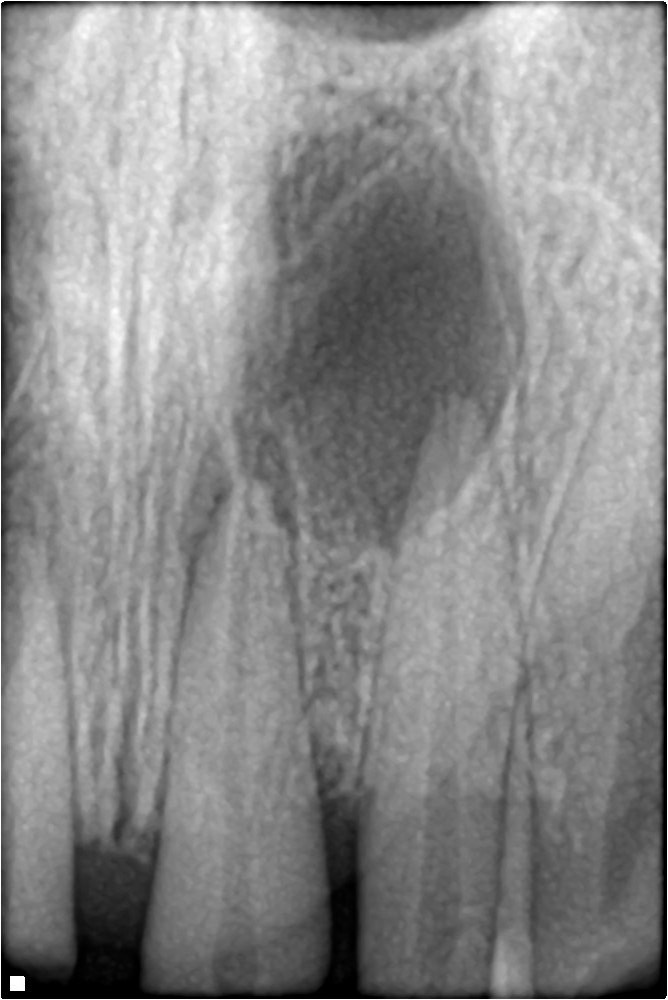
The statistics above are not abstract academic numbers. They translate into real decisions with real financial and health consequences.
| If a dentist recommends | A second opinion disagrees approximately |
|---|---|
| Root canal | 20-35% of cases |
| Multiple crowns | 30-50% of cases |
| Deep cleaning (SRP) | 40-60% of borderline cases |
| Extraction of a restorable tooth | 25-40% of cases |
| Full-mouth reconstruction | Highest variability of all |
These are not guesses. These are the ranges reported in published research.
Cases Where Second Opinions Change the Most
Large Treatment Plans
The more procedures recommended in a single plan, the more likely a second opinion will differ. A single filling recommendation has relatively low variability. A plan involving root canal, crown, and multiple fillings on a single visit has high variability.
Borderline Diagnoses
When the clinical picture is ambiguous -- early caries that could be monitored or filled, periodontal pockets in the 4mm range that could be a regular cleaning or a deep cleaning -- disagreement rates are highest.
Recommendations From a New Dentist
When a new dentist recommends substantially more work than your previous dentist, the statistics strongly favor getting an independent review. A sudden change in treatment volume is one of the strongest signals that overdiagnosis may be occurring.
What the Research Does NOT Say
The research does not say that dentists are incompetent or dishonest. It says that diagnostic variability is an inherent feature of clinical practice, not a bug. Two qualified, ethical dentists can look at the same data and reach different conclusions. This is normal. But it also means that any single recommendation carries a meaningful probability of being different from what another equally qualified professional would recommend.
That probability is the reason second opinions exist. And the stakes are high enough -- financially and medically -- that understanding the odds helps you make better decisions.
How an Online Second Opinion Service Provides a Statistically Independent Assessment
When you submit your case to an online second opinion service like toothcheck, you are getting an assessment from a reviewer who:
- Has no financial relationship with your treating dentist
- Is paid a flat fee regardless of what they recommend
- Does not perform the procedures they evaluate
- Reviews your case outside the time pressure of a clinical schedule
- Has the opportunity to review all of your imaging and records at once
This structural setup removes the main sources of bias documented in the research -- financial incentives, time pressure, and practice style alignment -- leaving the reviewer free to assess your case on the clinical evidence alone.
FAQ
How reliable are these statistics?
The numbers cited above come from peer-reviewed published research, including Bader and Shugars' foundational 1993 JDR paper, their 1995 JPHD variance review, the JADA Practice-Based Research Network crown-recommendation study30509-8/abstract), the 2022 JADA principal-agent paper00188-X/fulltext), and the Dental AI Council 14-country survey. Where individual study results are cited, the range across multiple studies is reported.
Does the disagreement rate mean I should never trust my dentist?
No. It means you should understand that any single clinical recommendation has a meaningful probability of being different from what another qualified professional would recommend. This is not unique to dentistry — it applies across medicine, and the American Dental Association Code of Ethics explicitly supports the patient's right to seek second opinions.
Is the disagreement rate the same for all procedures?
No. Simple procedures like cleanings and routine fillings have lower disagreement rates. Complex procedures like root canals, extractions vs. restoration decisions, and full-mouth reconstructions have higher rates — the National Dental Practice-Based Research Network data shows this directly.
Does experience level affect disagreement rates?
Some studies find that specialists agree with each other more than generalists do, but significant variability persists even among specialists. The PREDICT Project research on endodontist vs. general-dentist case-difficulty rating shows that experience changes the nature of disagreement rather than eliminating it.
What about AI — does it reduce disagreement?
AI tools can improve consistency on certain detection tasks (e.g., identifying cavities on X-rays), but they introduce their own limitations and cannot resolve the clinical judgment questions that drive most second-opinion disagreements. The 2025 BDJ Open systematic review of AI in dentistry concludes AI tools lack the ability to synthesise patient history, chief complaint, and physical examination — which is exactly the territory where dentists disagree most. See AI vs. Dentist: 5 Things AI Dental X-Ray Tools Miss.
Should I get a second opinion on every dental recommendation?
Not necessarily. For low-cost, low-risk procedures (routine cleaning, small filling), the inconvenience of a second opinion may outweigh the benefit. For any treatment plan over $1,000 or any irreversible procedure, the statistics strongly favour getting an independent review — the cost-benefit math is in our dental second opinion cost guide.
Final Advice
The research is clear: dentists disagree on diagnoses and treatment plans much more often than most patients realise. This is not a flaw in individual dentists — it is an inherent feature of clinical diagnosis.
Understanding the statistics empowers you to make better decisions. When a recommended treatment plan involves significant cost or irreversible procedures, an independent second opinion is not a sign of distrust — it is a sign of informed decision-making backed by the evidence.
If you want to know whether your recommended treatment plan aligns with what an independent dentist would recommend, upload your X-rays and treatment plan to toothcheck for an independent review from a licensed dentist — or, for a written treatment plan with CDT codes already in hand, use our dental treatment plan review service.
Image credits: Periapical X-ray showing bone loss by Shaimaa Abdellatif via Wikimedia Commons (CC BY-SA 4.0); chronic apical periodontitis image by Michele Gardini via Wikimedia Commons (CC BY-SA 3.0); periapical radiolucency image by Shaimaa Abdellatif via Wikimedia Commons (CC BY-SA 4.0). Used as educational examples — they do not depict toothcheck patients.
Reviewed by the toothcheck Dental Team.
Last medically reviewed: May 2026