What Is a Dental Treatment Plan Review? A Step-by-Step Guide
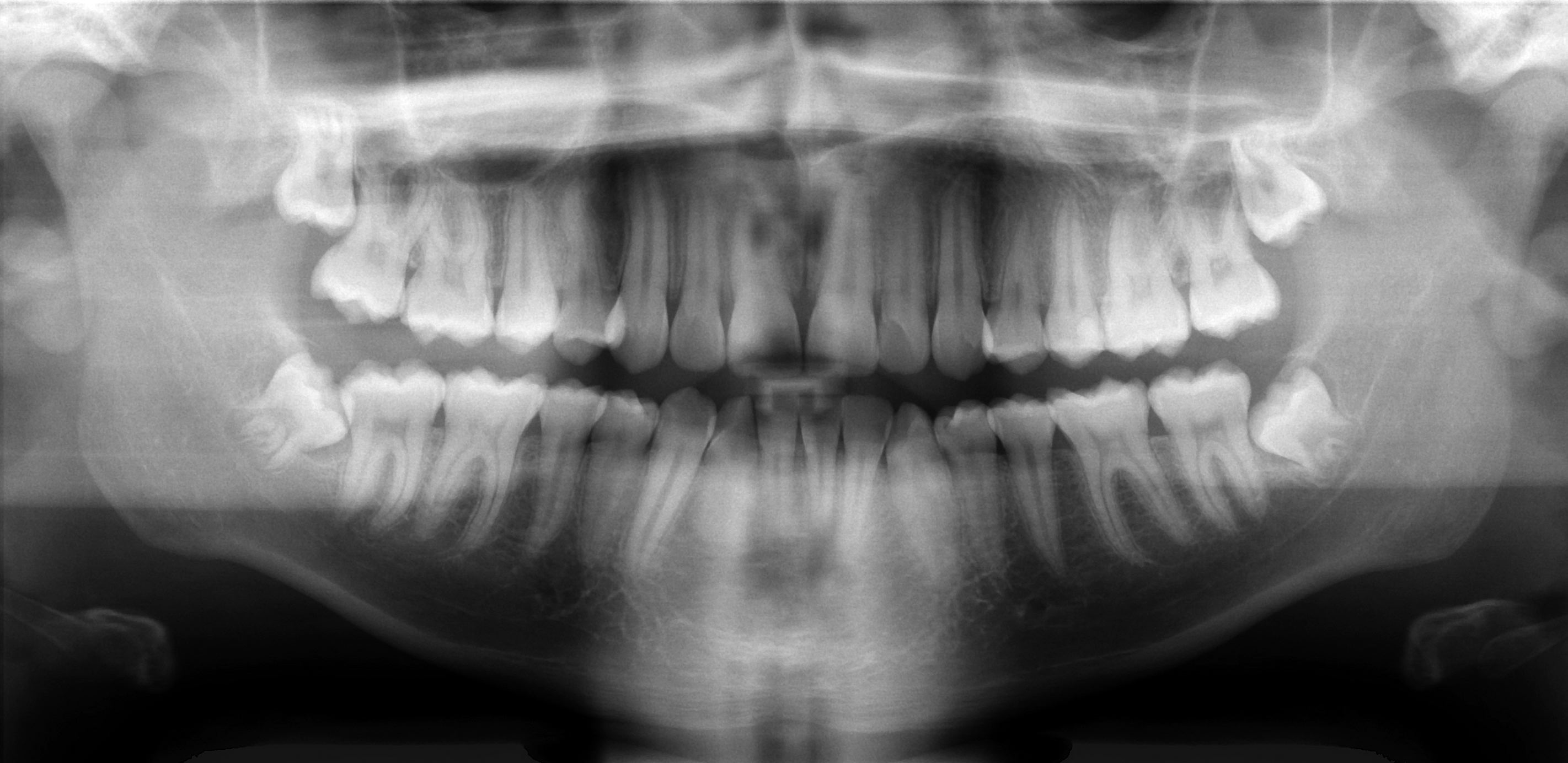
A dentist explains what a dental treatment plan review actually does — the line-by-line verification of procedures against CDT codes, X-ray findings, and FAIR Health benchmarks — and why a written independent review pays for itself on any $1,000+ plan.
Reviewed by the toothcheck Dental Team Independent dentist providing online second opinions.
Your dentist hands you a printed treatment plan: a list of procedures, tooth numbers, fees, and a total that runs into the thousands. Most patients sign and schedule the first appointment. But that piece of paper is doing more work than it looks like — it is a clinical recommendation, a financial commitment, and a billing document combined. Before you sign, you have the option of an independent review.
A dental treatment plan review is exactly what it sounds like: an independent licensed dentist — paid a flat $59 fee regardless of what they recommend — reads your written plan, examines your X-rays, and tells you in writing whether each procedure is clinically supported, each CDT code is correct, and each fee is reasonable for your area. The deliverable is a written report you can compare to the original plan line by line.
This guide explains what a treatment plan review actually verifies, the five-step process used in practice, and how to evaluate the plan you have been given against the same checklist.
Why Treatment Plan Review Exists
Peer-reviewed research on diagnostic variability in dentistry has consistently documented that two qualified dentists evaluating the same patient frequently reach different treatment recommendations. Bader and Shugars' foundational 1993 JDR work and the 1995 Journal of Public Health Dentistry review put treatment-plan variance at 30–50% between dentists on the same case. The Dental AI Council's 14-country survey of 136 dentists reviewing the same imaging found no case with unanimous agreement.
This variability is not a bug — it is an inherent feature of clinical medicine where judgement calls are required. The 2022 JADA paper on the principal-agent problem in dentistry00188-X/fulltext) explains the structural economics: when a clinician's income depends on the procedures they recommend, the incentive structure can pull toward action even when conservative care would be equally appropriate. A treatment plan review by a dentist with no financial stake in your treatment removes this pull.
For a deeper look at why structural independence matters in a reviewer, see Independent Dental Second Opinion: Why It Matters That the Reviewer Isn't Selling You Anything.
Quick Answer: Three Things a Review Verifies
1. Necessity — Does each recommended procedure correspond to a finding visible on your X-ray and a symptom or sign documented in your records? Or is it being inferred without strong evidence? 2. Appropriateness — Is the proposed procedure the right one for the finding, or would a less-invasive option (filling instead of crown, monitoring instead of root canal, regular cleaning instead of scaling-and-root-planing) achieve the same clinical goal? 3. Value — Is each fee reasonable for your geographic area, based on FAIR Health Consumer data and CDT code benchmarks? Are unnecessary add-ons bundled into the quote?
A useful written review tells you which line items pass all three checks, which warrant a conversation with your dentist, and which should not be on the plan at all.
The Anatomy of a US Dental Treatment Plan
A standard US dental treatment plan should contain, for every recommended procedure:
- CDT code (e.g., D2740 for a porcelain crown)
- Tooth number (e.g., #14, #19)
- Procedure description (e.g., "Crown, porcelain/ceramic")
- Fee in dollars
- Insurance estimate showing what your plan covers and your patient share
- Phase or sequencing (which procedures come first, in what order)
A plan missing CDT codes cannot be precisely verified — that itself is a red flag. Patients in the US have a HIPAA-protected legal right to their records, including a written, itemised treatment plan with codes. If a practice refuses to provide one, the American Dental Association Code of Ethics explicitly supports patient autonomy as a primary obligation.
For a complete guide to common CDT codes by category, see Dental Procedure Codes Explained.
The 5-Step Treatment Plan Review Process
This is what an independent reviewer actually does when your plan and X-rays arrive on their desk.
Step 1: Verify the Diagnosis
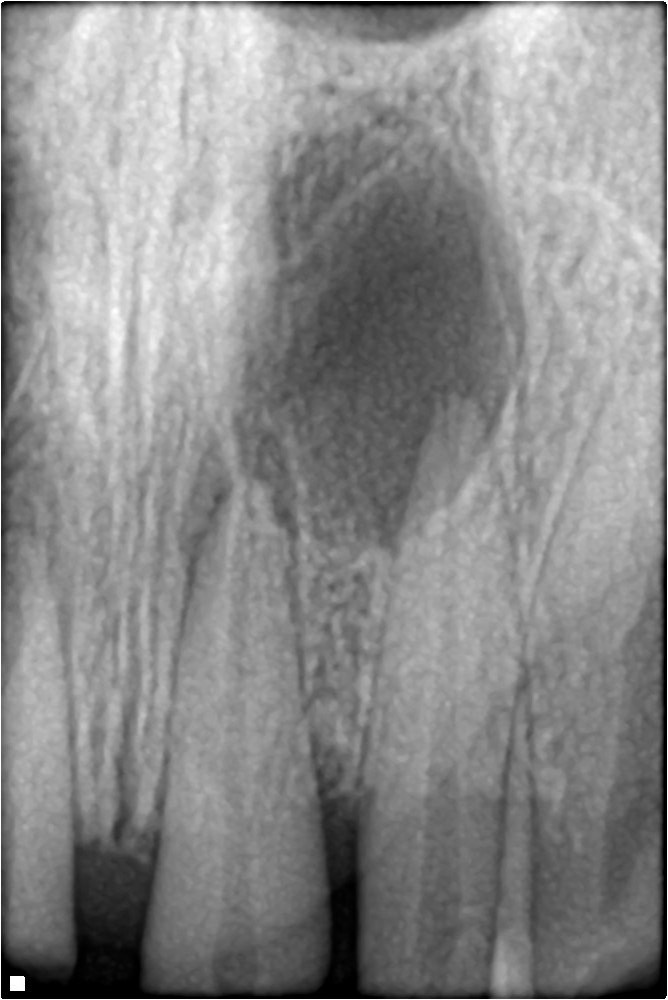
The reviewer reads each X-ray and each documented symptom and identifies the clinical diagnosis the plan rests on. Then they check whether the diagnosis is well-supported.
A mismatch between symptoms and diagnosis is the single most common reason for unnecessary dental treatment. If a root canal is recommended for a tooth that only hurts when chewing — see Tooth Hurts When Chewing: Common Causes Dentists Miss — the diagnosis is often a cracked tooth or high bite, not pulpal necrosis. The right treatment for those is fundamentally different.
Specifically the reviewer checks:
- Does the X-ray finding match the diagnosis?
- Do the documented symptoms match the diagnosis?
- Is the diagnosis supported by clinical testing (vitality test, percussion, palpation), or only by the imaging?
- Has anything been ruled out that should have been?
Step 2: Check Each Procedure Code Against the Diagnosis
For each line on the plan, the reviewer verifies that the CDT code matches the procedure being described and that the procedure matches the diagnosis. Common code-diagnosis mismatches include:
- D2740 (porcelain crown) recommended for a tooth where the cavity is small enough that D2391 (one-surface composite filling) or D2392 (two-surface) would suffice — see Do I Really Need a Crown?
- D4341 (scaling and root planing, 4+ teeth per quadrant) recommended without documented periodontal pockets ≥ 4 mm — see Do I Really Need a Deep Cleaning?
- D3330 (molar root canal) recommended on an asymptomatic tooth without a clear periapical finding or vitality test result
- D2950 (core buildup) added to every crown line item by default, regardless of remaining tooth structure
- D6010 (implant placement) recommended before a thorough evaluation of whether the natural tooth could be saved with a crown — see Crown vs Implant
Step 3: Evaluate Necessity Against the Evidence
Not every dental finding requires treatment. The reviewer triages each procedure into three categories based on the American Dental Association evidence-based dentistry framework:
Urgent (needs prompt treatment):
- Active infection with swelling or fever
- Severe spontaneous pain
- Decay reaching the pulp (visible on X-ray)
- Trauma or fracture exposing the nerve
Discretionary (can be scheduled, but is genuinely indicated):
- Restorations on teeth with active decay into dentin
- Crowns on structurally compromised teeth with adequate ferrule
- Periodontal treatment on documented periodontitis (per AAP staging)
Can be safely monitored (treatment is optional or premature):
- Small, inactive incipient (enamel-only) caries in low-risk patients
- "Watch" teeth with no progression on prior X-rays
- Minor cracks without symptoms
- Early gum inflammation without bone loss
The reviewer marks which line items fall into which category and explains the evidence for each call.
Step 4: Question the Sequencing
The order in which procedures are scheduled matters. Red flags in sequencing include:
- All major work scheduled in one visit — bundling root canal, multiple crowns, and a deep cleaning into a single appointment is often a logistics shortcut that does not match best clinical practice
- Irreversible procedures before diagnostic tests are complete — extraction or root canal recommended before vitality testing has been documented
- Implant placement before bone evaluation — without CBCT imaging showing adequate bone volume
- "Phase 1 / Phase 2" plans with no individual line items — bundling that hides what is actually being charged
- Crown placement scheduled before the root canal has fully healed — premature crown placement on a treated tooth that is still inflamed
Step 5: Check Each Fee Against Local Benchmarks
The reviewer compares each line-item fee against published benchmarks for your ZIP code using FAIR Health Consumer and similar sources. Signs of fee inflation include:
- Fees more than 30% above the 80th percentile for your area
- Unbundling — billing separate codes for procedures that are usually bundled
- "Premium materials" upcharges without clinical justification (zirconia at $2,500+ when standard PFM is clinically equivalent)
- Multiple crowns at the upper end of the price range without insurance discounts applied
- Add-on procedures (laser bacterial reduction, oral cancer screening as a separate code, "comfort rinse") that may not be billable as separate line items
For the deeper price-verification guide, see Is My Dentist Overcharging Me? and our crown cost article for state-by-state crown pricing.
Real Examples: Treatment Plans That Needed a Closer Look
These are the common patterns reviewers see most often.
"You Need 4 Crowns"
Multiple crowns recommended in one plan is one of the most common red flags. In several second-opinion services, fewer than half of multi-crown recommendations are confirmed in full on independent review. Common revisions: some teeth need fillings or onlays instead of crowns; some teeth can be monitored; some teeth need crowns but at less aggressive material/cost tier. See Do I Really Need a Crown?.
"Deep Cleaning on All Four Quadrants"
Full-mouth scaling and root planing (D4341 x 4) is one of the most over-recommended procedures in dentistry. Many patients with mild gingivitis or early gum inflammation are quoted SRP when a thorough regular cleaning (D1110) plus improved home hygiene would be the right treatment. The clinical threshold under the 2018 American Academy of Periodontology staging framework is documented bone loss and periodontal pocket depths ≥ 4 mm. Without those, SRP is over-indicated.
"Root Canal + Crown + Maybe Extraction + Implant"
A two-layer plan ("we will try the root canal but if it fails we will need to extract and implant") is sometimes legitimate when the prognosis is genuinely uncertain. More often, it is a sign the diagnostic foundation was not strong enough in the first place. An independent reviewer can often tell from the X-rays whether the tooth is realistically salvageable — and that determines which plan is the right one to commit to from the start.
"Phase 1 Treatment: $14,500"
A bundled phase-one quote without itemised CDT codes and procedure fees is the single hardest plan to price-check. Independent reviewers consistently flag these as requiring the practice to break them down before any review is meaningful. Patients in the US have the legal right to an itemised plan with codes.
When to Get a Professional Review
The cost-benefit math favours a paid review when:
- Total cost exceeds $1,000
- Multiple irreversible procedures are recommended (root canal, extraction, implant, crown)
- You have doubts about whether the diagnosis matches your symptoms
- A new dentist has substantially expanded your treatment plan vs. a previous dentist
- You have already received conflicting recommendations from different dentists
- The plan is bundled or unitemised
- Pressure has been applied to decide same-day
For low-cost plans (single small filling, routine cleaning), the math is less favourable — the review cost may approach the procedure cost. For complex plans, the cost of the review is a fraction of any single procedure it might prevent.
The cost-benefit analysis in detail is in Is a Dental Second Opinion Worth the Cost?.
How an Online Treatment Plan Review Works
The mechanical process for an online review:
1. You upload your written treatment plan (photo or PDF), your X-rays (any format), and a brief description of your symptoms 2. A licensed dentist — paid a flat fee that does not depend on what they recommend — reads everything 3. You receive a written report in under 72 hours covering each line item — necessity check, code verification, fee benchmark, and explicit recommendation (proceed / discuss with your dentist / decline)
The reviewer does not perform procedures, so there is no financial incentive to recommend more or less treatment. They are paid the same flat fee regardless of the conclusion they reach — which is the structural condition the ADA Code of Ethics describes for a valid second opinion.
For the full service detail, see Dental Treatment Plan Review.
What the Written Report Includes
A useful treatment plan review report contains:
- Line-by-line analysis of each procedure on the original plan with one of three verdicts: clinically supported, optional (could be deferred or monitored), or not indicated by the imaging
- CDT code verification confirming each code matches its procedure
- Local fee benchmark for each procedure, with deviation from the typical range flagged
- Alternative procedure recommendations where a less-invasive option would be clinically equivalent
- Urgency triage — which line items need attention now, which can wait, and which should be reconsidered
- Red flags explicitly named (bundled add-ons, missing codes, fee outliers)
- A clear summary of what to bring back into the conversation with your dentist
A useful report is something you can keep, share, and refer back to — not a verbal "looks fine" from someone with a stake in your decision.
Red Flags in Any Treatment Plan
- Multiple expensive procedures recommended at once with no triage
- Vague clinical explanations that do not match your X-ray findings
- Pressure to decide immediately (legitimate non-emergency treatment never requires same-day commitment)
- Treatment plan presented without the dentist showing you the X-ray and pointing out the specific finding
- Two-layer plans ("if A fails we will do B") on procedures that should not be uncertain
- Procedures listed without CDT codes
- "Premium material" upcharges presented as medical necessity rather than as a cosmetic preference
- Fees more than 30% above the local typical range
- Bundled "phase" plans without itemisation
For the broader checklist on overtreatment patterns, see 12 Red Flags of Unnecessary Dental Work.
FAQ
What is a treatment plan review?
An independent dentist evaluates your proposed treatment line by line — verifying necessity, CDT code accuracy, and fee reasonableness — and provides a written report you can compare to the original plan.
How is it different from a general second opinion?
A general second opinion answers "is this diagnosis correct?" A treatment plan review answers three questions in one report: is each procedure necessary, is each fee reasonable, and are unnecessary add-ons bundled in.
What are CDT codes?
Current Dental Terminology codes are the standardised five-character codes (D-codes) maintained by the American Dental Association used to bill every US dental procedure. They let you verify exactly what is being billed and benchmark each fee.
How do I read my treatment plan?
For each line: identify the CDT code, the tooth number, the procedure description, the fee, and the insurance estimate. Verify the X-ray supports the procedure, the code matches the description, and the fee is in line with local FAIR Health benchmarks.
What are common red flags?
Multiple crowns at once, deep cleaning without documented pocket depths, bundled "phase" plans without codes, immediate-decision pressure, and recommendations that do not match your symptoms or X-ray findings.
Can I get a treatment plan review online?
Yes. Upload your X-rays and written plan to toothcheck for a written, line-by-line independent review from a licensed dentist in under 72 hours.
Is it worth paying for a review?
For any plan over $1,000 or any plan with irreversible procedures (root canal, extraction, implant), the cost-benefit math strongly favours a review. The full breakdown is in Is a Dental Second Opinion Worth the Cost?.
Final Advice
Your treatment plan is a recommendation, not a contract. The published research is clear that two qualified dentists frequently reach different conclusions on the same case, and the financial and clinical stakes of unnecessary dental work — irreversible loss of tooth structure, thousands of dollars in fees, cascade-effect future treatment — are real.
A written, independent line-by-line review is the standard mechanism that resolves the uncertainty before you commit. The cost is a fraction of any single procedure it might prevent.
Upload your X-rays and treatment plan to toothcheck for an independent, written review from a licensed dentist in under 72 hours.
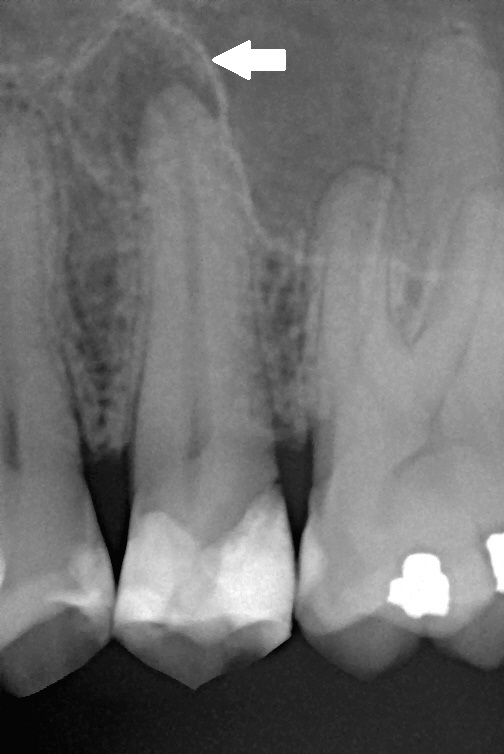
Image credits: Panoramic radiograph by Coronation Dental Specialty Group via Wikimedia Commons (CC BY 3.0); periapical radiolucency image by Shaimaa Abdellatif via Wikimedia Commons (CC BY-SA 4.0); chronic apical periodontitis image by Michele Gardini via Wikimedia Commons (CC BY-SA 3.0). Used as educational examples — they do not depict toothcheck patients.
Reviewed by the toothcheck Dental Team.
Last medically reviewed: May 2026